Ever feel like you're trying to solve a puzzle when it comes to your cholesterol? If you've been searching for a natural partner in your health journey, you're definitely not alone. Let’s take a look at red yeast rice, a traditional ingredient that's getting a lot of modern attention-it might just be the supportive boost your wellness routine has been missing.
Your Guide to Red Yeast Rice for Natural Wellness
Let's be real for a moment. Getting a cholesterol number from your doctor that’s higher than you’d like can be frustrating. It's easy to start second-guessing every meal and wondering what else you can do besides the usual advice. This is a common story, and it’s why so many of us are looking for effective, plant-based ways to support our heart health.
Think of this guide as a conversation with a trusted friend who's already done the homework for you. We'll walk through what red yeast rice is, how it works, and why it might be a valuable addition to your health toolkit. No jargon, no confusion-just simple, encouraging information focused on what really matters: you feeling your best.
A Natural Tradition Meets Modern Demand
Red yeast rice is hardly a new fad. It's a staple ingredient with centuries of history in both Asian medicine and cuisine. Its popularity has exploded recently, though, as more and more people seek out natural wellness solutions. This isn't just a hunch; the numbers tell a compelling story.
The global market for red yeast rice has seen incredible growth, which points to a huge shift in how we think about health. In 2023, the market was valued at around $1.1 billion and is projected to more than double to $2.4 billion by 2030. This boom is happening because people are actively looking for natural alternatives to manage cholesterol.
This growing interest is fantastic. It means more of us are taking proactive steps toward our heart health and exploring the power of natural ingredients.
What You Will Learn in This Guide
We believe knowledge is the first step toward feeling confident in your choices. In this guide, we'll cover everything you need to know in a clear, supportive way. We’ll break down:
- What It Is: A simple explanation of how this unique ingredient is made.
- The Science: A look at how it actually works in your body to support healthy cholesterol levels.
- Safety First: A transparent overview of dosages, potential side effects, and who should be cautious.
- Choosing Quality: Practical tips on how to become a savvy shopper and pick a safe, effective supplement.
Of course, a holistic approach to wellbeing is about more than just one supplement. Understanding the bigger picture of a healthy diet is key. For more on that, you can learn about the principles of ideal nutrition to build a truly complete wellness strategy.
We’re here to help you connect the dots between ancient wisdom and modern science, creating a path forward that feels good for both your body and your peace of mind. Let’s get started.
So, What Exactly Is Red Yeast Rice?
You’ve probably heard about red yeast rice, but it’s easy to feel a bit confused about what it actually is. Don’t worry, it’s not as mysterious as it sounds. Let's break it down together.
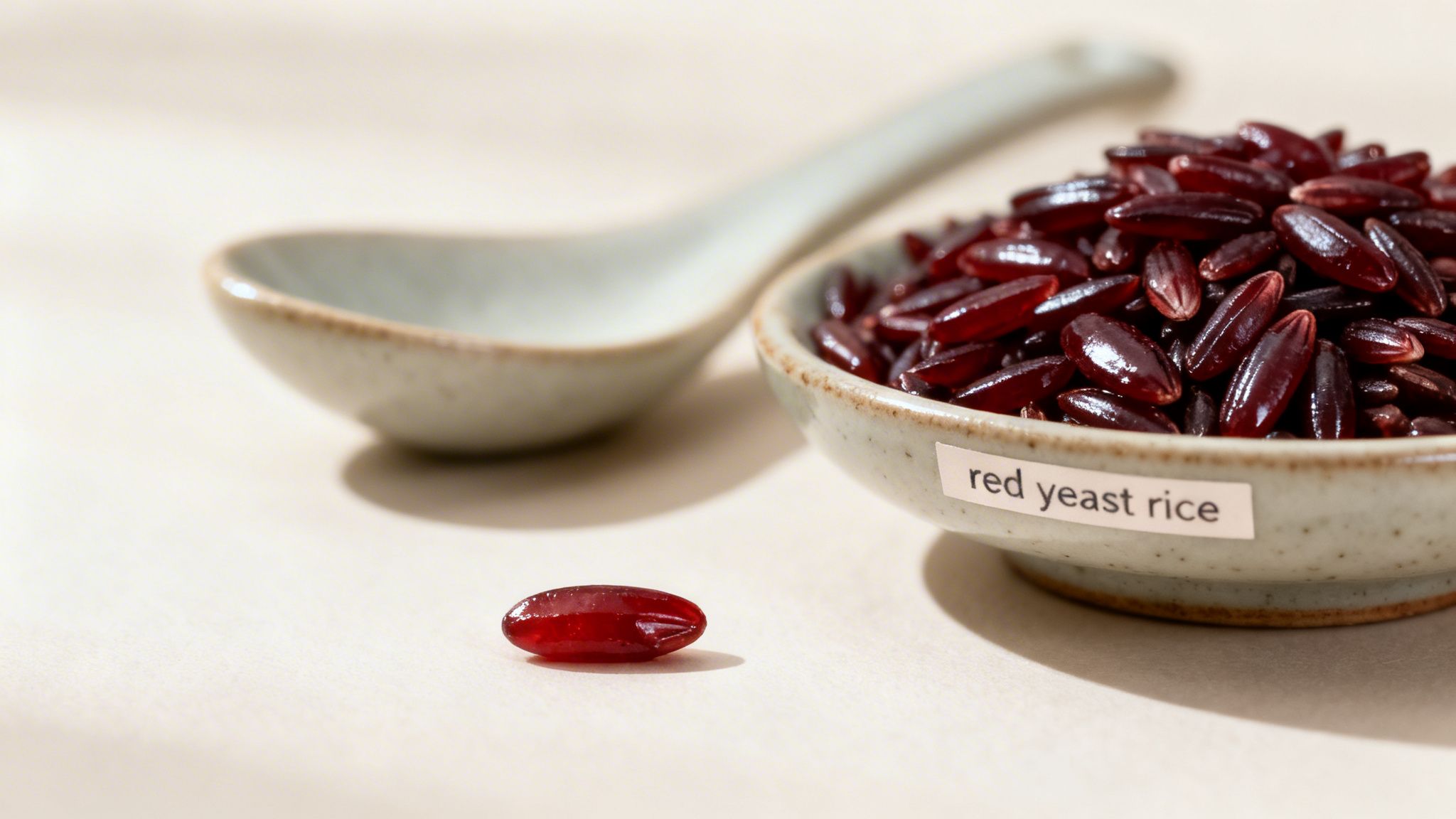
At its heart, red yeast rice starts out as regular white rice. The magic happens when it’s fermented with a specific type of yeast, a reddish-purple mold called Monascus purpureus.
This isn't some strange, new invention. It’s a completely natural process that has been used for centuries. This fermentation is what gives the rice its distinctive deep-red color and, more importantly, creates a range of powerful, health-supporting compounds.
A Natural Transformation
Think of it like making sourdough bread from a simple starter, or turning milk into yogurt. In each case, beneficial microorganisms transform a basic food into something much more complex and beneficial. Red yeast rice is a perfect example of this ancient wisdom in action.
You can dive deeper into this fascinating topic in our article on the benefits of fermented foods. It really highlights how these age-old techniques are still incredibly relevant for our health today.
The most famous compound produced during this process is monacolin K. This is the star of the show, and for a very specific reason: it’s chemically identical to the active ingredient in the prescription cholesterol-lowering drug lovastatin.
Through simple fermentation, nature creates a substance that mirrors a modern pharmaceutical. This remarkable connection is why so many people turn to red yeast rice for natural heart health support.
A Long History of Use
Long before it appeared in Western supplement aisles, red yeast rice was a staple in Traditional Chinese Medicine (TCM) and many Asian cuisines. For centuries, it has been valued for a few key reasons:
- Promoting Circulation: In TCM, it was prized for its ability to invigorate blood circulation and aid with digestion.
- Natural Food Coloring: Its brilliant crimson hue made it a popular natural colorant for foods like Peking duck, pickled tofu, and char siu pork.
- Food Preservation: The compounds created during fermentation also acted as a natural preservative, long before refrigeration existed.
This rich history tells you a lot about its reliability and safety. Its role is so deeply woven into Asian culture that the region now produces over 60% of the world's supply. The deep culinary and medicinal roots, especially in China, continue to fuel its global popularity as more people seek out its well-documented benefits.
By understanding where it comes from, the compounds it contains, and its centuries of use, you can see how this ancient food has earned its place in the modern world of natural health.
How Red Yeast Rice Supports Cholesterol Levels
So, how exactly does a fermented rice product help manage something as complex as cholesterol? The science behind it is fascinating, and it all comes down to a special compound that acts as a natural gatekeeper for your body's cholesterol production.
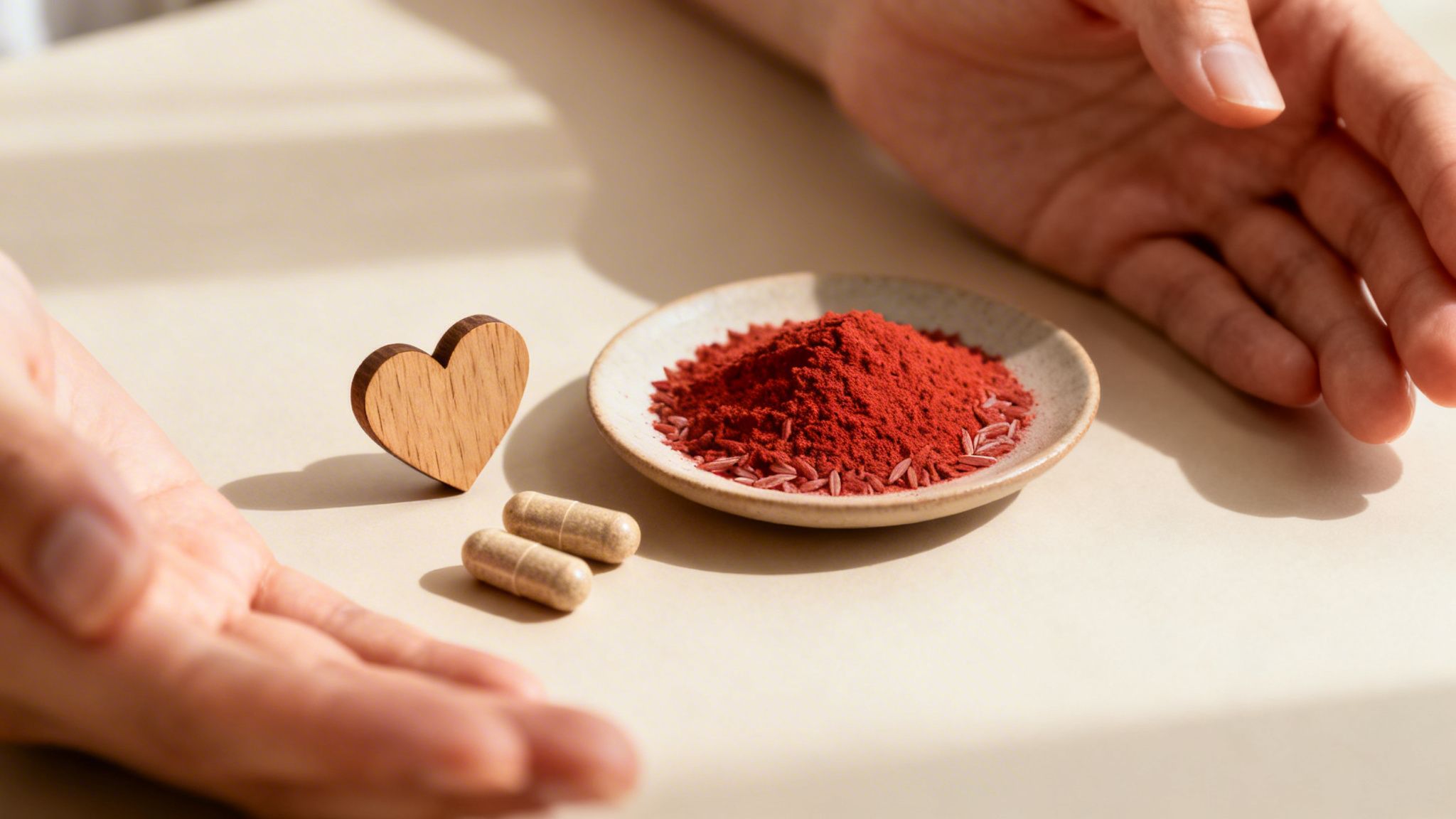
The main active ingredient in red yeast rice is a substance called monacolin K. As we mentioned earlier, this compound is chemically identical to lovastatin, an active ingredient found in some prescription statin medications.
Think of your liver as a 24/7 cholesterol factory. It needs a specific enzyme, called HMG-CoA reductase, to run the assembly line that manufactures cholesterol. This is a normal and necessary process, but sometimes that factory goes into overdrive.
The "Brake Pedal" for Cholesterol Production
This is where monacolin K comes in. It acts like a brake pedal for that HMG-CoA reductase enzyme, telling the factory to slow down production. By partially inhibiting this enzyme, it effectively reduces the amount of cholesterol your liver makes.
When your liver produces less cholesterol on its own, it starts looking for more from other sources. To get what it needs, it pulls LDL cholesterol-often called the "bad" cholesterol-out of your bloodstream. This dual action of producing less and clearing more is what helps lower your overall LDL levels.
In simple terms: Monacolin K helps your body make less of what you might have too much of (LDL cholesterol) while simultaneously clearing more of it out of your system. This is why red yeast rice can be such a powerful tool for supporting heart health.
Science Corner: What the Research Says
This isn't just theory; the evidence is pretty solid. A major scientific review in the American Journal of Cardiology combined the results of 20 different studies. It confirmed that red yeast rice could lower LDL cholesterol by a significant amount-on average, by 1.02 mmol/L, which is about 39 mg/dL. What this means for you is that a natural product has a well-understood, scientifically-backed mechanism for helping you reach your health goals.
More Than Just a One-Trick Pony
While monacolin K gets most of the attention, it’s not working in isolation. A high-quality red yeast rice product is a complex blend of natural compounds that all contribute to its effects. This is a great example of synergy, where the whole is greater than the sum of its parts.
Other beneficial components you'll find in red yeast rice include:
- Sterols: These are natural plant compounds, like beta-sitosterol, that help block cholesterol from being absorbed in your gut in the first place.
- Isoflavones: These plant-based compounds are known for their antioxidant properties, which help protect cells from damage.
- Monounsaturated Fatty Acids: Often called "good fats," these support overall cardiovascular wellness.
This team of ingredients works together, tackling cholesterol management from multiple angles. It’s a holistic approach, which is why the quality and completeness of a red yeast rice supplement matter so much.
For instance, a thoughtfully designed formula like Yuve Heart & Cholesterol Support is a smart, proactive step in managing your cholesterol naturally as part of a healthy lifestyle. It was created to deliver the benefits of carefully sourced Red Yeast Rice alongside other heart-healthy nutrients, taking the guesswork out of building a supportive routine.
When you're considering a new supplement, it's smart to look at the entire picture-not just the benefits, but also the potential risks. Let's walk through what you need to know to use red yeast rice safely and effectively, so you can feel confident in your choices.
The Straight Scoop on Safety and Dosing
Think of it this way: taking any supplement is a partnership between you and your healthcare provider. This guide is here to give you the right questions to ask and the key points to discuss.
A common starting point is figuring out the right dose. Most clinical studies that have shown a positive impact on cholesterol have used between 600 mg and 2400 mg per day. This is usually split into two separate doses.
But here’s a crucial detail: the effectiveness of red yeast rice comes from its active compounds, primarily monacolin K. The concentration of these compounds can vary dramatically from one brand to another. This makes it incredibly important to choose a high-quality supplement from a brand you trust.
Potential Side Effects and Who Should Be Cautious
Because monacolin K is chemically identical to the active ingredient in the prescription drug lovastatin, the potential side effects can be similar. Being aware of them isn't meant to cause alarm; it’s about knowing what to look out for so you can have an informed conversation with your doctor.
Most side effects are mild, but you should always listen to what your body is telling you. Common ones include:
- Muscle Pain or Weakness: This is the side effect people report most often. If you notice any new or unexplained aches, it's a clear signal to stop taking the supplement and consult your doctor.
- Digestive Discomfort: Some people experience gas, bloating, or general stomach upset. Yikes! While frustrating, this often resolves on its own.
- Liver Stress: In rare cases, red yeast rice can elevate liver enzymes, just like statin medications. For this reason, it’s not recommended for anyone who already has liver issues.
The interest in red yeast rice isn't just local; it's a global phenomenon. While it has been a staple in traditional Asian medicine for centuries, its popularity has surged in Western countries. Today, North America and Europe are major markets, with Europe accounting for about 30% of the global red yeast rice market revenue in 2024. This growing demand highlights the need for strong regulatory oversight to ensure product quality and safety worldwide. You can explore a deeper analysis of these market trends and their impact on supplement standards.
Who Should Avoid Red Yeast Rice
For some people, red yeast rice is simply not a safe option. It's essential to be direct and clear here, as your health is the number one priority.
Think of this as a non-negotiable safety checklist. I do NOT think this is something to experiment with if you fall into any of these categories.
You should not take red yeast rice if:
- You are pregnant, planning to become pregnant, or breastfeeding.
- You have active liver disease or a history of liver problems.
- You are already taking a prescription statin medication. Combining them can significantly increase the risk of side effects like muscle damage.
- You drink more than two alcoholic beverages per day.
- You have a serious infection or have had an organ transplant.
Red Yeast Rice Safety Checklist
A quick reference guide to help you determine if red yeast rice is a suitable and safe option for your health needs. Always consult a healthcare provider before starting any new supplement.
| Consideration | Who Should Be Cautious | Key Action |
|---|---|---|
| Existing Medications | Individuals taking prescription statins or other cholesterol-lowering drugs. | Do Not Combine. Discuss alternatives with your doctor to avoid an increased risk of side effects. |
| Liver Health | Anyone with a history of liver disease, elevated liver enzymes, or heavy alcohol use. | Avoid. Red yeast rice can stress the liver. Your doctor can recommend safer options. |
| Pregnancy/Breastfeeding | Women who are pregnant, trying to conceive, or nursing. | Avoid. The compounds in red yeast rice can be harmful to a developing fetus or infant. |
| Muscle Health | People with a history of myopathy or unexplained muscle pain. | Proceed with Caution. Monitor closely for any new muscle aches and report them to your doctor immediately. |
| Allergies | Individuals with known allergies to yeast or mold. | Avoid. Red yeast rice is a fermented product and could trigger an allergic reaction. |
Making sense of supplements can feel overwhelming, but you don't have to do it alone. By working with a doctor who understands your health goals, you can build a plan that is both effective and, most importantly, safe.
How to Choose a High-Quality Supplement
Feeling a bit overwhelmed by all the supplement choices out there? We get it. Walking down the health aisle or scrolling online can feel like navigating a maze. This section is your practical guide to cutting through that noise and picking a top-notch red yeast rice supplement with confidence.
Let's be direct: the biggest challenge with red yeast rice isn't whether it works, but whether it's safe. The quality can vary wildly from one bottle to the next, so knowing what to look for is absolutely essential for your health and peace of mind.
The Citrinin Problem
The main concern with low-quality red yeast rice is a contaminant called citrinin. This is a toxic byproduct that can form during the fermentation process if conditions aren't perfectly controlled.
Citrinin is a known nephrotoxin, meaning it's harmful to the kidneys, so avoiding it is non-negotiable. A trustworthy supplement must be certified as citrinin-free. Any brand serious about your health will test for it and be transparent about the results. If they don't mention it, consider that a major red flag.
Decode the Label Like a Pro
Beyond making sure a product is clean, you need to know what’s actually in it. Interpreting supplement labels can feel like learning a new language, but we’re here to help translate.
Here’s a simple checklist of what to look for when choosing a red yeast rice supplement:
- Third-Party Testing: This is your best insurance policy for quality. Look for seals from independent organizations like NSF International, USP (United States Pharmacopeia), or ConsumerLab. These certifications mean the product was tested to confirm it contains what the label says and is free from harmful contaminants.
- Clear Monacolin K Content: The label should specify the amount of monacolin K per serving. This helps you and your doctor understand the dose you're actually getting. Vague labels are often a sign of a less-than-reputable product.
- Citrinin-Free Guarantee: The brand must explicitly state that its product is tested and verified to be free of citrinin. This shows they are aware of the risks and are committed to your safety.
- Clean and Transparent Ingredients: Look for a simple ingredient list without unnecessary fillers, artificial colors, or common allergens. At Yuve, we firmly believe in this. Our commitment to clean, vegan, and rigorously tested ingredients is at the core of everything we do.
To get more familiar with what makes a supplement truly trustworthy, you can learn about the importance of third-party tested supplements in our detailed guide.
This quick decision tree can help you determine if red yeast rice is a potentially safe option for you.
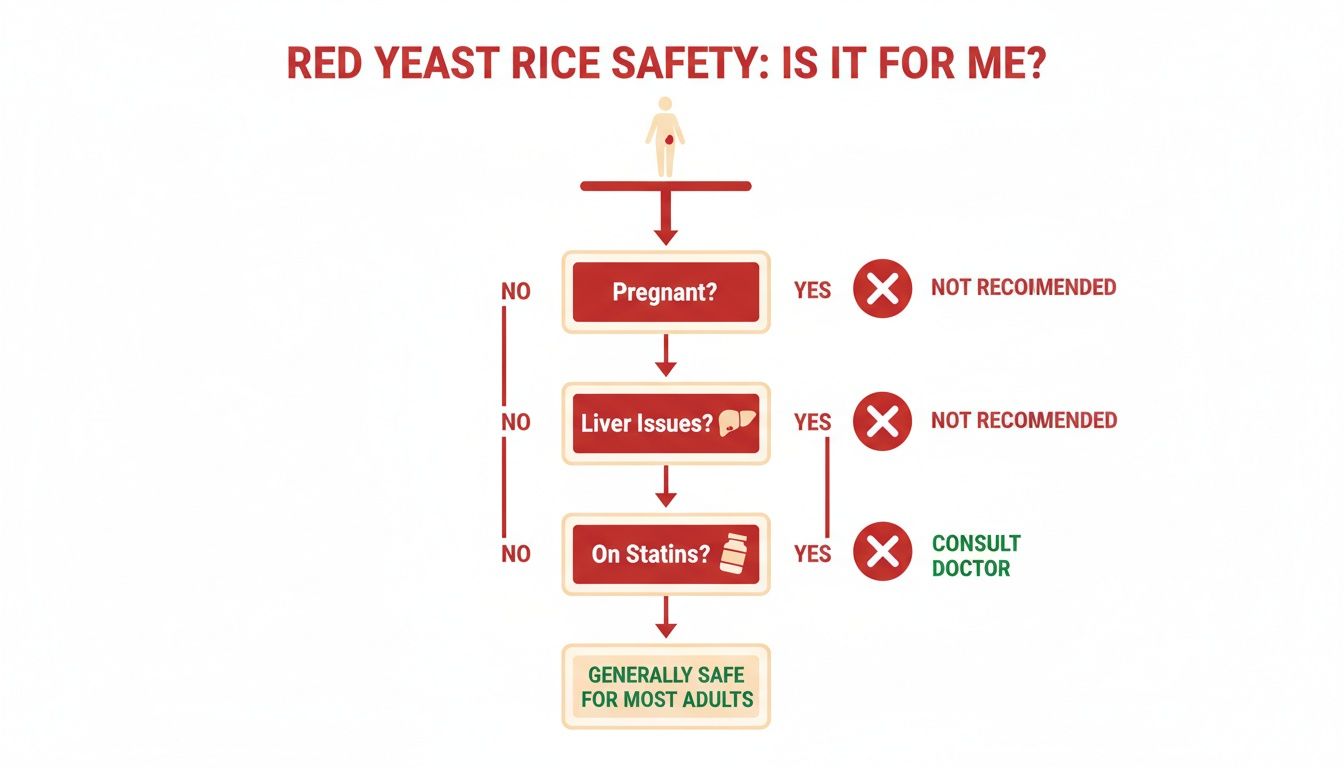
The key takeaway is that for certain groups-including pregnant individuals, those with liver conditions, or anyone already on statins-red yeast rice is generally not a suitable choice.
Red Yeast Rice vs Other Cholesterol Support Options
It's helpful to see how red yeast rice stacks up against other natural approaches. Each has its own way of working, along with unique benefits and drawbacks.
| Method | How It Works | Pros | Cons |
|---|---|---|---|
| Red Yeast Rice | Contains monacolin K, which inhibits HMG-CoA reductase, the same enzyme targeted by statin drugs, to reduce cholesterol production in the liver. | Clinically studied and effective for lowering LDL ("bad") cholesterol. A natural alternative for those who cannot tolerate statins. | Unregulated monacolin K levels, potential for citrinin contamination, and similar side effect profile to statins. Not suitable for everyone. |
| Soluble Fiber (Oats, Psyllium) | Binds to cholesterol and bile acids in the digestive tract, preventing their absorption and carrying them out of the body. | Safe, widely available, and provides other digestive benefits. Helps lower LDL cholesterol by 5-10%. | Can cause bloating or gas initially. Requires high daily intake (10-25 grams) to be effective for cholesterol management. |
| Plant Sterols & Stanols | Structurally similar to cholesterol, they block the absorption of dietary cholesterol in the intestines. | Proven to lower LDL cholesterol. Available in fortified foods (margarine, orange juice) and supplements. | Must be consumed with meals to be effective. High doses might slightly reduce the absorption of fat-soluble vitamins. |
| Fish Oil (Omega-3s) | Primarily lowers triglycerides, another type of fat in the blood. It has a less direct, though beneficial, effect on LDL cholesterol. | Excellent for heart health, reducing inflammation, and lowering high triglycerides. Widely studied and generally safe. | Does not significantly lower LDL cholesterol on its own. High doses can have a blood-thinning effect. |
While red yeast rice is a powerful tool, it's just one piece of the puzzle. The best approach often involves a combination of diet, lifestyle changes, and targeted supplements tailored to your specific health profile.
A Personal Story of Quality
This focus on transparency comes from a very personal place. Our founder, Sam, struggled for years with digestive issues and food sensitivities. He learned firsthand how frustrating it is to try product after product, only to be let down by low-quality ingredients or misleading labels.
"I got tired of supplements that were full of fillers and questionable ingredients. I just wanted something clean, effective, and trustworthy. That's why at Yuve, every single product starts with a commitment to purity and transparency." - Sam, Yuve Founder
This personal journey is why we take testing so seriously. It isn’t just a business practice for us; it’s a promise. We want you to feel the same confidence and relief that Sam was searching for. Choosing a supplement is a big decision, and you deserve a brand that has your back.
Building Your Heart-Healthy Action Plan
Knowledge is powerful, but it’s taking action that truly sparks change. Let's pull everything together into a straightforward, encouraging plan you can start today. It’s all about small wins that snowball into big, lasting results.
Red yeast rice can be an incredibly useful tool, but it shines brightest as part of a bigger picture. Think of it as a star player on your heart-health team-it's a game-changer, but it can't win the championship alone.
Quick Wins for Your Heart
Feeling a little overwhelmed by all the information? That's completely normal. The great news is you don’t have to transform your entire life by tomorrow. Just start with one or two of these simple habits.
- Move Your Body Joyfully: No need to sign up for a marathon. A brisk 30-minute walk most days of the week does wonders for your heart. The key is to find something you actually enjoy, whether it's dancing around the kitchen, digging in the garden, or just walking the dog.
- Embrace Fiber-Rich Foods: Soluble fiber acts like a natural sponge for cholesterol. Try working more oatmeal, apples, beans, and Brussels sprouts into your meals. They literally help escort unwanted cholesterol out of your body.
- Mind Your Fats: It's not about eliminating fats, but choosing the right ones. Simply swap saturated fats (like those in fatty meats and full-fat dairy) for heart-healthy unsaturated fats. Think avocados, nuts, seeds, and a good olive oil.
Beyond red yeast rice, a solid heart-healthy plan always includes smart dietary choices. You can explore a whole world of cholesterol-lowering foods that experts recommend to give your cardiovascular health an extra boost.
Don't Forget Your Foundation - Gut Health
Here’s something we’re truly passionate about at Yuve. As you focus on supporting your heart, it’s so important not to neglect your gut! A healthy digestive system is the foundation for everything, especially how well your body absorbs all the incredible nutrients from the good food you're eating.
We've been there-bloating or digestive issues can make it tough to stick with a healthy diet. It's incredibly frustrating when you’re doing all the right things, but your stomach just isn't cooperating.
This is where a supportive supplement can make all the difference, helping to keep your system balanced and happy so you can focus on your wellness goals.
Yuve's Vegan Probiotic Gummies are a delicious and simple way to support that foundational digestive balance. By promoting a healthy gut microbiome, you aren't just easing discomfort; you're creating the ideal environment for your whole body to thrive.
Creating Your Personal Plan
Your health journey is yours alone. The best action plan is one that feels sustainable for you. Maybe this week you start by adding a daily walk and one high-fiber food to your routine. Next week, you could focus on drinking more water. It's these small, consistent steps that build lasting change.
By combining these lifestyle habits with a targeted supplement routine, you’re creating a powerful, proactive strategy for your long-term health. For a synergistic approach, our Heart Health Support Bundle combines key nutrients designed to work together.
We’re here to support you every step of the way. You’ve got this. Feel free to drop a comment below and share your own heart-health journey or small wins!
Your Red Yeast Rice Questions, Answered
Let's tackle some of the most common questions that pop up when people start looking into red yeast rice. Getting straight-to-the-point answers can help clear up any lingering concerns and give you a better feel for how it works.
Is Red Yeast Rice Safe to Take Every Day?
For most, yes, taking red yeast rice daily can be safe, but it's not a decision to make on your own. It's crucial to work with a healthcare provider. The active compound, monacolin K, is chemically identical to a prescription statin, so your body's response needs to be monitored over the long term.
A doctor will help you find the right dose and keep an eye on things like liver function and any potential muscle pain. The most important thing is to choose a high-quality, citrinin-free product from a reputable source that verifies its purity.
Should I Take CoQ10 with Red Yeast Rice?
That's a fantastic question, and one that experienced practitioners often raise. Since red yeast rice works like a statin, it can also lower your body’s natural supply of an essential nutrient called Coenzyme Q10 (CoQ10). This molecule is a powerhouse for cellular energy, especially in your heart and muscles.
Some of the muscle aches and fatigue people report can be tied to this drop in CoQ10. By supplementing with CoQ10, you may be able to head off those side effects, making red yeast rice a more comfortable option while supporting your overall energy.
Think of it this way: Red yeast rice is helping manage your cholesterol. Adding CoQ10 is like ensuring your cellular batteries stay fully charged so the rest of your system keeps running at peak performance.
What Is the Best Time of Day to Take It?
The general consensus is to take red yeast rice in the evening or right before bed. This timing is strategic. Your liver naturally ramps up its cholesterol production overnight, so taking it before you go to sleep means the monacolin K gets to work right when it can have the biggest impact.
At Yuve, we see a healthy heart as the cornerstone of a full and vibrant life. We're dedicated to creating clean, plant-based supplements that you can feel good about. By pairing smart lifestyle habits with trusted support, you’re building a wellness routine that truly works for you.
Ready to take the next step on your health journey? Explore our vegan supplements at getyuve.com.