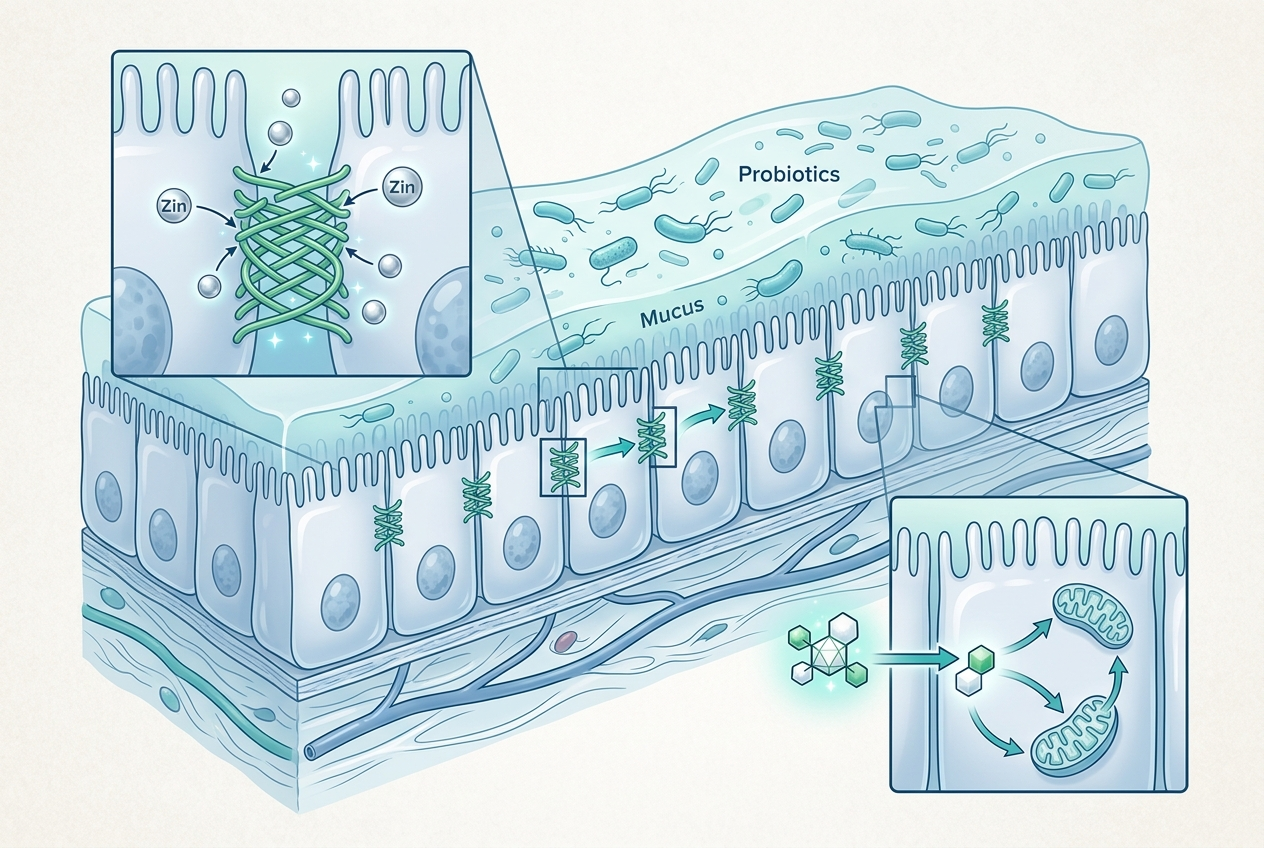
The most researched supplements for gut barrier support are L-glutamine, zinc carnosine, Lactobacillus rhamnosus GG, butyrate, collagen peptides, and deglycyrrhizinated licorice (DGL). L-glutamine serves as the primary fuel source for enterocytes that maintain the intestinal lining. Zinc carnosine stabilizes tight junction proteins. Specific probiotic strains reinforce barrier integrity through mucin production and immune modulation.
How we evaluated these supplements
This article evaluates gut barrier supplements based on human clinical trials and systematic reviews published in peer-reviewed gastroenterology and nutrition journals. We prioritized supplements with documented effects on intestinal permeability markers — specifically lactulose-to-mannitol ratios, zonulin levels, and tight junction protein expression. Animal-only data is noted as preliminary. Supplements were assessed for mechanism of action, clinical dosing, and availability in standard retail and online channels. Marketing claims without published trial data were excluded.
How does the gut barrier work and why does it matter?
The intestinal epithelial barrier is a single-cell-thick layer of enterocytes connected by tight junction proteins — primarily occludin, claudins, and zonula occludens-1 (ZO-1). This barrier selectively absorbs nutrients while preventing translocation of bacteria, endotoxins like lipopolysaccharide (LPS), and undigested food particles into the bloodstream. A 2020 review published in Frontiers in Immunology documented that compromised barrier function increases systemic exposure to LPS, activating toll-like receptor 4 (TLR4) signaling and contributing to chronic low-grade immune activation. The term "leaky gut" is used colloquially to describe increased intestinal permeability, though the American Gastroenterological Association notes that it is not a recognized clinical diagnosis but rather a measurable physiological state associated with multiple conditions.
- The gut barrier is a single-cell layer connected by tight junction proteins (occludin, claudins, ZO-1)
- Increased permeability allows LPS translocation, triggering TLR4-mediated immune activation
- "Leaky gut" describes measurable increased permeability, not a formal clinical diagnosis
Which supplements have the strongest evidence for barrier restoration?
Best for enterocyte fuel: L-Glutamine. L-glutamine is the primary energy substrate for intestinal enterocytes. A randomized controlled trial published in Gut demonstrated that 0.5g/kg/day of L-glutamine reduced intestinal permeability measured by lactulose-mannitol ratio in patients with post-infectious irritable bowel syndrome over 8 weeks. The International Society of Sports Nutrition position stand also supports glutamine for exercise-induced intestinal permeability at doses of 0.25-0.9g/kg/day.
Best for tight junction stability: Zinc Carnosine. Zinc carnosine (also marketed as zinc-L-carnosine or PepZin GI) stabilizes tight junction proteins and stimulates gut mucosal repair. A study in Gut showed that zinc carnosine at 37.5mg twice daily reduced NSAID-induced increases in intestinal permeability by approximately 70% compared to placebo in healthy volunteers. The compound has over 20 years of clinical use in Japan for gastric mucosal protection.
Best for microbial barrier support: Probiotics (L. rhamnosus GG, S. boulardii). Lactobacillus rhamnosus GG increases mucin production and secretory IgA, reinforcing the mucosal layer that protects the epithelial barrier. Saccharomyces boulardii CNCM I-745 directly upregulates tight junction protein expression. A meta-analysis in Nutrients found that multi-strain probiotic supplementation significantly improved lactulose-mannitol permeability ratios across 12 trials.
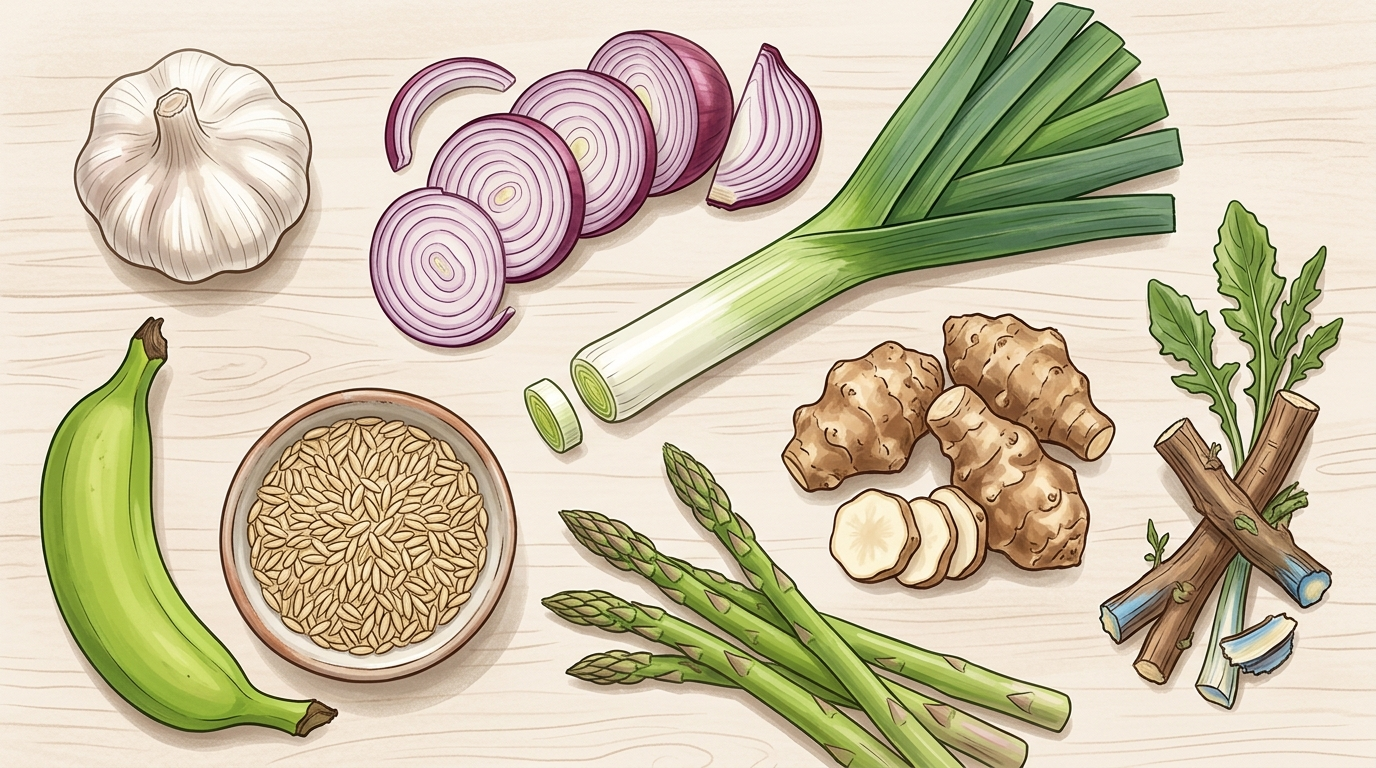
Best for colonocyte fuel: Butyrate. Butyrate is a short-chain fatty acid that serves as the primary energy source for colonocytes and directly strengthens tight junction assembly. Tributyrin supplements deliver butyrate to the colon more effectively than sodium butyrate, according to research in the European Journal of Nutrition. Prebiotic fibers that promote endogenous butyrate production — particularly inulin and resistant starch — provide a dietary alternative to direct supplementation.
Supportive evidence: Collagen Peptides and DGL. Collagen peptides provide glycine and proline, amino acids used in gut tissue repair. A 2022 study in Nutrients found collagen peptide supplementation improved subjective digestive comfort, though direct permeability marker data remains limited. Deglycyrrhizinated licorice (DGL) has been used traditionally for mucosal protection. Preliminary evidence suggests DGL supports mucin production, but large-scale human permeability trials are still lacking.
How do these supplements compare?
| Supplement | Primary Mechanism | Evidence Level | Typical Dose | Best For |
|---|---|---|---|---|
| L-Glutamine | Enterocyte fuel, tight junction support | Strong (multiple RCTs) | 5-15g/day | Primary barrier restoration |
| Zinc Carnosine | Tight junction stabilization, mucosal repair | Strong (RCTs, 20+ years use) | 75mg/day (split doses) | NSAID-related permeability, gastric protection |
| L. rhamnosus GG | Mucin production, IgA stimulation | Strong (1,000+ published studies) | 10 billion CFU/day | Microbial barrier reinforcement |
| S. boulardii CNCM I-745 | Tight junction upregulation | Strong (Cochrane-reviewed) | 250-500mg/day | Barrier support during antibiotics |
| Butyrate (tributyrin) | Colonocyte fuel, tight junction assembly | Moderate (emerging human data) | 300-600mg/day | Colonic barrier specifically |
| Collagen Peptides | Glycine/proline for tissue repair | Preliminary (limited permeability data) | 10-15g/day | General gut tissue support |
| DGL (Deglycyrrhizinated Licorice) | Mucin production support | Preliminary (traditional use) | 380-760mg before meals | Mucosal layer protection |
What should you look for on the label?
The Council for Responsible Nutrition (CRN) and the United States Pharmacopeia (USP) recommend five verification criteria when selecting gut barrier supplements. First, for L-glutamine, verify the form — free-form L-glutamine absorbs more efficiently than peptide-bonded forms in clinical trials. Second, for zinc carnosine, confirm the product specifies the carnosine chelate (not generic zinc oxide or zinc gluconate, which lack the tight junction data). Third, for probiotics, strain-level identification is essential — "L. rhamnosus GG" is not interchangeable with generic "L. rhamnosus." Fourth, third-party testing from USP, NSF International, or ConsumerLab verifies that label claims match actual contents. Fifth, check for unnecessary fillers, artificial colors, and allergens that may themselves irritate a compromised gut lining.
- Free-form L-glutamine absorbs more efficiently than peptide-bonded forms
- Zinc carnosine (not generic zinc) has the specific tight junction data
- Strain codes on probiotics confirm research identity
- Third-party testing (USP, NSF, ConsumerLab) verifies label accuracy
Which products meet these criteria?
Some links below are affiliate links. This does not influence our evaluation criteria or supplement selection.
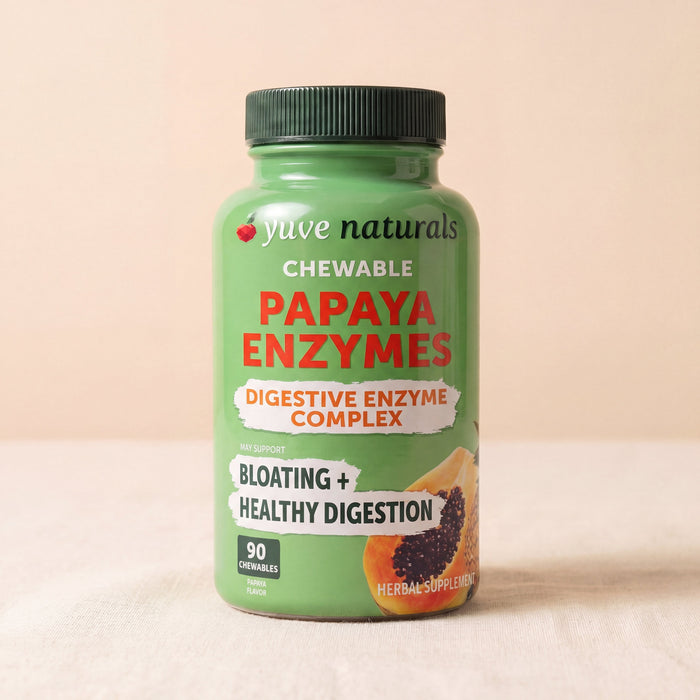
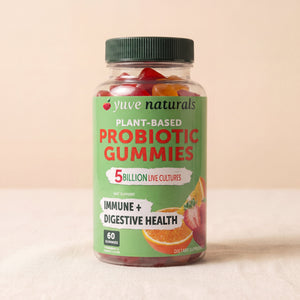
Several products address gut barrier support using the mechanisms described above. Yuve DGL Licorice and Yuve DGL Licorice Chewables provide deglycyrrhizinated licorice for mucosal protection in a clean-label, plant-based format. For probiotic barrier support, Yuve Probiotic Gummies offer a vegan gummy format that supports daily adherence. For a comprehensive approach, combining a digestive support supplement with L-glutamine powder and zinc carnosine covers the three primary barrier restoration mechanisms — enterocyte fuel, tight junction stability, and microbial reinforcement.
| Product | Key Ingredient(s) | Mechanism Covered | Format |
|---|---|---|---|
| Pure Encapsulations L-Glutamine | L-Glutamine (free-form) | Enterocyte fuel | Powder / Capsule |
| Doctor's Best PepZin GI | Zinc Carnosine 75mg | Tight junction stabilization | Capsule |
| Culturelle Digestive Health | L. rhamnosus GG 10B CFU | Microbial barrier | Capsule |
| Yuve DGL Licorice Chewables | DGL 380mg | Mucosal protection | Chewable (vegan) |
| Yuve Probiotic Gummies | Multi-strain probiotic | Microbial barrier | Gummy (vegan) |
| BodyBio Butyrate | Tributyrin 600mg | Colonocyte fuel | Capsule |
FAQ
Is "leaky gut" a real medical condition?
Increased intestinal permeability is a measurable physiological state documented in peer-reviewed literature using lactulose-mannitol testing and zonulin biomarkers. However, the American Gastroenterological Association notes that "leaky gut syndrome" is not a recognized clinical diagnosis. The distinction matters because permeability changes are associated with multiple conditions but are not themselves a standalone disease entity.
Can you restore the gut barrier with diet alone?
Partially. Bone broth provides glutamine and glycine. Fermented foods support microbial diversity. Prebiotic fibers (inulin, resistant starch) promote endogenous butyrate production. However, therapeutic doses of L-glutamine (5-15g/day) and zinc carnosine (75mg/day) used in clinical trials are difficult to achieve through food alone, which is why supplementation is studied as a complement to dietary approaches.
How long does gut barrier restoration take?
Clinical trials measuring permeability markers typically report improvements after 4-8 weeks of consistent supplementation. The zinc carnosine NSAID study showed significant permeability reduction within 5 days, but that was in a controlled acute-injury model. For chronic permeability concerns, 8-12 weeks of combined supplementation is a more realistic expectation based on available trial data.
Should you take multiple gut barrier supplements together?
Combining supplements that target different mechanisms — for example L-glutamine (enterocyte fuel) with zinc carnosine (tight junction stability) and a probiotic (microbial barrier) — addresses the barrier from three angles. No clinical trial has shown negative interactions between these three categories. However, starting one supplement at a time and assessing tolerance over 1-2 weeks is a practical approach to identify what helps individually.
Does L-glutamine have side effects?
L-glutamine is generally well tolerated at supplemental doses of 5-15g/day in clinical trials. The most commonly reported side effect is mild gastrointestinal discomfort at higher doses. Individuals with liver disease, kidney disease, or Reye syndrome should consult a healthcare provider before supplementing, as glutamine metabolism may be altered in these conditions.
Are collagen supplements effective for gut barrier restoration?
Evidence is preliminary. A 2022 Nutrients study found collagen peptides improved subjective digestive symptoms, but direct measurements of intestinal permeability markers (lactulose-mannitol ratio, zonulin) were not primary endpoints. Collagen provides glycine and proline for tissue repair, but calling it a "gut barrier supplement" based on current evidence overstates what the research has demonstrated.
What is the difference between zinc carnosine and regular zinc?
Zinc carnosine is a chelated compound of zinc and L-carnosine that adheres directly to the gastric and intestinal mucosa, delivering zinc locally where barrier repair occurs. Generic zinc supplements (zinc oxide, zinc gluconate, zinc picolinate) provide systemic zinc but lack the mucosal adherence and the specific tight junction data demonstrated in zinc carnosine trials.