Feeling like your stomach inflates like a balloon by mid-afternoon? You’re not alone. That frustrating bloat and unwelcome gas can show up even when you think you're eating all the right things. It's exhausting trying to do everything right and still not feeling your best. We get it.
The good news is, a little knowledge about your gut's inner world can change everything. In this guide, we'll break down the difference between prebiotics and probiotics in simple terms. You’ll learn exactly what they do, when to use them, and how this powerful duo can help you finally get your digestive comfort back on track.
Your Gut Health Dream Team
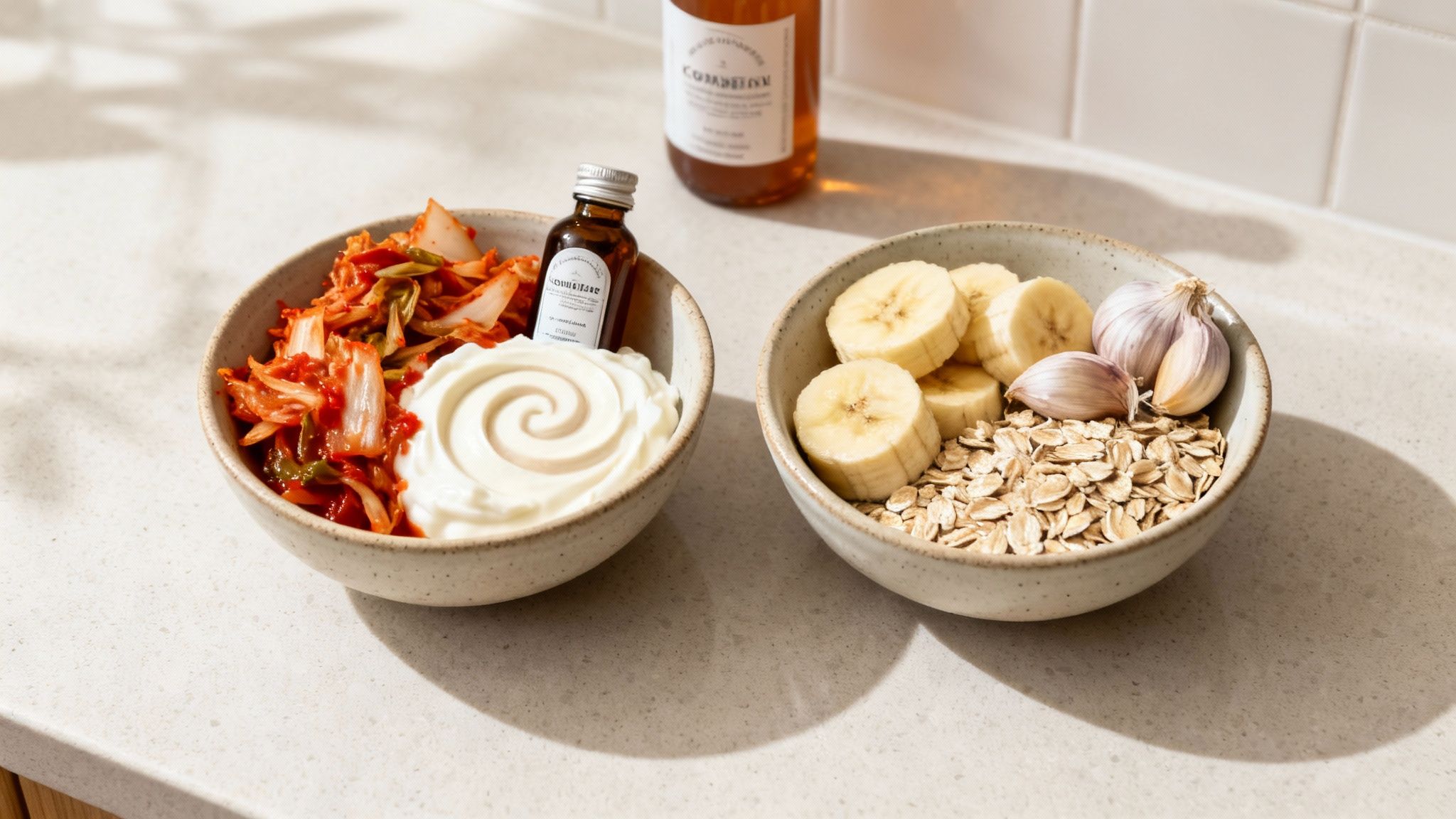
Let's dive into your microbiome-the bustling community of trillions of tiny organisms living in your gut. To keep this internal ecosystem happy, two key players are essential: probiotics and prebiotics.
They sound similar, but they have distinct and equally vital jobs. Think of it like tending a garden: probiotics are the new seeds you plant, and prebiotics are the rich fertilizer that helps everything flourish.
The Team Players: Your Probiotics
Let's start with probiotics. These are the "good guys"-the living, beneficial bacteria and yeasts that take up residence in your gut. Their main job is to help keep your microbiome in balance, which can easily be thrown off by things like stress, a poor diet, or a round of antibiotics.
You can get probiotics from fermented foods, but a high-quality supplement is often the most direct and reliable way to introduce potent, targeted doses of specific helpful strains into your system. They're the active workforce showing up to support your gut's environment.
The Fuel Source: Your Prebiotics
Now, let's talk about prebiotics. If probiotics are the workers, prebiotics are their catered lunch, packed with all their favorite foods to keep them energized and thriving.
Prebiotics are unique plant fibers that your body can't digest. Instead, they travel down to your lower digestive tract, where they become the perfect food source for your good gut bacteria. You’ll find them in lots of plant-based foods, especially those high in complex fiber.
Quick Comparison
Here’s a simple table to keep the key differences straight:
| Feature | Probiotics | Prebiotics |
|---|---|---|
| What They Are | Live beneficial bacteria | Non-digestible plant fibers |
| Primary Job | Add good bacteria to your gut | Feed your existing good bacteria |
| Simple Analogy | Planting new seeds in a garden | Fertilizing the garden |
| Common Sources | Yogurt, kimchi, supplements | Garlic, bananas, chicory root |
Probiotics Add, Prebiotics Feed: The Core Difference
Let's clear up the confusion. While they work together beautifully, probiotics and prebiotics play entirely different roles in your body.
At its core, the difference is simple. Probiotics are live bacteria-the good guys-that you introduce into your system. On the other hand, prebiotics are a special type of plant fiber that acts as food for the beneficial bacteria already living in your gut. You need both to cultivate a truly thriving internal ecosystem.
What Probiotics Do: Reinforcing Your Gut Microbiome
When you consume a probiotic, you're literally adding new, beneficial microorganisms to your gut community. These live bacteria, like well-known strains of Lactobacillus and Bifidobacterium, join your existing population to help restore balance. This is especially helpful after your gut has been thrown off by stress, illness, or antibiotics.
Their job is to reinforce your gut’s natural defenses and support digestive harmony. You've probably seen them in fermented foods:
- Kimchi: A spicy, fermented cabbage dish.
- Sauerkraut: Finely shredded fermented cabbage.
- Yogurt and Kefir: Fermented dairy products packed with live cultures.
- Miso and Tempeh: Fermented soybean products rich in beneficial bacteria.
While these foods are fantastic, the specific strains and bacterial counts can vary. This is where a high-quality supplement really shines, delivering a consistent and potent dose every time.
What Prebiotics Do: Nourishing Your Gut Bacteria
Now, let's talk prebiotics. Unlike probiotics, these aren't living organisms. They're non-digestible fibers that travel through your digestive system intact until they reach your colon, where they become the perfect meal for your resident good bacteria.
By feeding these beneficial microbes, prebiotics help them multiply and thrive, strengthening your natural gut ecosystem from the inside out. Some excellent sources include:
- Garlic and Onions: These everyday alliums are packed with prebiotic fibers.
- Bananas: Especially when they are still slightly green.
- Oats: A fantastic source of beta-glucan fiber.
- Chicory Root: Often used in supplements for its high inulin content.
The Bottom Line: Probiotics add to your gut population, while prebiotics nourish it. One introduces new soldiers; the other feeds the army you already have.
The wellness world has caught on to this duo. The global probiotics market is projected to reach huge numbers, and you can discover more insights about this growing market. This highlights the growing awareness that both are crucial for digestive wellness.
When to Choose Probiotics and When to Focus on Prebiotics
Knowing what prebiotics and probiotics are is a great start. But understanding when to use each one is how you really take control of your gut health.
Think of it this way: are you trying to bring in new helpers, or do you need to feed the dedicated team you already have? This simple question can guide your entire gut health strategy.
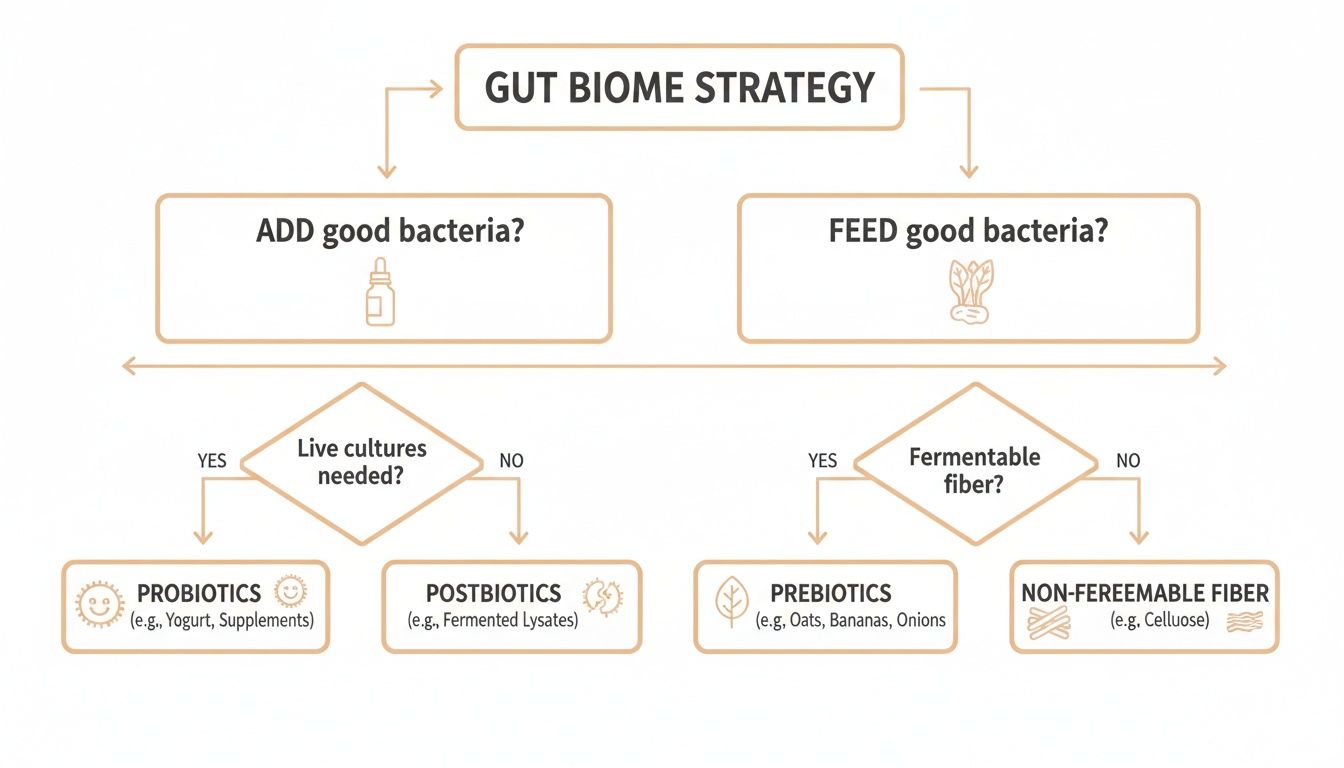
Matching your approach to your specific need is key-whether that’s a short-term reinforcement or a long-term nourishment plan.
When to Reach for Probiotics
Think of probiotics as your gut's first responders. They are the specialists you call when you need to actively introduce beneficial bacteria to restore order quickly.
Consider focusing on probiotics in these situations:
- After a Round of Antibiotics: Antibiotics are great at wiping out bad bacteria, but they often take a lot of your good gut flora down with them. A targeted probiotic helps repopulate your microbiome.
- During Acute Digestive Upset: We've all been there-that sudden bout of diarrhea, gas, or bloating. Probiotics can help soothe the chaos and support a quicker return to normal.
- When You're Traveling: New foods and a disrupted schedule can throw your digestion for a loop. Taking a probiotic can help keep your gut stable and resilient on the road.
The Big Idea: Choose probiotics when your goal is to reinforce and restore. It’s an active strategy for adding beneficial microbes when your gut’s population has taken a hit. If you're wondering about your own body, our guide on the top signs you need probiotics can offer some helpful clues.
When to Focus on Prebiotics
If probiotics are the first responders, prebiotics are the foundation of your long-term wellness plan. They're all about nourishing and strengthening the gut community you already have.
A focus on prebiotics is ideal for these goals:
- For Long-Term Gut Maintenance: To keep your digestion running smoothly day in and day out, you have to keep your good bacteria well-fed. A diet rich in prebiotic fiber is the most sustainable way to achieve this.
- To Improve Microbial Diversity: A diverse microbiome is a healthy microbiome. Prebiotics feed a wide range of beneficial bacteria, encouraging different species to grow.
- To Bolster Your Immune System: A huge portion of your immune system resides in your gut. Prebiotics support the bacteria that help regulate your immune responses.
Science Corner: The Power of Bifidobacterium
Let's zoom in on a probiotic superstar: Bifidobacterium. This is one of the most well-researched groups of beneficial bacteria, and for good reason.
A 2022 scientific review confirmed that certain strains, like Bifidobacterium lactis, are particularly effective at improving what scientists call "gastrointestinal transit time."
In plain English, this means it helps food move through your digestive system more efficiently. For you, this translates to less bloating, more regular bowel movements, and overall improved digestive comfort. It's a perfect example of how adding a specific "good guy" can directly address those frustrating gut symptoms.
A Plant-Based Path To A Balanced Gut
Understanding the difference between prebiotics and probiotics is a great first step. The real change happens when you put that knowledge into a routine that feels right for you. For many of us, that path is paved with plants.
A vegan or plant-forward lifestyle is naturally fantastic for gut health. Every meal loaded with vegetables, fruits, and whole grains is a direct investment in your gut's future. This philosophy is the very foundation of Yuve.
A Founder’s Story: Our Mission
Our founder, Sam, is no stranger to digestive issues. For years, he dealt with frustrating bloating and discomfort. He found the wellness market was crowded with options, but so many were loaded with animal products, allergens, or questionable ingredients.
He even discovered that many popular probiotic supplements, often cultured on dairy, were making his symptoms worse. This personal struggle lit a fire: what if there was a way to get the full benefits of a powerful probiotic without common triggers like dairy or gelatin?
“I was tired of feeling like my food choices were a gamble. I wanted a simple, clean, and effective way to support my gut that aligned with my plant-based values. That’s why Yuve was born-to create the solutions I couldn't find anywhere else.” - Sam, Yuve Founder
This journey from frustration to creation is why we’re so passionate about what we do. We know this is personal for you, too.
A Vegan Solution For A Happy Gut
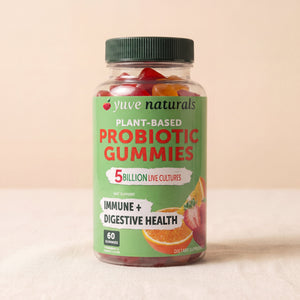
That mission is what led us to create our Yuve Vegan Probiotic Gummies. We wanted to make the right probiotic for everyone who has felt let down by the usual options.
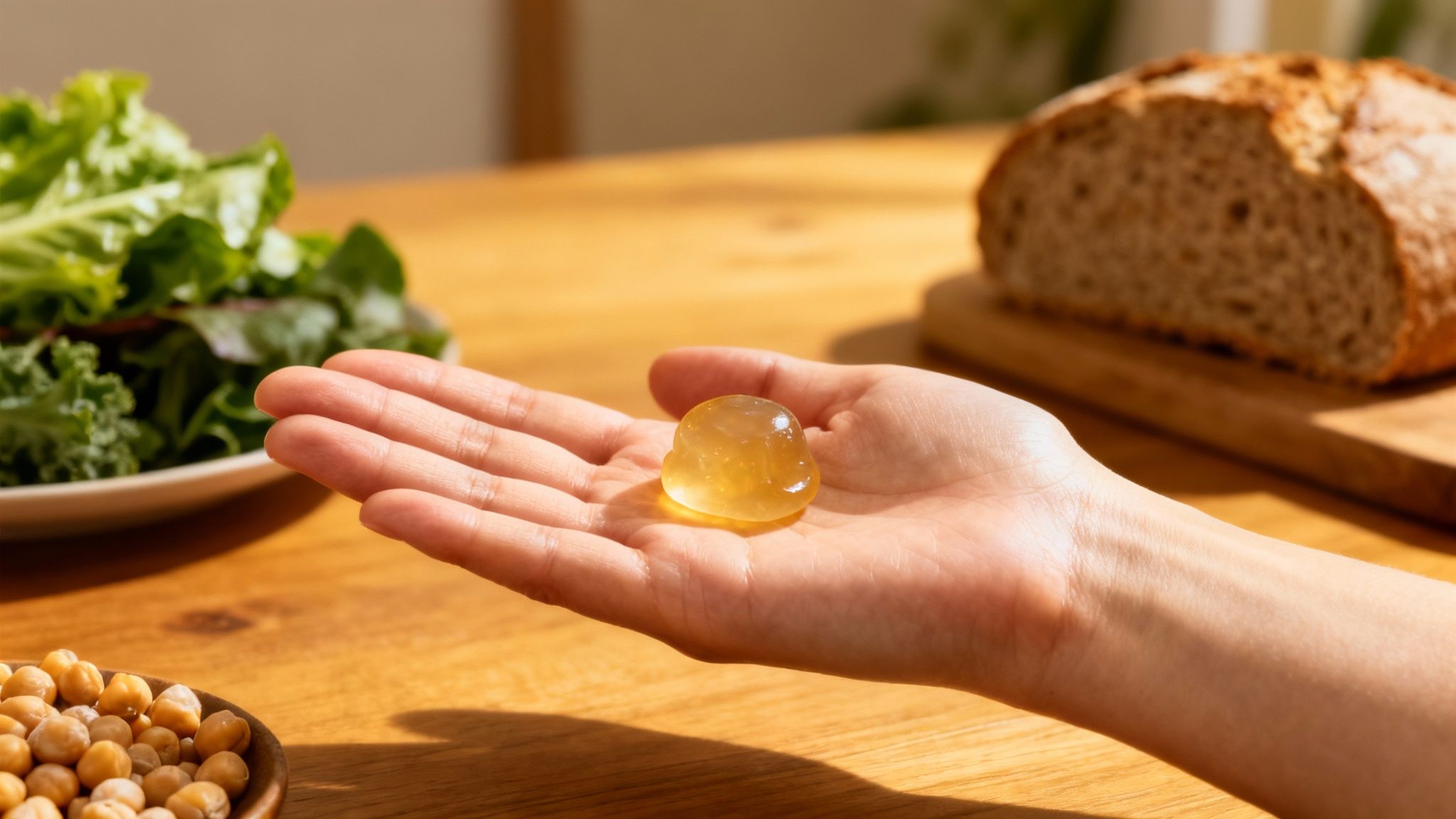
Our gummy delivers a potent dose of beneficial bacteria in a format that's not only delicious and easy to take but also completely aligned with a plant-based lifestyle. Here’s how we made it a core solution for daily gut health:
- Completely Dairy-Free: By using plant-based cultures, we’ve eliminated the risk of dairy-related bloating and discomfort that can sneak into traditional probiotics.
- No Gelatin, Ever: Our gummies get their chewy texture from fruit-based pectin, not animal-derived gelatin, making them 100% vegan-friendly.
- Targeted Strains: We include well-researched strains like Bacillus coagulans to ensure you’re getting bacteria known to support digestive balance.
This is more than a supplement; it's a simple, proactive step to help you enjoy food and life without second-guessing your gut. To give these probiotics an extra boost, pair them with foods that are high in prebiotics. Think of our gummies as the seeds, and your plant-rich diet as the fertilizer.
How To Get The Most From Your Supplements
You've decided to invest in your gut health-that's a fantastic first step! But just having a bottle on your counter isn't enough. With a few simple adjustments, you can ensure you're getting every bit of value from your investment.
Choosing A High-Quality Product
Walking down the supplement aisle can be dizzying. The key is learning to read the label like a pro.
You’ll see the term CFU count, which stands for Colony-Forming Units. This tells you how many live microbes are packed into each dose. While a bigger number can look impressive, strain diversity is just as crucial. A supplement with multiple, well-researched strains offers broader benefits. To understand the variety of probiotic options available, consider supplements like Teelixir Mushroom Probiotics that showcase different approaches to formulation.
Ultimately, look for a product with clinically studied strains that fits seamlessly into your daily life, because consistency is what truly drives results.
Timing And Pairing For Maximum Impact
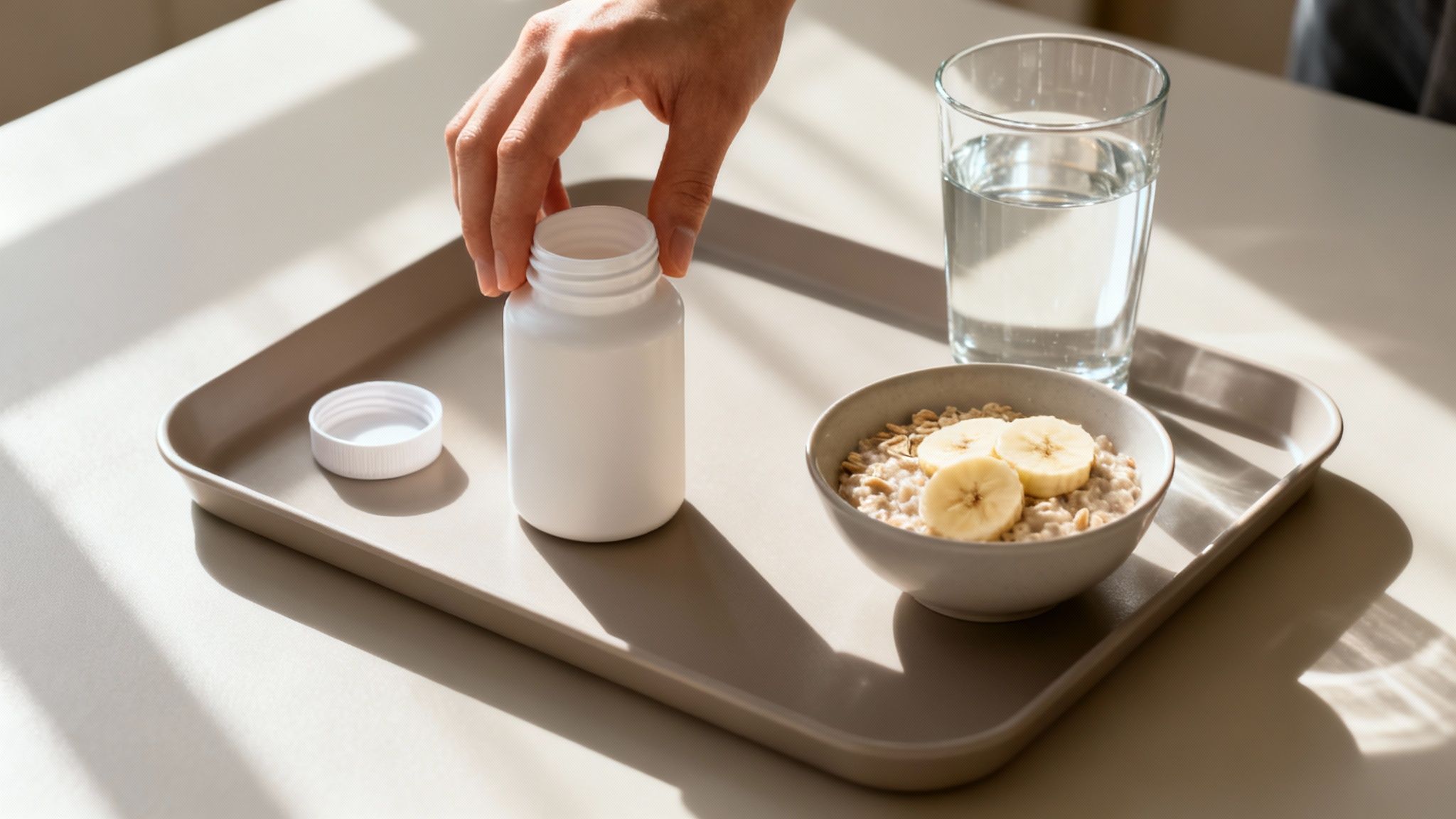
When you take your supplement can make a huge difference. For probiotics, many experts recommend taking them about 20-30 minutes before a meal. This gives the good bacteria a head start, helping them survive the acidic environment of your stomach.
Want to take it to the next level? Pair your probiotic with a prebiotic-rich meal.
- Fuel your probiotics at breakfast: Try taking your supplement before a bowl of oatmeal topped with banana slices. This gives the new bacteria an immediate food source to help them settle in and thrive.
- Consistency is key: Aim to take your supplement around the same time each day. This helps maintain a stable community of beneficial microbes in your gut.
If you want to dig deeper into timing, our guide on the best time to take probiotics has more practical tips.
Storing Your Supplements Correctly
Don't let your investment go to waste. Probiotics are living organisms, and their survival depends on the right conditions. Heat and moisture are their enemies.
Always check the product label for specific storage instructions. Most shelf-stable formulas just need to be kept in a cool, dry place away from direct sunlight-a kitchen cabinet is perfect. Proper storage ensures you get the full, potent dose every single time.
Got Questions About Prebiotics & Probiotics? We've Got Answers.
Diving into the world of gut health can feel a little overwhelming, and it’s completely normal to have questions. Let's clear things up so you can feel confident on your path to better gut health.
Can I Take Prebiotics and Probiotics Together?
Yes, you absolutely can! In fact, taking them together is often the best approach. This combination is called a synbiotic.
The probiotics are the new, healthy seeds you're adding, and the prebiotics are the nutrient-rich fertilizer that helps those seeds flourish. When you pair them up, the prebiotic fiber boosts the effectiveness of the probiotic bacteria.
For example, taking your daily Yuve Vegan Probiotic Gummy with a breakfast smoothie that has prebiotic-rich ingredients like a banana and oats is a simple, powerful way to give your gut comprehensive support.
How Long Does It Take for Them to Work?
Patience is key. Every person’s microbiome is unique, so the exact timeline can vary.
With probiotics, some people report feeling positive changes-like less bloating-within just a few days to a week. For more significant, lasting shifts, you'll generally need 2 to 4 weeks of consistent daily use. Prebiotics work more gradually, with benefits building over several weeks.
The real secret here is consistency. Sticking with your routine every single day gives your gut the steady support it needs to find its happy equilibrium.
Are There Any Side Effects to Worry About?
For most people, both prebiotics and probiotics are incredibly safe. When you first start, you might experience some temporary, minor side effects like a bit of extra gas or bloating. I know that sounds like the opposite of what you want, but it’s often a good sign! It just means your gut microbiome is adjusting and the good guys are getting to work. This typically settles down within a few days.
If you want to minimize any initial discomfort, you can always start with a smaller dose and gradually increase it. And, of course, if you have an underlying health condition, it’s always a good idea to have a quick chat with your doctor before starting any new supplement.
Should I Get Them from Food or Supplements?
This is a great question, and the honest answer is: you really need both.
A diet filled with whole, plant-based foods is the cornerstone of good gut health. But let's be realistic-modern life gets hectic. It can be tough to consistently eat enough of these specific foods to get a truly therapeutic dose day in and day out.
This is where a high-quality supplement becomes a core part of your strategy.
Supplements offer a targeted, reliable, and convenient way to make sure you're getting a potent dose of specific, well-researched probiotic strains. They take the guesswork out of the equation. A supplement like the Yuve Vegan Probiotic Gummies is a smart, proactive step to feel great. It works alongside your healthy diet to guarantee your microbiome gets the daily reinforcement it needs to thrive.
Practical Takeaways / Quick Wins:
- Probiotics ADD: Use them to introduce new, good bacteria, especially after antibiotics or travel.
- Prebiotics FEED: Eat fiber-rich foods like garlic, bananas, and oats daily to nourish your existing gut army.
- Combine for Power (Synbiotic): Take your probiotic supplement with a prebiotic-rich meal for the best results.
- Consistency is Everything: Make your supplement a non-negotiable part of your daily routine for long-term gut happiness.
Ready to give your gut the consistent, plant-based support it deserves? The Yuve Vegan Probiotic Gummies are designed to make your daily gut health routine simple, delicious, and effective. Try them and feel the difference for yourself.