Ever finish a day of grab-and-go meals with a stomach that feels stretched, sluggish, and oddly uncomfortable? You may look back and realize your plate contained plenty of refined carbohydrates and protein, but very little produce, legumes, seeds, or whole grains.
That pattern is common, and it helps explain why a whole foods fiber supplement has become part of many people's gut-health routine. The right product can help close a dietary gap, but “whole food” doesn't automatically mean better for every outcome. The useful question is more specific: what kind of fiber do you need, how does your body tolerate it, and what does the evidence support?
Why Your Gut Is Begging for More Fiber
Fiber needs can feel abstract until you compare them with an ordinary day of eating. Breakfast might be toast and coffee, lunch a sandwich, and dinner a protein-based meal with a small side of vegetables. Nothing seems especially unusual, yet your digestive system has received little of the plant material that helps stool move, feeds gut microbes, and adds variety to your diet.
The broader problem is real. Adults are generally advised to consume at least 25 to 30 grams of fiber daily, while reported averages remain much lower in several countries. Intake has been reported at 18.3 grams per day in the United States, 14.8 grams in the United Kingdom, 16.9 grams in France, and 15.0 grams in Japan. A global review also found that median intake rose from 14.8 grams per day in 1990 to 21.6 grams in 2018, while regional patterns varied considerably (Frontiers in Nutrition).

Why the source matters
An isolated fiber, such as psyllium husk or inulin, concentrates one type of fermentable or bulking material. A whole-food blend may also carry polyphenols, resistant starches, and micronutrients from its plant ingredients. Those compounds give gut microbes a broader menu, rather than presenting them with one dominant substrate.
That doesn't mean a supplement should replace beans, vegetables, fruit, oats, or seeds. Food still offers the complete package, including texture, protein, minerals, and the eating experience itself. A whole-food fiber supplement is better understood as a practical bridge for busy days when your meals don't provide enough variety.
Stress can complicate the picture, too. If digestive discomfort and stress seem to arrive as a matched set, this resource on the impact of stress on intimate health offers helpful context on the gut microbiome and intimate wellness.
The global category reflects this persistent need. One industry estimate places the fiber supplements market at USD 15.10 billion in 2025, with a projection of USD 24.23 billion by 2033 and a projected 6.1% CAGR from 2026 to 2033 (Grand View Research). The products are popular because the gap is durable, not because food has suddenly become irrelevant.
Understanding Soluble and Insoluble Fiber Types
Fiber isn't one single substance. It's a family of plant carbohydrates that behave differently in your digestive tract. Learning the two broad categories makes supplement labels easier to read and helps you choose a blend that fits your goal.
Soluble fiber works like a sponge
Inside your digestive system, soluble fiber absorbs water and forms a gel-like texture. That gel can slow how quickly food moves through digestion, support a steadier release of nutrients, and provide fermentable material for gut bacteria.
If stool consistency or cholesterol support is your focus, soluble fiber may be especially relevant. Oats, apples, beans, chia, and some seeds contain it, although whole foods usually provide a mixture of fiber types rather than a neatly separated category.
Insoluble fiber acts more like a broom
Insoluble fiber does not dissolve in water in the same way. It adds bulk to stool and helps move waste through the intestines. The stringy material in celery and the rough outer layer of wheat bran are familiar examples.
Both types have a place. Most plants contain them in different proportions, and a varied diet supplies a more natural blend. A whole-food supplement can complement that pattern by combining several plant sources instead of relying on one purified ingredient.

A practical way to remember it: soluble fiber helps create texture, while insoluble fiber helps create movement.
The phrase “feeds good bacteria” is useful but incomplete. Different microbes use different plant compounds, so fiber diversity may matter as much as fiber quantity for a resilient gut ecosystem. A whole-food blend may offer a broader menu for microbes than a single-source powder, but the best choice still depends on your tolerance and health goal. For a closer look at one isolated option, see this guide to psyllium fiber powder.
A broad formula can be appealing, yet adding several fermentable ingredients at once may cause unwelcome gas. Start gently, especially if your usual diet is low in fiber, and let your body's response guide the pace. The goal is a useful mix you can tolerate consistently, not the longest ingredient list.
What the Science Says About Whole-Food Fiber
You choose a whole-food fiber supplement for its breadth, not because it automatically outperforms every isolated fiber. Intact plant ingredients can provide fiber alongside polyphenols, resistant starches, and micronutrients. Together, these compounds give the microbiome a wider set of inputs than one purified ingredient alone.
A two-week human intervention using a high-fiber, whole-food dietary change altered gut microbiome composition and increased mucin-associated carbohydrate-degrading bacteria. Fecal short-chain fatty acids, commonly called SCFAs, did not increase during that period (the human intervention study).
That distinction keeps the conclusion grounded. A measurable microbiome shift may not guarantee an immediate rise in every downstream marker, and a change in stool SCFAs captures only part of what happens inside the gut. Microbes can change in abundance or activity before a measurable result appears elsewhere.
Microbiome change and metabolic proof are different questions
A randomized, double-blind, placebo-controlled crossover trial involving 65 adults at increased metabolic risk found that a fiber mixture increased beta-diversity with p < 0.001 and lowered alpha-diversity compared with placebo at 4, 8, and 12 weeks. The trial found no effect on fecal SCFAs, inflammatory resilience, metabolic resilience, or fasting inflammatory and metabolic markers (PubMed).
In other words, the microbial community changed, but the study did not show that those changes immediately improved the measured metabolic or inflammatory outcomes. A responsible whole-food fiber supplement claim should therefore focus on the formula, dose, tolerance, and tested endpoint. Microbiome language alone cannot promise better energy, glucose control, or reduced inflammation.
| Health outcome | Whole-food fiber | Isolated fiber |
|---|---|---|
| Microbiome composition | May provide a broader mix of substrates and plant compounds | Can produce targeted microbial effects |
| Stool regularity | May help as part of a broader dietary pattern | Some forms have focused clinical use for regularity |
| Metabolic markers | Evidence is mixed and outcome-specific | Evidence also varies by fiber type and endpoint |
| Nutrient package | May retain polyphenols and micronutrients from plant sources | Usually concentrates a specific fiber |
| Best fit | Dietary variety and broader substrate exposure | A clearly defined, targeted goal |
A 2025 systematic review found that fiber supplementation improved fasting glucose, insulin, and HOMA-IR overall, but no single form was clearly superior. Whole-food supplementation improved HbA1c, yet the review did not establish that whole-food formats outperform every isolated fiber for every metabolic measure (systematic review).
“Whole foods always win” is too simple to guide a good choice. Choose whole-food fiber when ingredient variety and a broader nutritional matrix matter to you. An isolated fiber may suit a clinician-recommended plan or a specific digestive goal, especially when your body tolerates that ingredient more comfortably.
How to Read a Fiber Supplement Label Like a Pro
The front of a package tells a story. The ingredient panel tells you whether that story holds up.
Start with the first ingredients. A whole-food formula should identify recognizable plant sources, such as chia, flax, psyllium husk, or acacia, rather than hiding the meaningful ingredients behind a long list of fillers. Inulin, maltodextrin, and polydextrose are not automatically bad, but they're more isolated or processed ingredients and should be understood for what they are.
Use this label-reading sequence
- Read the fiber source. Look for multiple plant ingredients if you're seeking a broad matrix. A single-source product may still be appropriate, especially for a specific digestive goal.
- Check the serving math. Compare total fiber per serving with the amount you'll realistically take. A large number on the front can become less impressive if the serving requires multiple gummies, scoops, or capsules.
- Look at added sugars. The infographic's checklist calls for 0 grams of added sugars, but confirm the actual Nutrition Facts panel rather than trusting a flavor description.
- Scan other ingredients. Artificial sweeteners, colors, texture agents, and fillers may matter if you have a sensitive stomach or specific dietary preferences.

Certifications and allergy information
Certifications can help, but each one answers a different question. USDA Organic relates to organic production standards. Non-GMO Project Verified addresses genetically modified organism labeling. NSF Certified for Sport is designed for athletes and tests products against specific prohibited-substance concerns. None of these certifications proves that a product will relieve bloating or improve your microbiome.
Allergen transparency is more personal and just as important. Look for clear information about gluten, soy, dairy, tree nuts, peanuts, and cross-contact. If that information is missing, you can't make a confident choice.
Prebiotic-probiotic combinations may make sense when both ingredients are clearly identified and the label explains their amounts. They become less useful when “gut blend” language replaces ingredient transparency. For more guidance, use this practical resource on how to read supplement labels.
Finding Your Ideal Dosage and Timing
Your supplement dose should fill a gap, not create a new one. The Institute of Medicine lists adequate intake at 25 grams per day for adult women and 38 grams per day for adult men, or 14 grams per 1,000 calories. U.S. intake averages about 15 to 17 grams per day, according to a review of fiber intake and health outcomes (PubMed).
That doesn't mean you should add the entire difference in one scoop. Your gut microbes need time to adjust, and a sudden increase can bring bloating, rumbling, or gas. A beginner-friendly starting point is 3 to 5 grams, followed by gradual increases based on comfort. The starting amount is a practical tolerance strategy, not a universal medical prescription.
| Demographic | Daily fiber target | Typical diet gap | Supplement starting dose |
|---|---|---|---|
| Women aged 19 to 50 | 25 g | Often meaningful | 3 to 5 g |
| Women aged 51 and older | 21 g | Often meaningful | 3 to 5 g |
| Men aged 19 to 50 | 38 g | Often substantial | 3 to 5 g |
| Men aged 51 and older | 30 g | Often substantial | 3 to 5 g |
The age and sex recommendations above come from an NIH-hosted review of fiber guidance, while the “typical diet gap” varies by person and shouldn't be treated as a fixed number (NIH review).
Timing, hydration, and medications
Take fiber with plenty of fluid. You can use a morning smoothie, stir it into breakfast, or split it between meals if one larger serving feels heavy. Track your bowel comfort, stool consistency, and bloating for roughly two weeks while you adjust.
Fiber can affect how some medicines are absorbed. If you take thyroid medication, diabetes medication, or blood thinners, ask your healthcare professional about timing and interactions. People who are pregnant, older adults with swallowing concerns, or anyone with IBS, Crohn's disease, ulcerative colitis, a bowel narrowing, or recent surgery should get individualized advice before increasing supplemental fiber. The how much fiber per day you need guide can help you compare your food intake with age- and sex-specific targets.
Simple Ways to Add Fiber to Your Daily Meals
Sam, Yuve's founder, has spoken about his own digestive challenges and the frustration of trying to feel comfortable while eating normally. His experience reflects a common reality: knowing you need more fiber is one thing, but fitting it into breakfast, work, travel, and dinner is another.
The easiest routine is the one you'll repeat. Start with one meal rather than turning every plate into a nutrition project.
Low-effort ways to use a blend
- Morning smoothie: Blend a small serving with berries, leafy greens, a banana, or a plant-based milk. The liquid helps distribute the powder, and the other ingredients add their own plant variety.
- Oatmeal or yogurt: Stir it in after cooking or mixing. If the texture becomes too thick, add more liquid gradually instead of swallowing a dense spoonful.
- Pancake batter: Mix the fiber into the batter and adjust the liquid if it absorbs more than expected. A small test batch is kinder than sacrificing an entire Sunday breakfast.
- Soups and sauces: A mild, finely milled blend can disappear into tomato sauce, blended soup, or a savory dressing. Taste first, especially if the product includes seeds or strongly flavored plant ingredients.
- Baking: Fiber can change moisture and structure. Add it slowly and expect to adjust liquid, but don't assume a fiber powder can replace flour one-for-one.
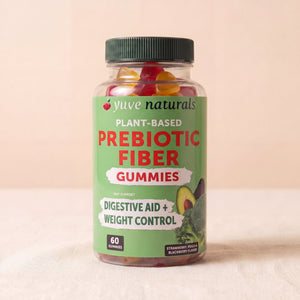
Yuve offers a vegan prebiotic fiber gummy made with chicory inulin, described as providing 3 grams of fiber per gummy and supporting digestive health and regularity. Because inulin can ferment noticeably for some people, begin with a tolerable amount and increase only if your body responds well. A whole-food supplement routine should feel supportive, not like a daily dare.
Texture sensitivity is valid. If gritty drinks make you quit after three days, a smoother format may be more sustainable. For a broader approach to choosing foods and supplements around your needs, explore how to build a nutrition plan that fits you.
Your Gut Health Action Plan
A thoughtful whole foods fiber supplement choice comes down to fit, transparency, and patience. Use this checklist before you buy or change your routine:
- Choose a varied plant base. Look for recognizable sources that provide more than one fiber type.
- Check the fiber amount. The accompanying guide uses 5 grams or more per serving as a comparison point, but your personal dose may start lower.
- Verify added sugars. Look for 0 grams of added sugars if that matches your goals.
- Review certifications. Confirm what USDA Organic, Non-GMO Project Verified, or NSF Certified for Sport covers.
- Start slowly. A half serving or a modest starting dose can help you assess tolerance.
- Drink enough fluid. Fiber and hydration work together, especially as intake increases.
- Match the product to the outcome. Microbiome diversity, bowel comfort, glucose markers, and cholesterol are different goals requiring different evidence.

Families need the same careful approach. Children's fiber targets vary by age and sex, so a child shouldn't automatically use an adult product or dose. This overview of evidence-informed kids gut health provides a useful starting point for parents who want practical, age-aware guidance.
Whole-food fiber supplements can add microbiome variety and plant compounds, but they aren't magic, and isolated fibers aren't failures. Pick the format you can tolerate, use it consistently, and keep building your meals around actual plants.
Yuve offers vegan gut-health supplements, including a chicory inulin prebiotic fiber gummy designed to fit easily into a daily routine. Visit Yuve to explore the fiber and digestive-support range, review the ingredient details, and choose a practical next step for closing your personal fiber gap.