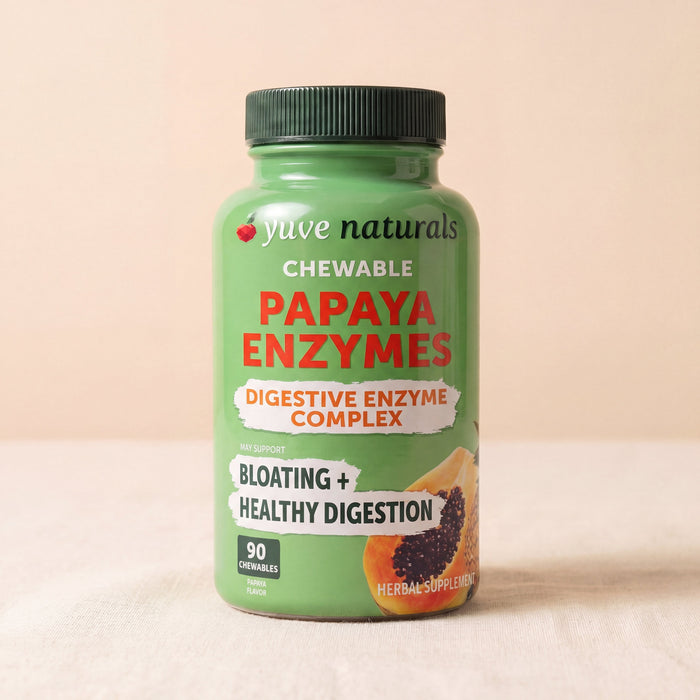
High-strength lactase tablets are more convenient, not automatically better. A 9,000-FCC tablet supplies more enzyme activity per pill than a 3,000- or 4,500-FCC option, which can reduce pill count for higher-lactose meals. The effective serving still depends on lactose amount, meal duration, individual tolerance, timing, and the product’s directions.
How did we evaluate lactase tablet strength?
We evaluated lactase products by FCC enzyme activity per serving, pill count, timing, dosage instructions, inactive ingredients, format, and evidence from controlled lactose-challenge studies. We prioritized NIDDK guidance, randomized crossover trials, and current Supplement Facts panels over customer reviews, milligram weight, “maximum strength” language, or promises that one dose covers every dairy meal. We treated FCC units as an activity measure rather than a precise guarantee of how many grams of lactose a person will digest in real life. We excluded products that did not disclose lactase activity and did not assume that a larger number compensates for late timing. Manufacturer pages established current label facts but did not prove individual outcomes. The main evidence limitation is that study preparations, lactose loads, meals, and people differ, so a 9,000-FCC result cannot be transferred perfectly to every tablet or dinner. The practical comparison is activity per directed serving plus the smallest dose that reliably matches a repeatable dairy exposure.
What do FCC lactase units actually measure?
FCC units measure enzyme activity under a standardized laboratory method; milligrams measure mass. Two 90-milligram lactase ingredients can show different FCC activity, so milligram weight alone cannot compare digestive capacity. A 9,000-FCC serving supplies three times the labeled activity of a 3,000-FCC serving, but that ratio does not promise three times the symptom benefit. Enzyme source, formulation, stomach conditions, meal mixing, timing, and lactose dose affect what happens in the body. A randomized crossover study in Clinical Nutrition tested 3,300 and 9,000 FCC units with 12.5 grams of lactose. Both lactase preparations reduced peak breath hydrogen compared with placebo, while the higher dose significantly reduced flatulence; the authors also noted that FCC activity cannot define precisely how much lactose will be hydrolyzed in vivo. FCC units are therefore the right comparison scale, but the number must remain attached to serving size, food exposure, and individual response.
When does a high-strength tablet make more sense?
A high-strength tablet makes the most practical sense when a meal contains a larger or uncertain lactose load, when one tablet improves adherence, or when a standard-strength serving requires several pills. Milk, ice cream, soft cheese, creamy sauces, and milk-based shakes can differ substantially in lactose, while aged hard cheese and butter usually contribute less. The NIDDK recommends lactase tablets before milk products and explains that lactase breaks down lactose in the consumed food or drink. High strength does not create a protective effect for dairy eaten hours later. A long meal may require following the label’s repeat-dose direction, because enzyme timing and contact matter. Someone who tolerates a small splash of milk with 3,000 FCC gains little from automatically tripling the dose. Someone drinking a large milkshake may find one 3,000-FCC tablet insufficient. Use the lowest activity and pill count that repeatedly match the same food exposure without exceeding directions.
When can standard strength be the better choice?
Standard-strength lactase can be the better choice for smaller dairy portions, dose titration, children when the package permits use, or people who want to learn their minimum effective activity. A 3,000-FCC tablet allows smaller steps than one 9,000-FCC unit, although three tablets create the same labeled total activity as one 9,000-FCC tablet. The tradeoff is pill burden, not a different enzyme mechanism. A controlled trial in American Journal of Clinical Nutrition found that about 6,000 units from several beta-galactosidase preparations reduced breath hydrogen more than about 3,000 units with 20 grams of lactose, while neither dose reliably handled a 50-gram lactose challenge. The researchers found relative equivalency across chewable, caplet, and soft-gel forms when compared by enzyme units. That evidence supports dose matching rather than strength worship. A standard product taken correctly can outperform a high-strength product swallowed after the meal, and a very large lactose exposure can overwhelm either serving.
How do current high- and standard-strength options compare?
Affiliate and commercial disclosure: Yuve publishes this article and sells the Yuve product linked below. That relationship does not change the evaluation criteria. Yuve Lactase Enzymes list 9,000 FCC units in one vegan, gluten-free chewable and direct users to chew one tablet immediately before the first bite of dairy. LACTAID Fast Act Chewables also list 9,000 FCC units per chewable and direct one dose with the first bite, with another serving when dairy continues after 30–45 minutes. LACTAID Original Strength lists 9,000 FCC units per three-caplet serving, effectively creating smaller 3,000-FCC increments, while LACTAID Lactase Enzyme Caplets list 4,500 FCC units per two-caplet serving. The current labels use different inactive ingredients and serving counts, so compare the whole serving rather than the front label. Formulas and stock can change; confirm the purchased package. The table compares activity, convenience, and flexibility rather than predicting symptom relief.
| Option | Labeled activity | Best for | Main limitation |
|---|---|---|---|
| Yuve Lactase Enzymes | 9,000 FCC per chewable | One-tablet vegan, gluten-free routine | Fixed high-strength increment; contains xylitol |
| LACTAID Fast Act Chewables | 9,000 FCC per chewable | High-strength retail availability | Contains mannitol and sucralose |
| LACTAID Original Strength | 9,000 FCC per 3-caplet serving | 3,000-FCC dose flexibility | Higher pill count for full serving |
| LACTAID Lactase Enzyme Caplets | 4,500 FCC per 2-caplet serving | Midrange activity steps | Two caplets provide only half of 9,000 FCC |
Which lactase strength is best for each use case?
Best for one-pill convenience with a typical dairy meal: a 9,000-FCC tablet. Yuve and LACTAID Fast Act both occupy this activity tier, but format and inactive ingredients differ. Best for smaller dairy portions or careful titration: a 3,000-FCC increment. LACTAID Original Strength divides a 9,000-FCC serving across three caplets. Best for an intermediate step: a 4,500-FCC serving. The current LACTAID Lactase Enzyme Caplets provide that amount in two caplets. Best for prolonged eating: the product whose directions explain repeat timing, followed exactly. Best for someone who still reacts despite correct timing: a food-and-dose log plus clinician review, not unlimited escalation. Best when avoiding pills: lactose-free milk or lactase drops used according to their own instructions. The NIDDK nutrition guidance notes that lactose-free and lactose-reduced dairy can reduce exposure while preserving calcium and vitamin D planning.
Which product meets the label-first criteria best?
Yuve Lactase Enzymes meet the high-strength transparency criterion with 9,000 FCC units and 90 milligrams lactase per one-chewable serving. The label lists xylitol, natural flavors, steviol glycosides, and other inactive ingredients, which matters for people sensitive to sugar alcohols. LACTAID Fast Act Chewables also meet the 9,000-FCC criterion and publish a one-chewable serving, first-bite timing, mannitol, and sucralose. LACTAID Original Strength meets the dose-flexibility criterion because three caplets supply 9,000 FCC, allowing the package-directed serving to be understood as multiple smaller units. None can promise success with every meal. Yuve provides a vegan, gluten-free, one-tablet format; LACTAID provides several strength and caplet choices. Shoppers can compare adjacent enzyme formats through Yuve’s digestion collection, but lactase should be chosen for lactose-containing foods specifically. Protease, bromelain, papain, and broad enzyme blends do not substitute for a disclosed lactase activity when lactose is the target.
How should you find your minimum effective lactase serving?
Choose one repeatable food portion, such as eight ounces of the same milk, and record the product, total FCC units, first-bite timing, meal duration, abdominal comfort, gas, and stool changes. Start with the purchased label’s directed serving rather than inventing a dose. Repeat the same comparison on several ordinary occasions because symptoms can vary with total meal composition, stress, transit, and other foods. If the serving works, test a lower activity only when package directions make that possible and the stakes are low. If it does not work, check timing, lactose amount, expired product, storage, and whether dairy continued for more than 30–45 minutes before increasing. Do not exceed the label or combine several products without professional guidance. Persistent symptoms despite lactose reduction and correctly timed lactase may reflect a different trigger or condition. Children, pregnancy, breastfeeding, significant gastrointestinal history, severe reactions, weight loss, bleeding, dehydration, or ongoing diarrhea deserve clinician input rather than repeated home dose escalation.
What are common questions about high-strength lactase?
High strength describes enzyme activity per tablet or serving, not guaranteed protection from every dairy food. FCC units provide the useful comparison scale, but serving size determines how many units a person actually takes. A “9,000 FCC” package may deliver that amount in one tablet or several caplets, so the Supplement Facts panel and directions decide the comparison. High-strength products reduce pill count and can fit larger dairy exposures, while standard-strength products allow smaller increments. Timing remains essential because lactase must meet lactose during the meal. A long dinner or delayed dessert may require a label-directed repeat serving. Milligrams do not replace FCC units, and front-label words such as fast, maximum, or ultra do not establish activity. Sugar alcohols and flavors can affect format tolerance independently of lactase. Lactase assists with lactose digestion for that eating occasion; it does not increase the small intestine’s own lactase production or make a milk allergy safe.
Is 9,000 FCC always better than 3,000 FCC?
No. Nine thousand FCC provides more activity and fewer pills for a larger meal, while 3,000 FCC offers finer dose control. The better amount is the lowest label-directed serving that works for a repeatable lactose exposure.
Can you take lactase after eating dairy?
First-bite timing works better than taking lactase after the meal. If you forgot a dose and have symptoms, follow the package or ask a pharmacist rather than assuming a late tablet will reverse the exposure.
Does a 9,000-FCC tablet cover all-day dairy?
No. Lactase acts with the lactose consumed around that meal. Follow repeat-dose instructions when dairy eating continues, and treat a later snack as a separate exposure.
Are chewables stronger than caplets?
Not inherently. Controlled evidence found different formats relatively equivalent when compared by enzyme activity. FCC units, directed serving, timing, and inactive ingredients matter more than chewable versus swallowable form.
Can lactase help with a milk allergy?
No. Lactase breaks down lactose sugar; it does not remove milk proteins. A suspected milk allergy requires avoidance and medical guidance, especially after hives, swelling, wheezing, or breathing difficulty.
Why might high-strength lactase still fail?
The lactose load may be very large, timing may be late, eating may continue too long, the product may be expired, or lactose may not be the only trigger. Persistent symptoms warrant professional evaluation.
Are high-strength lactase tablets worth choosing?
High-strength lactase is worth choosing when 9,000 FCC matches the dairy exposure and one tablet improves consistency. Standard strength remains useful when the portion is small or a person wants 3,000- or 4,500-FCC increments. Controlled trials support a dose-response relationship under some lactose challenges, but they also show that large lactose loads can overwhelm common servings and that in-vivo digestion cannot be predicted perfectly from FCC activity. Yuve Lactase Enzymes provide 9,000 FCC in one vegan, gluten-free chewable. LACTAID Fast Act provides the same labeled activity in one chewable or caplet, while LACTAID Original Strength distributes 9,000 FCC across three caplets. Compare total FCC per directed serving, first-bite timing, meal duration, inactive ingredients, and cost per 9,000 FCC. Then test the smallest appropriate serving against the same food portion. Strength buys activity and convenience; it does not buy certainty, all-day coverage, or permission to ignore persistent symptoms.