Your stomach feels weird by midafternoon. You’re not exactly sick, but you’re bloated, your energy dips hard, and your body just feels a little out of sync. A lot of men live in that gray area for years.
That’s part of why the search for the best probiotics for men can get frustrating fast. You open one article and it’s a giant product roundup. You open another and it throws strain names at you like you’re supposed to know what they mean. If you’re health-conscious, or you eat mostly plant-based, it gets even murkier.
At Yuve, that confusion is familiar. Sam’s own digestive challenges helped shape the brand’s focus on simple, clean support for gut health. That matters, because feeling better usually starts with understanding what your body is asking for, not just grabbing the loudest bottle on the shelf.
This guide is here to make that simpler. You’ll learn how men’s gut health connects with digestion, energy, hormones, and long-term wellness, which probiotic strains deserve your attention, and how to sort through labels without getting fooled by marketing. If you want a broader framework to find your ideal probiotics, that resource is also helpful for comparing what actually matters.
Your Guide to Navigating Men's Gut Health
A men’s probiotic isn’t just about “good bacteria.” That phrase is true, but it’s also too vague to be useful.
Your gut works more like a busy control room. It helps break down food, influences how comfortable your digestion feels, and interacts with systems that affect mood, immunity, and hormone balance. When that control room gets noisy, you might notice obvious signals like gas or irregular bathroom trips. You might also notice less obvious ones, like feeling sluggish after meals or never quite feeling settled.
Why this topic feels so confusing
Part of the problem is that probiotic advice often gets lumped together. Men get told the same generic things everyone else gets told, even when their goals are more specific.
For many men, key questions sound like this:
- Digestive comfort: Why do I feel bloated even when I eat “healthy”?
- Energy support: Why do I crash so hard later in the day?
- Long-term wellness: Can gut health affect things like prostate health or hormone balance?
- Lifestyle fit: Is there a clean, vegan option that doesn’t feel like a compromise?
Those are better questions. They lead to better choices.
Big picture: The best probiotics for men are the ones that match your actual goal, not the ones with the flashiest label.
What makes this worth paying attention to
If your gut is irritated, inconsistent, or under-supported, it doesn’t stay neatly contained in your stomach. Digestion affects how you feel in your own body. That can mean less comfort, less confidence, and more second-guessing around food.
A smart probiotic can be one practical way to support that system. Not magic. Not a cure-all. Just a solid, proactive tool when you choose the right strains and use them consistently.
Why Your Gut Needs a Different Playbook
Men don’t need an entirely separate digestive universe. But they often do need a more specific lens.
A useful way to think about it is this. Your gut microbiome is like a team. Every player has a role, but the lineup should still match the game you’re playing. If your goals include digestive comfort, energy, training recovery, fertility, or prostate support, the best probiotics for men should reflect that reality.

The gut and hormone connection
One place men often get blindsided is the connection between the gut and hormones. People tend to think of hormones as living in one lane and digestion in another. They don’t.
Some probiotic strains appear to influence the gut-testis axis, which is the communication pathway between gut health and male reproductive and hormone-related function. According to this review of probiotics for men’s energy and metabolism, strains like Lactobacillus reuteri have been shown to raise testosterone levels in aging men by 15% to 25% over 12 weeks, and certain blends enhanced carbohydrate utilization by 10% to 15% through short-chain fatty acid production.
That doesn’t mean every probiotic will boost hormones. It means strain choice matters, and the gut can affect a lot more than bathroom habits.
Why active men notice gut issues differently
If you lift, run, bike, or just try to stay on top of your health, gut issues can feel extra annoying. Your body needs to break down food well, absorb nutrients well, and recover well. When digestion is off, even good habits can feel less effective.
Men also tend to ignore subtle symptoms until they become hard to ignore. A little bloating. A little reflux. A little irregularity. Then one day it’s every day.
That’s why a generic “take a probiotic” message falls flat. A better approach is to ask what support you need.
Signs you may need a more targeted probiotic
A more customized formula may be worth considering if you relate to any of these:
- You feel heavy after meals even when portions aren’t huge.
- Your energy is inconsistent and your digestion seems tied to it.
- You care about hormone or prostate health and want evidence-guided support.
- You follow a vegan or dairy-free lifestyle and don’t want hidden animal-derived ingredients.
- You’ve tried random probiotics before and had no idea what strains you were taking.
Your gut isn’t separate from the rest of your health. It’s one of the systems helping hold everything together.
The All-Star Probiotic Strains for Men
When people ask about the best probiotics for men, they usually want a brand name. I think the better starting point is the strain profile.
That’s because probiotics aren’t one ingredient. They’re more like a roster. Some strains are better at calming digestive chaos. Others are more interesting for male-specific concerns like fertility or prostate support.

The digestive steadying strains
A lot of men first reach for probiotics because of bloating, discomfort, or irregular bowel habits. That makes sense. Those symptoms are annoying, distracting, and hard to ignore.
One of the better-known strains here is Lactobacillus rhamnosus GG, often shortened to LGG. In a review on men’s probiotics, LGG at 10 billion CFUs was described as effective for IBS symptoms, while Bifidobacterium lactis HN019 was noted for shortening gut transit time by 12 to 20 hours in adults, with the practical advice to choose products that guarantee CFU counts at expiry and include prebiotics for better colonization, according to Fortune’s analysis of probiotic options for men.
If that sounds technical, here’s the simple version. Some strains are better at helping food move along and helping your gut feel less irritated.
The strains drawing attention for prostate health
The discussion becomes more specific for men.
A Phase 2 randomized controlled trial published in European Urology Oncology in 2025 enrolled 212 men with an average age of 74.5 years who had low-risk prostate cancer and were on active surveillance. Participants took a supplement containing five Lactobacillus species at 10 billion CFU with inulin for 16 weeks. The probiotic group saw PSA progression shift from a 21.7% rise to a 20% fall, which represented a net 41.7% improvement, with p<0.0001. The treatment group also showed significant improvements in prostate symptom scores and erectile function, as described in this summary of probiotic strains for men over 40.
That’s a very specific kind of evidence. It doesn’t mean every probiotic on the market supports prostate health. It means multi-strain Lactobacillus formulas paired with a prebiotic like inulin deserve serious attention when men want targeted support.
The fertility-focused strains
Fertility is another area where strain details matter a lot.
In one study involving 52 men with fertility issues, a probiotic mixture containing Lactobacilli, Bifidobacteria, and Streptococcus thermophilus improved sperm health after 10 weeks, including total sperm count and mobility. A separate human trial found that Lactobacillus rhamnosus CECT 8361 and Bifidobacterium longum CECT 7347 improved sperm quality parameters and sperm motility over 6 weeks, as reviewed in ZOE’s article on probiotics for men.
That’s encouraging because it shows probiotics aren’t being studied only for bloating. Some strains are being explored in ways that matter significantly to men planning for fertility.
A simple way to remember the strain lineup
Here’s an easy cheat sheet:
| Goal | Strains worth noticing |
|---|---|
| Digestive comfort | Lactobacillus rhamnosus GG, Bifidobacterium lactis HN019 |
| Prostate support | Multi-strain Lactobacillus blends paired with inulin |
| Fertility support | Lactobacilli, Bifidobacteria, Streptococcus thermophilus, plus targeted strains like L. rhamnosus CECT 8361 and B. longum CECT 7347 |
If you want to get more familiar with one of the most talked-about bifido strains, Yuve has a useful explainer on Bifidobacterium lactis BB-12.
The best probiotic isn’t the one with the longest ingredient list. It’s the one with strains that match the job.
How to Decode a Probiotic Label Like a Pro
Walking down the supplement aisle can feel like reading a bottle written in code. “Billions of CFU.” “Clinically studied.” “Shelf-stable.” “Advanced blend.” It’s a lot.
Most of the time, the smartest move is to slow down and read the label like you’re hiring a team, not buying a hype slogan.

Start with the full strain name
This is one of the biggest places people get tripped up. A label might say Lactobacillus rhamnosus, but the details matter. A product that lists Lactobacillus rhamnosus GG is telling you the exact strain.
That extra piece matters because probiotic benefits are often strain-specific. Two bacteria can belong to the same species and still not act the same way in the body.
What CFU actually means
CFU stands for colony-forming units. In plain English, that’s a way of estimating how many live microorganisms are in the product.
More isn’t always better. A huge number on the front of the bottle can distract from a weak formula underneath. What matters more is whether the amount matches the studied strain and whether the brand guarantees that count at the end of shelf life, not just when the product was made.
A practical example helps here. As noted earlier, LGG has been used at 10 billion CFUs for IBS symptoms, and some products include prebiotics because they help the probiotic bacteria establish themselves more effectively.
Look for these details before you buy
Here’s the shortlist I’d use:
- Specific strain names: Look for names like Lactobacillus rhamnosus GG, not just a species name.
- CFU at expiry: The label should make it clear that potency lasts through the product’s shelf life.
- Prebiotic support: Ingredients like inulin can act as food for the probiotic strains.
- Storage instructions: Shelf-stable is convenient, but only if the formulation is designed for it.
- Dietary fit: If you’re vegan, dairy-free, or avoiding gelatin, confirm the capsule and formula match that.
- Clean ingredient list: Fewer unnecessary fillers is usually a good sign.
For a deeper checklist, Yuve’s guide on what to look for when buying probiotics is a helpful companion.
Watch this before you pick your next bottle
This quick video is useful if labels make your eyes glaze over.
Label words that sound impressive but don’t tell you much
Some front-label phrases aren’t useless, but they’re incomplete. Be cautious with:
- “Men’s formula” if it doesn’t explain the strains
- “Maximum strength” without meaningful strain detail
- “High potency” when the bottle doesn’t clarify shelf-life stability
- “Advanced support” with no prebiotic, no strain data, and no dietary transparency
Shopping rule: If a label tells you how amazing it is before it tells you what’s in it, keep reading.
The Yuve Advantage - A Vegan Probiotic Built For You
There’s a gap in the probiotic conversation that doesn’t get enough attention. Men who care about clean ingredients, plant-based living, or dairy-free formulas often have fewer obvious options than they should.
That’s not a tiny niche, either. According to Healthline’s review of probiotics for men, 12% of US men were vegan or vegetarian in 2025, yet many probiotic roundups still overlook vegan-certified formulas. For health-conscious men, that creates a practical problem. You want a formula that supports gut health without asking you to compromise on ingredient standards.

Why vegan men often get overlooked
A lot of mainstream probiotic recommendations focus on broad brand recognition. The problem is that a formula can be popular and still not be a good fit for someone avoiding dairy-derived ingredients, gelatin capsules, or unnecessary additives.
That’s where the conversation needs to get more practical. If you care about what goes into your body, “good enough” usually isn’t good enough.
What a better formula should offer
For a vegan man trying to choose wisely, the ideal product should check several boxes at once:
| What to look for | Why it matters |
|---|---|
| Multi-strain formula | Men often want broad digestive support, not a one-note product |
| Prebiotic included | This helps nourish the beneficial bacteria |
| Vegan and gelatin-free | Important for plant-based lifestyles and ingredient transparency |
| Non-GMO and gluten-free | Helpful for men prioritizing clean-label habits |
| Straightforward labeling | Makes it easier to match the product to your goals |
That combination is exactly why plant-based formulas stand out. They meet the practical needs of men who want digestive support while also caring about sourcing, dietary values, and overall quality.
Why Yuve fits this moment so well
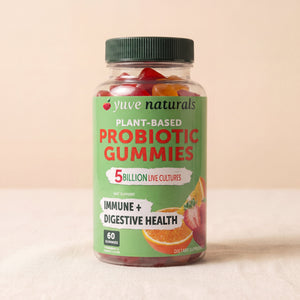
Yuve was built around those clean-label priorities. Its probiotic approach lines up with what many men are already looking for: vegan, non-GMO, gluten-free, and gelatin-free support that doesn’t make you choose between gut health and ingredient standards.
That matters even more when you remember what we covered earlier about multi-strain formulas and prebiotics. Men don’t just need a bottle that says “probiotic.” They need a formula that makes sense for real-life use and real-life values.
If vegan supplements are part of how you shop, Yuve’s overview of vegan probiotics supplements is worth reading.
A clean formula isn’t a bonus feature. For a lot of men, it’s the baseline.
The bigger point
The best probiotics for men shouldn’t force a tradeoff between science and lifestyle fit. If a formula supports your digestive goals and also matches your standards around dairy-free, plant-based, and clean ingredients, that’s not being picky. That’s being smart.
Your Probiotic Action Plan and Lifestyle Tips
Knowing what to buy is helpful. Knowing how to use it is what gets you somewhere.
A probiotic works best when it becomes part of your routine, not a random thing you remember after a heavy dinner. If you’re trying to support digestion, energy, or general gut balance, consistency wins.
Keep the routine simple
Many men do well taking a probiotic with a meal, especially if that feels gentler on the stomach. Follow the product directions, but don’t overcomplicate the timing.
What matters most is that you take it regularly.
Here’s a realistic plan:
-
Pick one product and stick with it
Don’t rotate between three bottles because one influencer said one thing and another said something else. Give your body a fair trial with one formula.
-
Take it at the same time daily
Breakfast is often easiest because it’s repeatable. Dinner works too if that’s your more reliable meal.
-
Pay attention to your own signals
Notice bloating, bathroom regularity, post-meal comfort, and how steady your energy feels. You don’t need a spreadsheet. A quick note in your phone works.
Support your probiotic with everyday habits
A probiotic has a better chance to help when your daily habits don’t work against it.
Try these quick wins:
- Eat fiber regularly: Beans, oats, fruit, vegetables, and other fiber-rich foods help support the gut environment.
- Hydrate well: Your digestive system tends to work better when you’re not chronically under-hydrated.
- Slow down meals: Eating too fast can add extra discomfort on top of whatever your gut is already dealing with.
- Manage stress where you can: Stress and digestion are close friends, unfortunately.
- Keep your diet steady at first: If you start a probiotic while also changing everything else, it’s harder to tell what’s helping.
What a simple week can look like
Here’s a practical example:
| Time | Action |
|---|---|
| Breakfast | Take your probiotic with food |
| Lunch | Include a fiber source like beans, veggies, or oats from earlier in the day |
| Afternoon | Drink water before the energy slump turns into a giant coffee rescue |
| Dinner | Eat at a pace your stomach can keep up with |
| Evening | Note whether bloating, transit, or comfort felt any different |
What not to do
A few mistakes make probiotics feel more confusing than they need to be:
- Don’t chase the highest CFU number just because it looks powerful.
- Don’t expect overnight transformation. Gut support usually asks for patience.
- Don’t ignore ingredient fit if you know dairy, gelatin, or fillers matter to you.
- Don’t use probiotics as a substitute for sleep, food quality, hydration, or medical care.
Small daily habits usually beat heroic health kicks that last four days.
Your Questions on Men's Probiotics Answered
Do men really need a probiotic made just for men
Not always. What matters most is the strain match and the formula quality. But many men do have specific goals, like digestive comfort, fertility support, hormone awareness, or prostate-focused support. That’s why the best probiotics for men are often the ones selected with those goals in mind, rather than a totally generic blend.
How long does it take to notice a difference
That depends on what you’re tracking. Some men notice digestive changes first, such as less bloating or more regular bathroom habits. Other goals are slower-moving and need more consistency. The important part is giving one thoughtful product a fair chance before deciding it “did nothing.”
Should I take probiotics with food or on an empty stomach
Many people prefer taking them with food, especially if that feels easier on the stomach. Follow the instructions on the label, because formulation can vary.
Do I need to refrigerate my probiotic
Some probiotics are shelf-stable, and some need refrigeration. The right answer is the one on the package. Don’t assume one is better than the other just based on storage. What matters is whether the product was formulated and packaged to protect viability.
Can I take a probiotic with other supplements
Often, yes, but the safest move is to check with a healthcare professional if you take prescription medications, have a medical condition, or use several supplements at once. That’s especially important if you’re managing a diagnosed digestive or prostate-related issue.
What happens if I stop taking probiotics
You may stop getting the support that formula was providing. Some people feel no obvious difference. Others notice their digestion becomes less predictable again. That doesn’t mean you’re dependent on probiotics. It usually means your routine, diet, and baseline gut health still matter.
Are vegan probiotics actually effective
They can be, yes. What matters is the quality of the strains, the overall formulation, and whether the product includes supportive features like prebiotics and clear labeling. Vegan doesn’t mean weaker. It just means the formula fits a plant-based standard.
What if probiotics make me gassy at first
That can happen. Your gut may need a little time to adjust. If symptoms feel mild and temporary, some people find they settle as the body adapts. If symptoms are intense, persistent, or concerning, stop and speak with a healthcare professional.
If you want a clean, plant-based option that fits a health-conscious lifestyle, Yuve is a smart place to start. Their vegan supplements are built for people who care about gut health, ingredient quality, and daily consistency without the usual compromise on dairy-free, non-GMO, gluten-free, and gelatin-free standards.