You're standing in the supplement aisle with a bottle in one hand and a tiny ingredient panel in the other. Magnesium stearate, tocopherols, silicon dioxide, maltodextrin, artificial dyes, and several names that look like they belong in a chemistry textbook can make a simple purchase feel like an exam.
Clean label ingredients can offer a clearer starting point, but “clean” isn't a magic word and it isn't a regulated guarantee. The useful skill is knowing how to read the label calmly, recognize ingredient families, and weigh transparency against the stability and performance a product needs, especially when you're choosing vegan supplements or products for gut health.
Why the Back of a Supplement Label Can Feel Overwhelming
A shopper named Sam once described the experience perfectly: the front of a bottle promised plant-based support and simple nutrition, but the back looked like a wall of unfamiliar terms. The label included magnesium stearate, tocopherols, silicon dioxide, maltodextrin, and artificial dyes. None of those words explained, at a glance, what the ingredient did or whether it mattered for the person taking the supplement.
That confusion is understandable. Ingredient names often reflect chemistry, manufacturing conventions, or the source's scientific name rather than the language we use in a kitchen. Even a product built around familiar foods can contain a few technical ingredients that help it flow, hold its shape, resist moisture, or remain consistent from the first serving to the last.

The problem isn't always the long word
A Latin-binomial ingredient or a starch filler can create doubt even when the overall formula is wholesome. Tocopherols, for example, are forms of vitamin E that may help protect oils from oxidation. Silicon dioxide can help a powder move through manufacturing equipment instead of clumping. The name may sound alarming, but the practical question is what role it plays and whether it fits your preferences.
That doesn't mean every technical ingredient deserves a free pass. Artificial dyes, heavy use of fillers, vague flavor descriptions, and unexplained allergen risks may reasonably make you pause. The label should give you enough information to make that judgment without requiring a chemistry degree.
Practical rule: Don't judge an ingredient by pronunciation alone. First ask what it does, why it's there, and whether the product explains it clearly.
You don't need to memorize every additive. Look for patterns instead: recognizable plant foods, clear source language, short lists, and a sensible purpose for each supporting ingredient. This guide is your calm decoder for the next bottle you pick up, including the labels that seem designed to make you put the product straight back on the shelf.
What Clean Label Ingredients Actually Mean
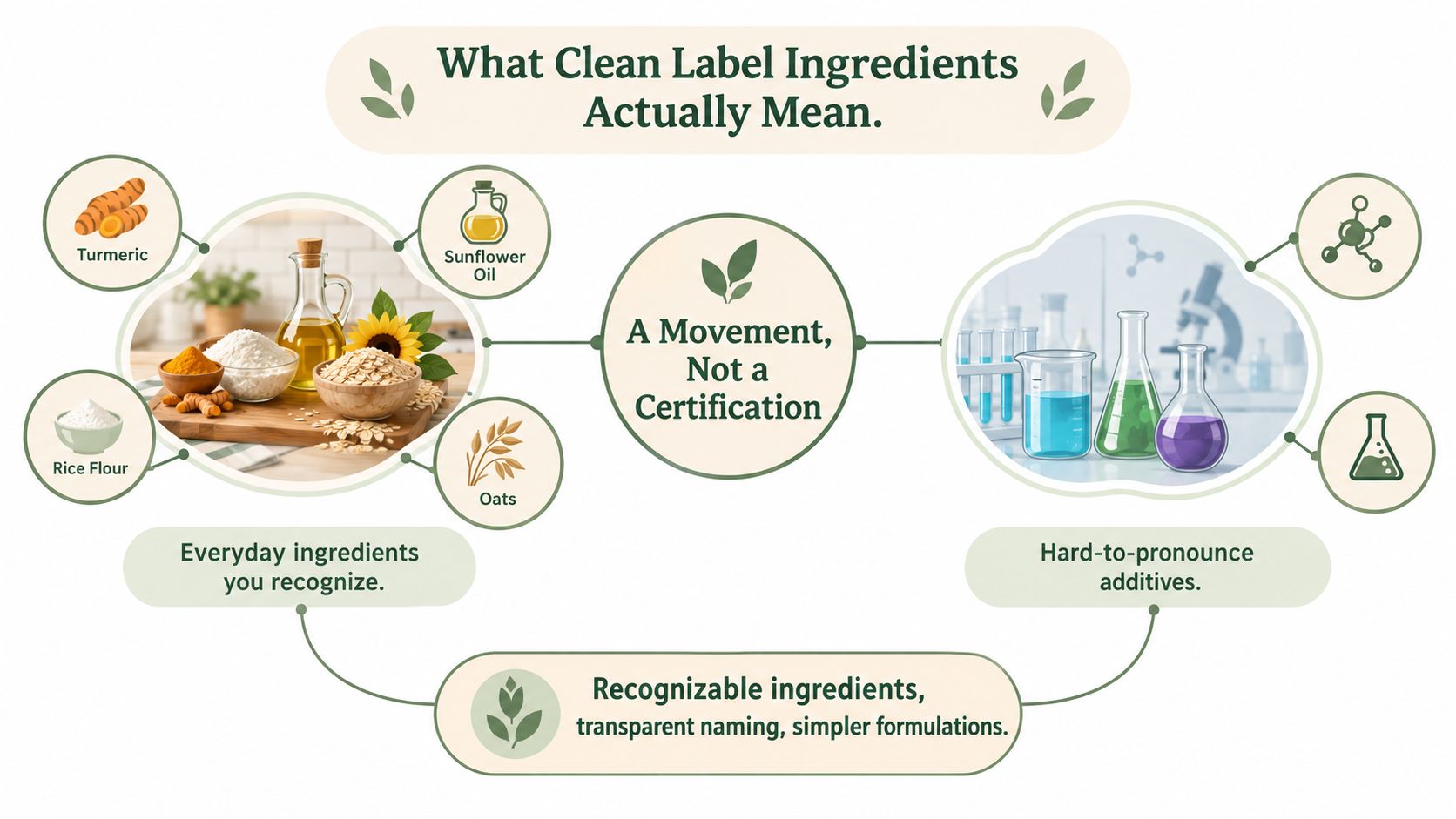
Clean label is a movement, not a certification. There isn't one universal legal definition that makes a product clean. Instead, the phrase usually describes a consumer expectation built around simplicity, recognizable ingredients, minimal processing, and transparent communication, as explained in background coverage from North Central Companies' clean label guide.
Think of a well-stocked home kitchen. You might recognize turmeric, rice flour, sunflower oil, oats, chia seeds, or citrus. A clean-label formulation often tries to make the ingredient list feel closer to that kitchen than to a lab bench filled with unnamed beakers. That comparison is useful, but it isn't a scientific test. A familiar ingredient can still be processed, and an unfamiliar one can serve a legitimate technical purpose.
The main signals shoppers look for
Most clean-label expectations gather around a few ideas:
- A shorter list: Fewer ingredients can make a formula easier to understand, although length alone doesn't determine quality.
- Recognizable sources: Whole-food or plant-derived ingredients, such as oats, rice flour, or sunflower lecithin, often feel more transparent.
- No artificial colors or flavors: Shoppers commonly look for natural color and flavor sources instead.
- Limited synthetic preservatives: Brands may use alternative preservation systems, packaging, or processing controls.
- Clear sourcing language: Terms such as organic, non-GMO, vegan, or gluten-free can tell you more about a product's standards when they're supported by meaningful certification or explanation.
Clean isn't an on or off switch
Widely accepted examples might include oats, chia, rice flour, vitamin C from acerola, and natural flavors. Ingredients that many clean-label shoppers try to avoid include BHA, BHT, titanium dioxide, aspartame, and carrageenan. Consumer acceptance also varies by country, product category, personal health needs, and the ingredient's function.
A survey of 346 consumers found that “less/minimally processed” ranked highest among clean-label attributes, followed by recognizable ingredients, known ingredient functions, absence of artificial additives, simple ingredients, and a shorter list, according to the published consumer research. For you, that means the best question isn't “Is this product perfectly clean?” It's “Does this label communicate its ingredients clearly, and does the formula match my priorities?”
Common Clean Label Claims and Ingredients to Recognize
Front-of-pack claims are helpful signposts, but they're not the whole map. USDA Organic, for example, is a formal certification with defined standards, while “natural” or “clean” may be a brand's positioning language rather than a single regulated category. Non-GMO, vegan, gluten-free, and third-party tested can each matter, but you still need to check who verified the claim and what the product actually contains.
The same caution applies to free-from language. “Dairy-free,” “soy-free,” or “nut-free” may help someone avoid a trigger or allergen, yet the full ingredient and allergen statements remain essential. A product can meet one preference while missing another, such as being vegan but containing a sweetener you don't tolerate well.
A quick translation table
| Claim or Ingredient | What It Signals | Where You Typically See It |
|---|---|---|
| Non-GMO | The product or selected ingredients meet a non-GMO standard stated by the brand or certifier | Supplements, packaged foods, protein products |
| USDA Organic | Ingredients and production meet USDA organic requirements when the claim is properly certified | Botanicals, snacks, powders, supplements |
| Vegan | No animal-derived ingredients are intended in the formula, but check manufacturing details if cross-contact matters | Capsules, gummies, protein powders |
| Gluten-free | The product is presented as meeting gluten-free requirements, subject to the applicable standard | Grains, bars, supplements, prepared foods |
| No artificial flavors or colors | The formula avoids flavor or color ingredients described as artificial | Gummies, beverages, snacks |
| Third-party tested | An outside organization or laboratory has assessed selected quality or safety measures | Supplements and sports nutrition |
| Free from dairy, soy, or nuts | The brand identifies the product as excluding a named ingredient or allergen | Supplements, functional foods, snack products |
| Ascorbic acid with citrus bioflavonoids | Vitamin C paired with plant-derived citrus compounds | Immune formulas and vitamin products |
| Mixed tocopherols | Plant-based vitamin E forms that may support oil protection in a formula | Softgels, oil-based supplements, functional foods |
| Rice or pea protein | Plant-based protein sources rather than whey | Protein powders, bars, vegan blends |
| Acacia fiber or chicory root | Fibers commonly used as prebiotic-style ingredients | Fiber powders, gummies, bars, digestive products |
| Natural flavors | Flavoring derived from natural sources under the applicable labeling rules | Gummies, drinks, powders, packaged foods |
Read claims beside the ingredient list
Natural flavors aren't automatically more suitable for everyone, and a plant-derived ingredient isn't automatically gentle on a sensitive stomach. Chicory root, for instance, may be included for its fiber role but can feel uncomfortable for some people who are prone to gas or bloating.
A useful label-reading habit is to treat every claim as one data point. Check the source, the other ingredients, the allergen statement, and the product's intended use. If the label says “clean” but gives little information about sourcing, testing, or function, the claim may be doing more work than the ingredient list.
The Trade-Off Between Clean Labels and Product Performance
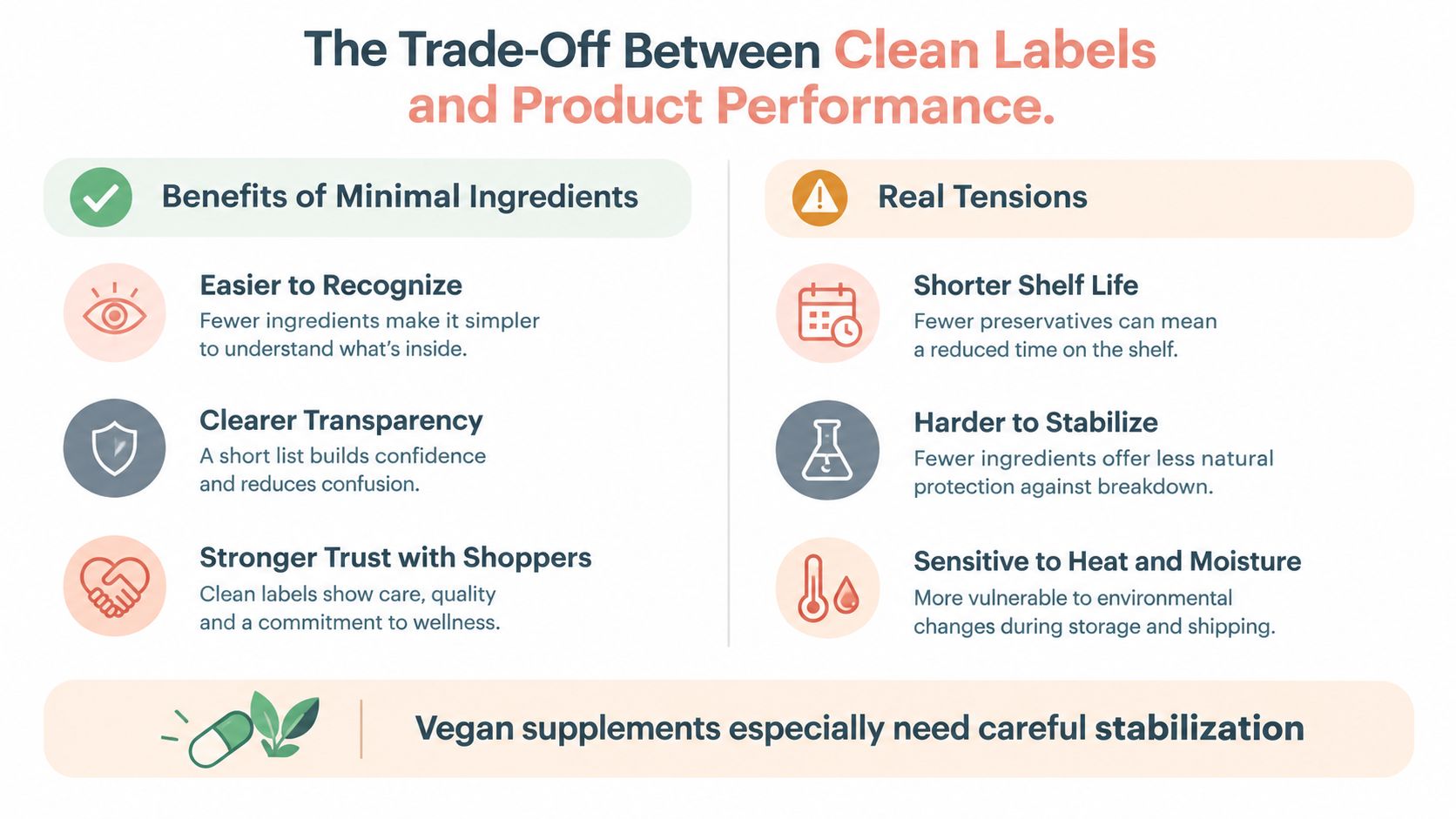
A shorter ingredient list can feel reassuring, but cleaner doesn't automatically mean better-performing. Every supplement has practical challenges: moisture, heat, oxygen, microbial growth, texture, flow, and shelf degradation. Manufacturers use certain ingredients to manage those challenges, and removing them can create new ones.
This tension becomes especially noticeable in vegan supplements. A plant-based capsule or gummy may need careful protection from oxidation or moisture. An oil-based gut-health product can change over time if the formula doesn't protect the oil. A probiotic may require thoughtful packaging and processing so the organisms remain viable through storage. The label may look simpler after reformulation, but the product can become more sensitive to heat, humidity, or handling.
Familiar swaps can change the formula
Natural flavors may replace artificial flavors, but the new blend can be more variable or taste different across batches. Sunflower lecithin may replace soy lecithin for a plant-based or allergen-conscious position, while still serving an emulsifying role. Removing silicon dioxide from a powder can affect how easily it flows or how much it clumps.
The same issue appears across food and supplement categories. Research on clean-label formulation identifies familiar ingredients such as rice flour, corn starch, rice starch, potato starch, citrus fiber, and tapioca flour as generally more accepted, while gellan gum, maltodextrin, carrageenan, and CMC fall into a lower-acceptance zone, with about one-third of consumers finding those latter ingredients acceptable, as reported in Ingredion's clean-label ingredient coverage. Replacing a stabilizer with a starch or fiber may improve label familiarity, but it can also require tighter process control.
A label is part of a product's story, not a complete performance test.
What this means for your gut-health choices
For a probiotic capsule, a clean-label decision might include checking the capsule material, storage directions, testing information, and expiration date. For an omega oil, look for clear oil sourcing, packaging that limits exposure to light or oxygen, and instructions that protect quality after opening.
You may also notice a higher price when a brand uses more specialized plant-based ingredients, smaller-batch sourcing, alternative preservation methods, or extra testing. That price doesn't prove superior quality, but it can reflect the work required to maintain stability without relying on a familiar synthetic aid.
The smart shopper doesn't demand that every product contain nothing but kitchen ingredients. Instead, you weigh ingredient transparency, personal tolerance, shelf stability, and functional performance together.
How to Read a Clean Label Supplement Step by Step
A supplement label becomes easier when you read it in a fixed order. Start with the facts panel, not the marketing headline. The front may say “plant-based” or “clean ingredients,” but the facts panel tells you which active ingredients appear, how much is provided, and what form they take.
Step one, identify the active formula
Look for the ingredients that are meant to do the primary job. A vitamin C formula might list ascorbic acid or vitamin C from acerola. A plant protein might use rice or pea protein. A fiber product may contain acacia fiber or chicory root. Note whether the source is clear and whether the serving information makes sense for how you intend to use the product.
Next, read the other ingredients list from top to bottom. Ingredients generally appear in descending order by weight, so the beginning of the list deserves particular attention. Scan for colorants, sweeteners, flow agents, capsule materials, flavor systems, and potential allergens.
Step two, translate instead of panic
- Maltodextrin: A starch-derived carbohydrate used in some products for texture, bulking, or processing. It may be a preference concern rather than an automatic safety signal.
- Magnesium stearate: A manufacturing aid that can help ingredients move through equipment and prevent sticking.
- Natural flavors: Flavor ingredients derived from natural sources, though the label may not identify every component of the blend.
- Tocopherols: Forms of vitamin E that may help protect oils from oxidation.
- Silicon dioxide: A flow aid that can reduce clumping in powders.
Whether an ingredient is acceptable depends on your allergies, digestive response, dietary philosophy, and the product's purpose. Someone with a sensitive gut may respond differently to a sweetener or fiber than someone else. If you're comparing labels beyond supplements, the ArtNaturals deodorant guide offers a useful example of how ingredient names and product functions can be read together.
Step three, check quality signals
Look for third-party testing details, country of manufacture, allergen statements, storage instructions, lot information, and an expiration date. A certification logo can help, but a logo without an identifiable standard or organization tells you less.
For a more detailed walkthrough, use Yuve's guide to how to read supplement labels.
A worked example with Yuve
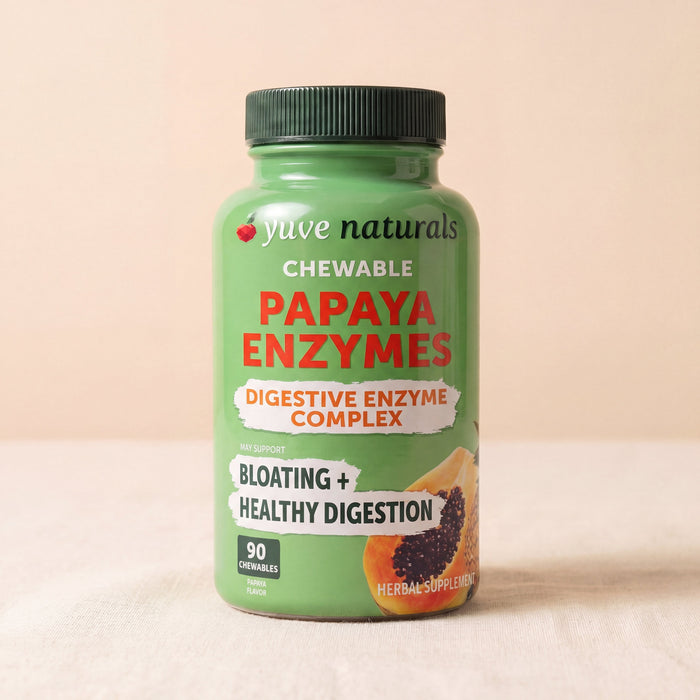
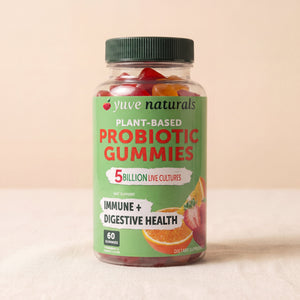
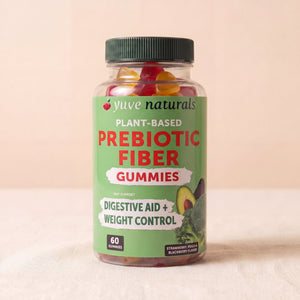
Yuve describes its products as vegan, non-GMO, gluten-free, and gelatin-free, with a focus on clean ingredients and fewer unnecessary fillers. In a gut-health-focused formula, you could apply the same workflow: identify the active probiotic or prebiotic ingredients, check the supporting ingredients, confirm the dietary claims, and review storage guidance.
That approach evaluates the product as a functioning supplement rather than treating a clean-label phrase as a substitute for the full panel.
Why Clean Label Matters for Vegan and Eco-Conscious Shoppers
For vegan shoppers, a clean label often answers a values question as much as a nutrition question. The reader wants to know whether the capsule contains gelatin, whether the flavor system relies on animal-derived ingredients, and whether the brand explains its plant-based choices. Vegan and clean-label preferences overlap, but they aren't identical. A vegan product can still contain a long list of highly processed ingredients, while a clean-label product may not be vegan.
Capsule materials make the difference visible. Gelatin and shellac may concern shoppers avoiding animal-derived ingredients, while pullulan and cellulose capsules can fit a plant-based approach. You still need to verify the finished product's certification or brand statement, because plant-based claims can vary in how much detail they provide.
Shared values, different filters
Eco-conscious shoppers may look beyond the ingredient list to sourcing, packaging, and processing. Fair-trade botanicals, domestically grown ingredients, low-waste packaging, and clear supply-chain information can support a broader sustainability picture. None of these cues alone proves that a product has a low environmental footprint, but together they help shoppers compare brands more thoughtfully.
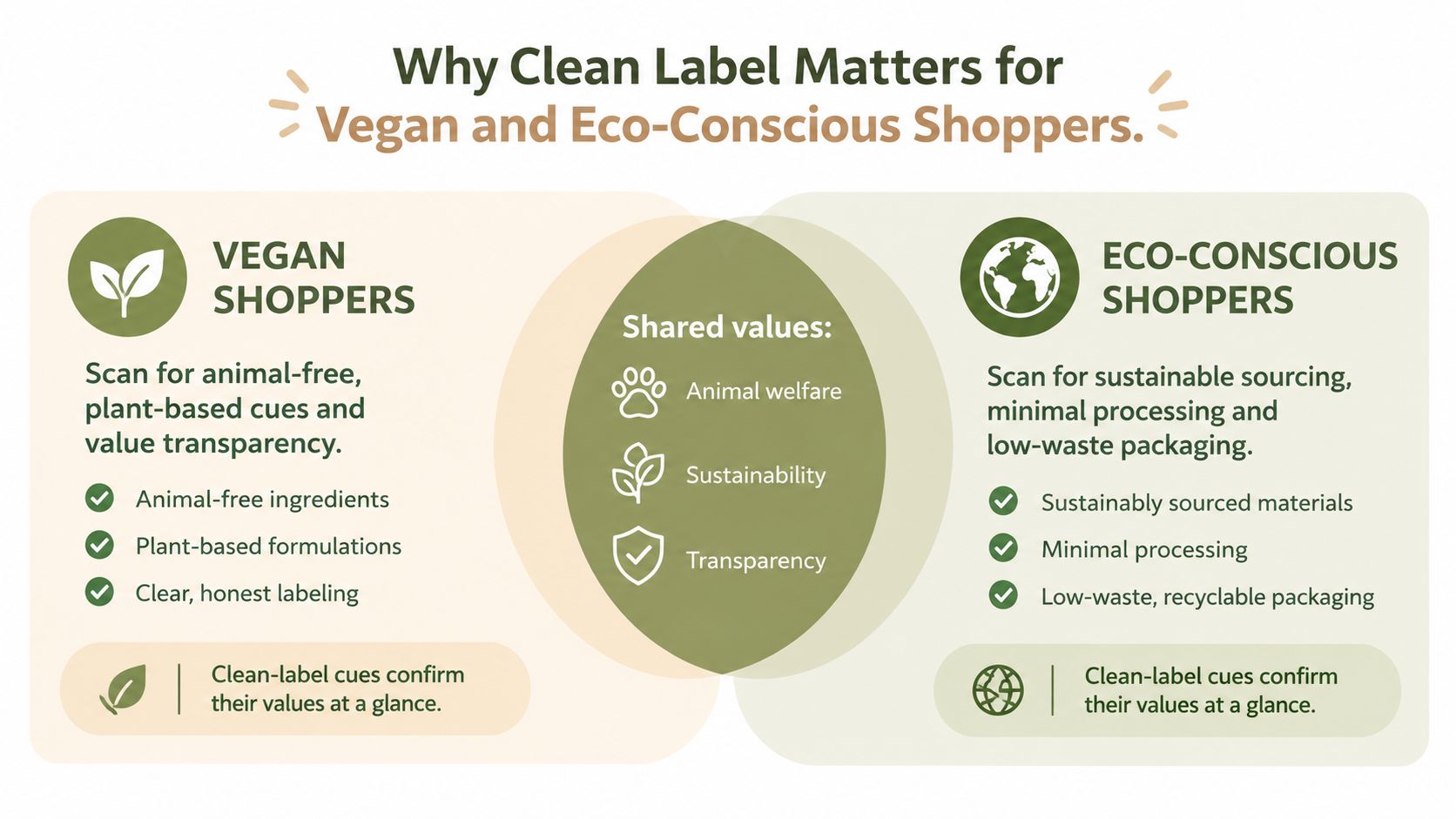
A vegan shopper may prioritize animal-free materials first. An eco-conscious shopper may prioritize sourcing and packaging. Both may want transparent names, minimal unnecessary ingredients, and a clear explanation of how the product was made.
Gut health adds another layer
People choosing supplements for digestion may pay close attention to artificial sweeteners, titanium dioxide, heavy flavor systems, or fibers that don't agree with them. That's where personal response matters. A fashionable ingredient isn't automatically gentle, and a familiar ingredient isn't automatically effective for every digestive system.
For shoppers comparing certification details, Yuve's resource on USDA-certified organic supplements can help clarify how organic positioning fits alongside vegan, non-GMO, and clean-label considerations. The most useful purchase supports your health needs and your ethical priorities without asking you to ignore either one.
Your Clean Label Shopping Checklist
Save this checklist for your next pharmacy or grocery trip. It turns a vague clean-label promise into a handful of practical decisions.
- Read the front claim, then turn the bottle around. Treat “clean,” “natural,” or “plant-based” as an invitation to investigate, not as the final answer.
- Find the active ingredients first. Ask what the product is designed to provide and whether the source or form is clearly named.
- Scan the other ingredients list. Look for colors, sweeteners, flavors, capsule materials, fillers, and flow agents. A technical name deserves context, not an automatic rejection.
- Check recognizable ingredient families. Rice flour, oats, chia, citrus-derived compounds, plant proteins, acacia fiber, and mixed tocopherols may be easier to understand than vague blends, but you should still consider how your body responds.
- Verify the claim. Non-GMO, USDA Organic, vegan, gluten-free, and third-party-tested statements can be useful, especially when the label identifies the certifier or testing approach.
- Look for allergen clarity. Check dairy, soy, nuts, gluten, and manufacturing statements if those ingredients affect your choices.
- Consider stability needs. Probiotics, oils, gummies, and fiber products may need protection from heat, moisture, oxygen, or contamination. A very short list isn't automatically a stable formula.
- Match the product to your body. If a prebiotic fiber or sweetener makes bloating worse, “clean” doesn't make it the right choice for you. Keep a simple note of what you tolerate, especially if digestive discomfort is part of the picture.
- Review the label as a whole. Ingredient quality, transparency, testing, storage, and intended use matter more than one reassuring phrase on the front.
For more help comparing testing claims, read the third-party-tested supplements buying guide. A few steady label-reading habits can replace aisle anxiety with informed choice.
Yuve offers vegan supplements designed around gut health, including probiotic and prebiotic-focused products with clean ingredients, and its formulas are described as non-GMO, gluten-free, and gelatin-free. Visit Yuve to explore the range, compare ingredient panels, and choose a routine that fits your dietary values and digestion goals.