
Sam knew the feeling too well. By afternoon, his stomach could feel so inflated that even a simple snack seemed like a negotiation, and the search for a “quick fix” left him more frustrated than hopeful.
Immune support chewables entered that conversation for a practical reason. They can make daily nutrient support easier, but a pleasant taste alone doesn't make a good formula. The core questions are more useful: What's inside, can your stomach tolerate it, will the nutrients remain stable, and does the label tell you enough?
Why I Stopped Chasing 'Quick Fixes' for My Gut
Sam's digestive challenges didn't arrive as one dramatic event. They showed up in ordinary moments: discomfort after eating, uncertainty about which ingredients to trust, and the familiar feeling of being stuck between wanting nutritional support and not wanting another product that might upset his stomach.
That experience shaped a more thoughtful approach at Yuve. Instead of treating gut health as a hunt for one magic ingredient, Sam began looking at the full picture: food choices, hydration, daily habits, ingredient quality, and whether a supplement format made sense for real life.

A chewable can fit naturally into that picture. For someone who dislikes swallowing tablets, a small chew may feel manageable. For a family juggling breakfast, school bags, work, and dinner, convenience can make consistency less difficult. But immune support chewables aren't a substitute for meals, sleep, medical care, or a varied diet.
The gut-friendly lens
The gut and immune system don't operate in separate rooms. Digestion, nutrient absorption, and the body's normal defenses are connected, which is why a sensitive belly deserves attention when you're choosing an immune-support product.
That doesn't mean every digestive symptom is caused by a supplement. Bloating can have many possible triggers, including food intolerances, eating patterns, stress, and underlying health conditions. If discomfort is persistent, severe, or changing, speak with a qualified healthcare professional rather than trying to solve it with a gummy.
Sam's practical lesson: A product should make your routine clearer, not add another mystery to it.
For people who feel overwhelmed by meal planning, simple food choices can help create a steadier foundation. You can browse gut-friendly meal plans for ideas that pair balanced meals with a more predictable routine.
A useful daily check-in might include:
- Notice patterns: Record when bloating appears and what you ate, without turning every meal into a test.
- Keep hydration visible: A glass or bottle within reach makes drinking water easier to remember.
- Choose tolerable formats: A chewable may suit one person, while a capsule or powder may suit another.
- Read before buying: Check serving size, active ingredients, sweeteners, allergens, and dietary certifications.
The video below offers another way to think about making health routines feel more approachable.
The hopeful part is that progress doesn't need to look dramatic. Sam's journey was less about finding a perfect shortcut and more about building a routine that respected both nutrition and digestion. That same mindset makes sense when you're comparing immune support chewables.
The Rise of Chewable Immunity Support
Sam first noticed the appeal of chewables on a rushed morning. A tablet sat beside his coffee, a powder needed mixing, and breakfast was already late. A chewable offered a simpler choice, especially on days when swallowing pills or preparing a drink felt like one more task.
That convenience helps explain the format's growth. In North America, the immune health supplements market is estimated at USD 4.58 billion in 2025, with a projection of USD 7.81 billion by 2031 and a 9.29% CAGR, according to Mordor Intelligence's North America immune health supplements market report. The report also identifies gummies as the fastest-growing form, with a projected 10.44% CAGR, while tablets held 30.55% of the 2025 share.
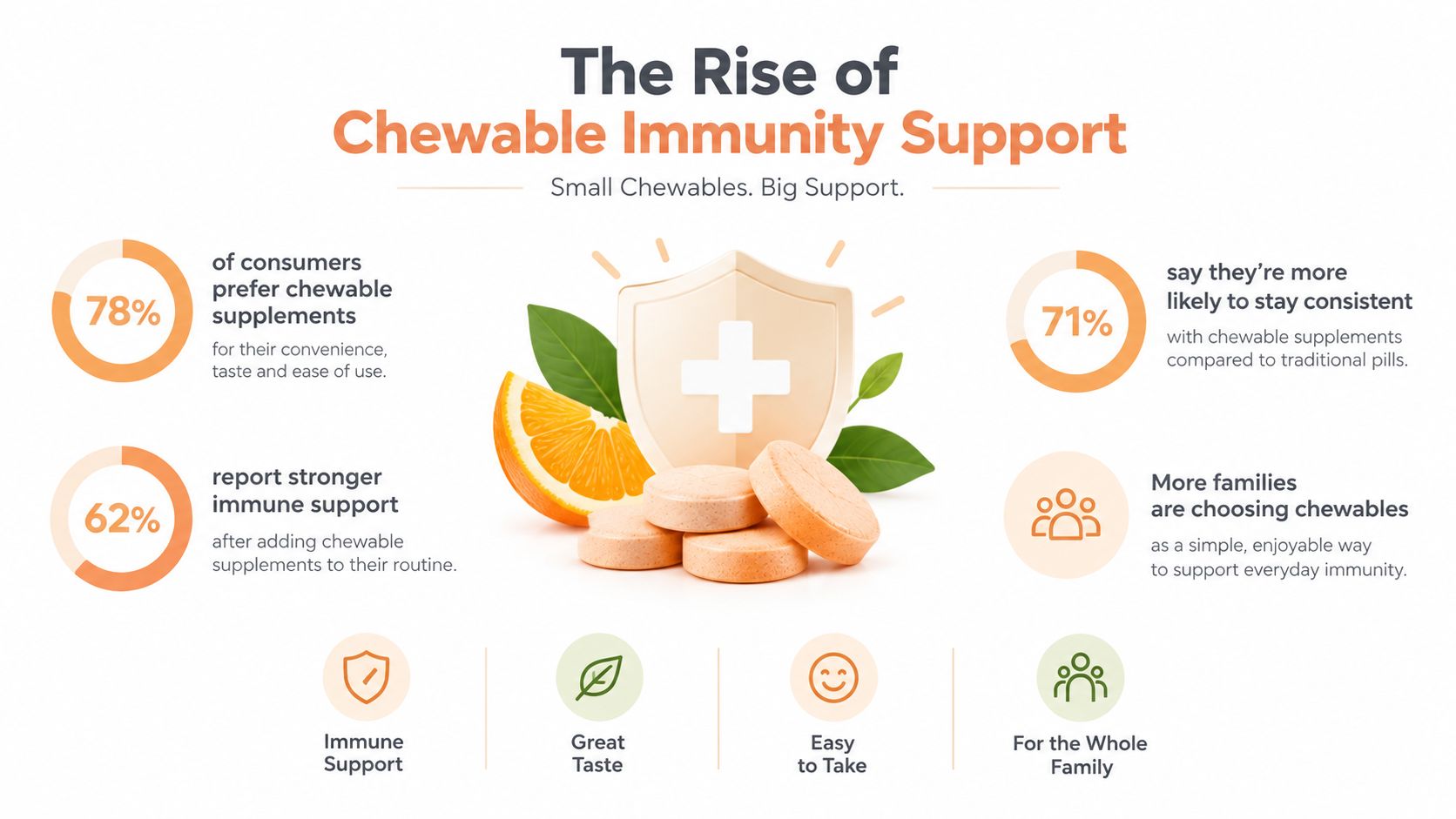
The numbers describe a shift in preference rather than the end of tablets. A child may reject a large pill, an adult may struggle to swallow one, and a busy parent may forget a powder that requires water and preparation. For each person, the easier format may be the one they can follow consistently.
Convenience is part of adherence
Chewables remove several small obstacles. There is no powder to mix, full glass of water to carry, or tablet to swallow. That does not make a chewable automatically more effective, but it can make a routine easier to repeat.
The format still needs scrutiny. Sweetness may come from sugar, sugar alcohols, or other sweeteners. Texture may depend on gelatin, pectin, or another gelling agent. A serving may also contain more pieces than expected, which matters for anyone monitoring sweeteners or total nutrient intake.
A “gummy” label does not confirm that a product suits a plant-based diet. Yuve's guide to checking whether immune support gummies are vegan explains why shoppers should check for gelatin and review the full ingredient label rather than relying on the product name.
Why sensitive-belly shoppers need more detail
Sam learned that a pleasant taste was only part of the decision. For people with digestive sensitivity, the hidden formulation details may matter just as much as the advertised nutrients:
- What sweetens the chew? Certain sweeteners may feel uncomfortable for some people.
- What creates the texture? Gelatin, pectin, and other gelling agents differ in dietary fit and tolerability.
- How much do I take? A larger serving can increase exposure to sweeteners or minerals.
- Can children use it? Follow the product's age guidance and ask a pediatric professional when needed.
Chewables are gaining attention because they fit easily into daily life. A better choice depends on transparency too. Look for clear active ingredients, serving instructions, dietary information, and storage guidance, then choose the format your routine and stomach can handle.
Key Ingredients in Immune Support Chewables
Most immune-support chewables are built around a familiar group of nutrients, especially vitamin C, vitamin D, and zinc. Their reputations make sense, but the label still matters. The ingredient name alone doesn't tell you whether the dose suits your needs, whether the nutrient is stable, or whether the finished chew is comfortable for your stomach.
Vitamin C has a narrower promise than the marketing suggests
Vitamin C is often presented as a shield against every cold. The NIH Office of Dietary Supplements says vitamin C isn't proven to prevent colds in healthy adults, while regular supplementation of 200 mg per day or more can shorten cold duration in some studies. The same source lists an adult upper safety limit of 2,000 mg per day.
What does that mean for you? Vitamin C may have a role in a sensible formula, but “immune support” isn't the same as guaranteed prevention. Add the amount from your chewable to other supplements and fortified foods so your total intake doesn't drift upward without you noticing.
Vitamin C also presents a manufacturing challenge. It can be sensitive to oxidation, heat, light, and moisture, so a product needs more than a recognizable ingredient on the front of the package.
For a closer look at how brands communicate their ingredients, you can explore what goes into products and compare the level of detail offered on different labels.
Zinc needs restraint and clear instructions
Zinc is another common feature of immune support chewables. Zinc lozenges are generally discussed as an early-cold-onset option, with clinical and expert sources describing regimens that use 9 to 23 mg of elemental zinc per dose every 2 to 3 hours while the lozenge dissolves in the mouth, as explained in the Perque Zinc Throat Guard reference.
That information doesn't mean a daily chewable should be used like a lozenge. Zinc can irritate the stomach, especially on an empty stomach, and prolonged high intake can reduce copper absorption and eventually impair immune function. Follow the product directions, consider your total zinc exposure, and ask a healthcare professional about special circumstances.
A vitamin C and zinc combination may be convenient, but it can increase the formulation workload. Taste masking, mineral tolerability, and vitamin stability all need attention.
Vitamin D belongs in the label conversation
Vitamin D often appears in immune-support formulas, but a product label can't tell you whether supplementation is appropriate for your individual status. That depends on diet, sun exposure, health history, medications, and sometimes laboratory testing.
A thoughtful label should make the nutrient amount and serving size easy to find. It shouldn't rely on a large “immune” claim while hiding the details in tiny print.
You may also see elderberry, probiotics, or prebiotics in chewable products. Probiotics are live microbes that can support the gut when taken in adequate amounts, while prebiotics are nondigestible fibers that feed those microbes. Both may cause temporary gas, bloating, or other digestive discomfort, particularly when someone starts with a large amount, as described by the Canadian Digestive Health Foundation's probiotic guide.
Label-reading rule: The front of the package sells the format. The Supplement Facts panel tells you what you're actually taking.
For additional context on zinc and related immune nutrients, Yuve's article on quercetin and zinc can help you approach ingredient combinations with more questions and less hype.
Chewables vs. Pills and Powders - What's the Best Fit?
A chewable isn't automatically better than a pill or powder. It solves a different problem.
A pill offers compact dosing and usually avoids the sweet taste associated with a gummy or chew. A powder can be flexible, especially when you already have a drink you enjoy. A chewable sits between them, offering portability and no mixing while still requiring careful attention to texture, sweeteners, and storage.
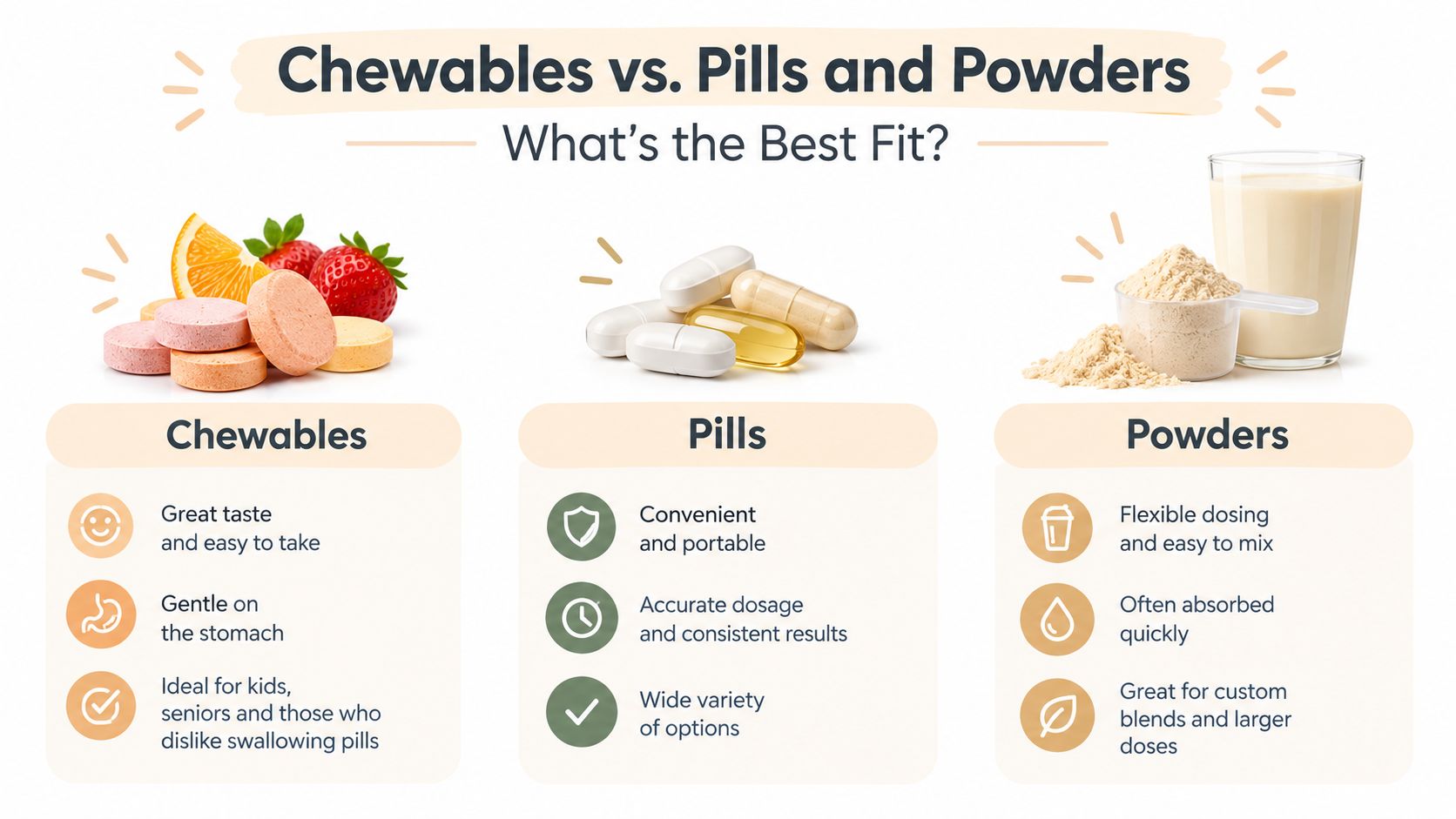
A simple format comparison
| Format | Practical advantage | Possible drawback |
|---|---|---|
| Chewable | Easy to take without mixing and often more approachable for children or pill-averse adults | May contain sweeteners, can bother some stomachs, and can be sensitive to moisture |
| Pill | Compact and familiar, with no need to chew | Swallowing may be difficult, and some minerals can feel harsh on an empty stomach |
| Powder | Can mix into a preferred drink and may offer flexible preparation | Requires water or another liquid and may have texture or flavor issues |
Chewables also have a hidden technical weakness: stability. Formulation literature notes that lowering water content is one of the most effective ways to preserve vitamin potency in chewables. One cited study reported about 45% degradation in chewable vitamin products stored with 3% moisture at 45°C for 3 months, according to the formulation review on multiple vitamins and minerals.
That doesn't mean every chewable will lose its value. It means heat and moisture control matter. Desiccants, opaque or foil barrier packaging, low-water excipients, coated nutrients, microencapsulation, and careful processing can all help protect sensitive ingredients.
Your decision can start with one honest question
Ask, “Which format will I use correctly?”
Choose a chewable if swallowing pills is a barrier and you can store it in a cool, dry place. Choose a powder if mixing it into your routine feels natural. Choose a pill if you prefer a compact product and tolerate that format comfortably.
Whatever you choose, keep the container closed, follow the storage instructions, and don't leave a chewable in a hot car or humid bathroom. A delicious format still needs disciplined handling.
How to Choose Safe and Effective Vegan Chewables
A vegan label is only the beginning. You also need to confirm what gives the chew its texture, how it's sweetened, what allergens it contains, and whether the nutrient amounts make sense for your routine.
Yuve focuses on vegan supplements described as non-GMO, gluten-free, and gelatin-free, including chewable formats. Treat those features as useful comparison points, then verify the specific product label before buying.
Use this shopping sequence
First, identify the active nutrients. Look for vitamin C, vitamin D, zinc, or other ingredients listed with clear amounts per serving. “Immune blend” is less helpful when the label doesn't explain what the blend contains.
Next, check the serving instructions. Confirm how many chews make one serving and whether the product is intended for adults, children, or both. Do not assume a child can use an adult formula just because the chew tastes appealing.
Then, inspect the dietary details. Look for gelatin, dairy, gluten, soy, nuts, artificial colors, and any allergen statements relevant to your household. Vegan shoppers should also look for a clear vegan statement or certification rather than relying on a fruit flavor or green packaging.
Finally, evaluate the sweetener and storage information. A sensitive belly may respond poorly to certain sweeteners, and a chewable exposed to heat or humidity may be more vulnerable to quality changes.
For a deeper walkthrough, Yuve's guide on how to read supplement labels can help you slow down at the shelf and find the details that marketing language leaves out.
Claims need careful translation
Supplements cannot legally be marketed as treating or preventing disease, and the FDA has warned companies about prevention or cure claims. That's why labels often use wording such as “supports immune health” rather than promising to stop illness, as explained in this overview of immunity-support product claims.
That language isn't a guarantee. It describes the intended role of the product, not a promise that you won't get sick.
A trustworthy label invites questions. It doesn't ask you to replace sleep, balanced meals, vaccines, medical advice, or common-sense hygiene with a chewable.
For children, pregnancy, chronic conditions, allergies, medication use, or ongoing digestive symptoms, check with a qualified healthcare professional. A vegan product can fit a dietary preference and still require individual review.
Third-party testing can offer another layer of reassurance, but it doesn't remove the need to read the Supplement Facts panel. Look for transparent manufacturer information, clear contact details, lot information, and storage guidance. If the product hides its amounts, serving size, or allergen details, choose a clearer option.
Your Practical Guide to Feeling Your Best
The most helpful immune-support routine is usually the one you can understand and repeat without upsetting your stomach. Start with food, water, sleep, movement, and a format that fits your household. Then consider whether a clearly labeled chewable fills a specific nutritional or convenience gap.
Sam's experience offers a useful reminder: feeling better isn't always about adding more. Sometimes it means noticing patterns, choosing simpler ingredients, and refusing to let a colorful package do all the explaining.
Try this checklist:
- Read the full label: Confirm active ingredients, serving size, sweeteners, allergens, and dietary fit.
- Respect the format: Store chewables away from heat and humidity, and follow the package directions.
- Start thoughtfully: Introduce one new product at a time so you can notice how your body responds.
- Keep expectations realistic: Support is not the same as disease prevention or treatment.
- Ask for personal guidance: Speak with a healthcare professional if you're pregnant, choosing for a child, managing a condition, or dealing with persistent bloating.
- Build the foundation: Pair supplementation with balanced meals, hydration, sleep, and routines that feel sustainable.
You don't need to make immune support complicated. You need enough information to choose a product that matches your diet, your digestion, and your everyday life.
Yuve offers vegan, gelatin-free supplements in formats designed for people who want plant-based support for gut health and immunity, including chewable options. Visit Yuve to compare the available formulas and choose a clearly labeled option that fits your routine.




