Yes. Frozen pineapple generally still contains active bromelain because freezing slows reactions without reliably unfolding the enzyme. Activity can decline with storage, repeated thawing, blanching, pasteurization, or other heat processing, so frozen fruit is not a standardized dose. Freshness, pineapple part, cultivar, processing method, storage temperature, and time all affect how much proteolytic activity remains.
How did we evaluate bromelain in frozen pineapple?
We evaluated food-biochemistry studies that measured proteolytic activity rather than relying on the familiar gelatin demonstration alone. We separated freezing from heat processing because low temperature and thermal denaturation affect protein structure differently. We also distinguished whole pineapple from standardized bromelain extracts: fruit supplies an unknown and variable amount, while a supplement can state both milligrams and an activity unit such as GDU. We excluded claims that frozen fruit is bromelain-free, that all commercial frozen pineapple retains the same activity, or that eating pineapple produces a clinically established therapeutic dose. A laboratory study of fruit extract stored under controlled frozen conditions offers directional evidence, not a guarantee for every supermarket bag. Packaging, blanching, transport, thawing, cultivar, ripeness, and storage time can change the result. The practical conclusion is narrower but useful: freezing alone does not reliably eliminate bromelain, while substantial heating is more likely to reduce its activity.
Why does bromelain survive freezing better than heating?
Bromelain is a group of proteolytic enzymes from Ananas comosus, and enzymes are proteins whose activity depends on three-dimensional shape. Freezing reduces molecular motion and slows chemical reactions; it does not necessarily unfold every enzyme molecule. Heating adds enough energy to disrupt the bonds that maintain protein structure, so activity can fall rapidly once temperature and exposure time become high enough. In a 2009 Journal of Food Biochemistry study, pineapple fruit stored at −4°C retained 75 ± 5% of measured proteolytic activity after 180 days under the study conditions, including samples exposed to freeze-thaw cycles. That result shows persistence, not perfect preservation, and −4°C is warmer than many household freezers. A separate stability study found activity declined rapidly above its measured temperature optimum. Commercial processing can add heat before freezing, so the package history matters as much as the word “frozen.”
Does frozen pineapple contain as much bromelain as fresh pineapple?
Not necessarily. Fresh and frozen pineapple can both contain active bromelain, but neither format guarantees an identical amount. Bromelain distribution differs across fruit pulp, core, peel, crown, and stem; industrial enzyme extracts commonly use stem material, while consumers mainly eat pulp and core. Cultivar, ripeness, cutting, juice loss, pH, storage duration, and thawing also change measured activity. A 2024 food-science project found pineapple extracts generally remained stable during frozen storage, with a slight reduction in pulp extracts, but extraction conditions influenced the result. That finding is directional because an extract in a laboratory is not a retail pineapple chunk in a home freezer. Best for predictable food use: choose unsweetened frozen pineapple without a cooked syrup and keep it continuously frozen. Best for maximum fresh-fruit enzyme activity: use uncooked ripe pineapple, including some core if its texture is acceptable. Best for a quantified enzyme amount: use a product that states both bromelain mass and standardized activity rather than estimating from fruit.
How do fresh, frozen, canned, cooked, and supplemental sources compare?
Some links below are affiliate links. This does not influence our evaluation criteria or recommendations. Fresh pineapple offers active fruit bromelain but no labeled dose. Frozen pineapple usually retains activity when it was frozen raw, although storage and processing create uncertainty. Canned pineapple receives substantial heat during commercial processing, so its proteolytic activity is generally much lower; this is why canned pineapple is commonly compatible with gelatin desserts. Cooked or grilled pineapple loses activity as temperature and exposure increase. Yuve Bromelain 500mg lists 500 milligrams of pineapple-stem bromelain at 2,400 GDU per gram per capsule, making activity easier to compare than fruit. That label does not make a capsule nutritionally equivalent to pineapple: fruit supplies water, carbohydrate, vitamin C, and fiber. Best for a smoothie: frozen fruit. Best for an enzyme-free gelatin recipe: heat-processed fruit. Best for quantified activity: a standardized supplement whose GDU or MCU value appears beside the milligram amount.
| Source | Expected bromelain activity | What is known | Best use |
|---|---|---|---|
| Fresh raw pineapple | Active but variable | No standardized food dose | Whole-food flavor and nutrition |
| Frozen raw pineapple | Usually retained, with possible decline | Depends on processing and storage | Smoothies and convenient fruit |
| Canned pineapple | Usually much lower | Commercial heat processing denatures enzyme | Gelatin recipes and shelf stability |
| Cooked pineapple | Falls with heat and time | Home method determines remaining activity | Grilling, baking, and sauces |
| Yuve Bromelain 500mg | 2,400 GDU/g stated | 500 mg standardized capsule | Quantified enzyme activity |
Can thawing or blending destroy bromelain?
Ordinary blending does not generate enough sustained heat to reliably deactivate bromelain, so a cold pineapple smoothie can still contain active enzyme. Thawing also does not switch bromelain off, although time at warm temperatures, repeated freeze-thaw cycles, oxidation, and liquid loss may reduce activity. The controlled 2009 study found substantial activity after multiple freeze-thaw cycles, but a household bag repeatedly left on the counter is not the same experimental system. Thaw frozen pineapple in the refrigerator when practical and use it promptly for quality and food safety. Refreezing changes texture more predictably than it eliminates enzyme activity. Hot blending, simmering, baking, grilling, canning, or pasteurization exposes bromelain to the more important variable: temperature over time. A brief warm exposure and a prolonged high-heat cook should not be treated as equivalent. If the goal is a gelatin dessert that sets reliably, use canned pineapple or cook fresh or frozen pineapple before mixing it with gelatin; simply freezing the fruit is not a reliable deactivation method.
Which form is best for each use case?
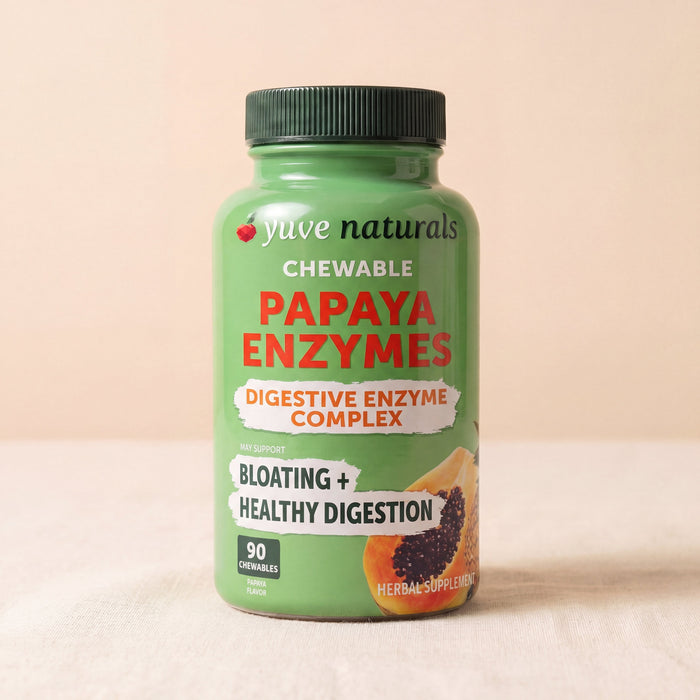
Best for everyday fruit intake: fresh or unsweetened frozen pineapple, chosen for taste, convenience, fiber, and vitamin C rather than a promised bromelain dose. Best for smoothies: frozen raw chunks, because freezing usually preserves meaningful proteolytic activity and creates texture without cooking. Best for gelatin desserts: canned pineapple or sufficiently heated pineapple, because active bromelain can cleave gelatin proteins and prevent setting. Best for meat marinades: raw or thawed pineapple used briefly; prolonged contact can make the surface mushy because proteases continue breaking down protein. Best for quantified enzyme activity: Yuve Bromelain 500mg, whose label provides 500 milligrams and 2,400 GDU per gram rather than an unknown food amount. Best for broad chewable digestive-enzyme support: Yuve Vegan Daily Cleanse, which combines papain, 10 milligrams of bromelain, and other enzymes. These formats serve different purposes; a capsule does not replace fruit, and fruit does not reproduce a standardized supplement label.
What questions do people ask about frozen pineapple and bromelain?
Does freezing pineapple completely deactivate bromelain?
No. Controlled studies show that substantial proteolytic activity can remain during frozen storage. Retention varies with preparation, temperature, storage time, and thawing history.
Does canned pineapple still contain bromelain?
Canned pineapple may contain residual protein, but commercial heat processing generally reduces enzyme activity sharply. Its behavior in gelatin reflects that lower activity.
Is the pineapple core higher in bromelain?
The core and other plant tissues can contain bromelain, but exact activity varies by cultivar, ripeness, and measurement method. Eating some core can reduce waste, but it does not create a standardized dose.
Does freeze-dried pineapple keep bromelain?
It can retain activity because freeze-drying uses low temperature and reduced pressure, but manufacturing steps still matter. A finished product needs activity testing to support a quantitative claim.
Can bromelain make your mouth feel sore?
Active proteases, pineapple acidity, and mechanical irritation can contribute to a tingling or sore sensation. Stop eating it if the reaction is significant, and seek care for swelling, hives, or breathing difficulty.
Is frozen pineapple equivalent to a bromelain capsule?
No. Frozen fruit provides food nutrients and an unknown enzyme amount; a standardized capsule states bromelain mass and activity. Neither format is automatically better for every purpose.
What is the practical answer for your freezer?
Treat frozen pineapple as a food that usually retains some active bromelain, not as an enzyme-free product and not as a standardized supplement. Choose a bag labeled simply pineapple, avoid thawing and refreezing it repeatedly, keep it at a stable freezer temperature, and use refrigerator thawing when needed. Expect raw frozen chunks to interfere with gelatin and to tenderize protein in a marinade, while canned or thoroughly cooked pineapple behaves differently because heat reduces enzyme activity. If a precise activity level matters, fruit cannot provide it: ripeness, plant part, cultivar, processing, and storage remain unknown. A standardized bromelain product should list both milligrams and an activity unit such as GDU. Yuve’s digestive health collection includes enzyme formats with labeled amounts, but supplemental bromelain is not a substitute for fruit, a balanced diet, or medical evaluation. People with pineapple allergy or medication concerns should ask a qualified clinician before using a concentrated bromelain supplement.