Meta title: Garden of Life Digestive Enzyme Guide for Bloating and Gut Support
Meta description: Learn how a garden of life digestive enzyme works, what makes each formula different, where the gaps are, and how to choose the best digestive support for your needs.
Lunch was simple. Maybe it was a salad with chicken, a smoothie, or a bowl of rice and vegetables. A couple of hours later, your stomach feels tight, puffy, and weirdly heavy anyway.
That disconnect is frustrating. You try to eat well, but your gut still acts like it missed the memo.
A lot of people land on a garden of life digestive enzyme while trying to figure out why meals sometimes feel harder to digest than they should. It's understandable. The labels sound promising, the ingredients look thoughtful, and digestive enzymes can seem like the missing piece when bloating keeps showing up uninvited.
That Post-Meal Bloat Is Real and You're Not Alone
A familiar scene goes like this. You finish dinner, sit down to relax, and then your waistband starts to feel suspiciously snug. Not because you overate. Just because your belly feels full of pressure, gas, or that stubborn stretched-out feeling that makes you want to unbutton everything and call it a night.
That can happen after rich meals, but it can also happen after foods people usually think of as "safe." Yogurt. Eggs. Beans. Broccoli. A protein shake. Sometimes even a healthy meal leaves you feeling anything but comfortable.
If you've been trying to decode bloating on your own, it helps to know that bloating is a symptom, not a personality flaw. It doesn't mean you're doing food wrong. It means your digestive system may need a closer look. If you want a medical overview of what can contribute to abdominal bloating, that resource does a good job walking through common causes.
When digestive support starts sounding appealing
Many people don't start with supplements because they're excited about enzymes. They start because they're tired.
Tired of:
- Feeling uncomfortable after meals
- Guessing whether dairy, fat, fiber, or stress is the culprit
- Carrying antacids, peppermint tea, or stretchy pants as a backup plan
- Wondering why one meal is fine and the next one is chaos
Practical rule: If your gut symptoms keep repeating after meals, it's worth getting curious instead of blaming yourself.
Garden of Life comes up often because the brand offers more than one enzyme formula. Some are capsules. Some are chewables. Some focus on broad-spectrum digestion across different parts of the digestive tract. That sounds great on paper, but labels can get technical fast.
What you actually need is clarity
You don't need a chemistry degree to understand digestive enzymes. You need plain language, real product details, and a balanced explanation of where these supplements may help and where they may fall short.
That's what this guide is for. No hype. No scare tactics. Just a clear walkthrough so you can make a smarter decision for your own gut.
What Are Digestive Enzymes Anyway
Digestive enzymes are proteins that help break food into smaller parts your body can absorb. Without them, food doesn't get processed as smoothly. That can leave you feeling overly full, gassy, or uncomfortable after eating.
A simple way to think about enzymes is this. Your meal is a locked box. Nutrients are inside. Enzymes are the tiny tools that help open that box.

The basic jobs enzymes do
Different enzymes work on different parts of food. That's where people often get confused. They assume one enzyme does everything. It doesn't.
Here's the plain-English version:
- Amylase helps break down carbohydrates like grains, fruit, and starchy foods.
- Protease helps break down protein from foods like chicken, beans, fish, tofu, or eggs.
- Lipase helps with fats, including oils, nuts, avocado, and richer meals.
- Lactase helps break down lactose, the natural sugar in dairy.
- Fiber-focused enzymes like cellulase or pectinase help work on plant material your body doesn't fully handle on its own.
If you've ever felt fine after toast but awful after pizza, or great with fruit but not with a creamy pasta dish, that difference can matter. The type of food on your plate affects which enzymes your body needs to use.
Why some people look for enzyme supplements
Your body naturally makes digestive enzymes, but support products appeal to people who feel like digestion is sluggish, inconsistent, or easily overwhelmed by certain meals.
Common examples include:
- Dairy discomfort that shows up as gas or rumbling after ice cream or milk.
- Heavy-meal regret after burgers, fries, or holiday food.
- Plant-food sensitivity when beans, cruciferous vegetables, or high-fiber meals leave you bloated.
- Mixed-meal confusion when a meal with protein, fat, carbs, and vegetables feels especially hard to digest.
Some people don't need more food rules. They need better digestion support.
Where the confusion usually starts
Supplement labels often list a long parade of ingredients and strange abbreviations. PU. HUT. FIP. ALU. If that makes your eyes glaze over, you're normal.
What matters most at the beginner stage is understanding this:
| Enzyme type | Main food target | Example meal |
|---|---|---|
| Protease or papain | Protein | Chicken, tofu, eggs |
| Lipase | Fat | Fried food, creamy dishes |
| Lactase | Dairy sugar | Milk, ice cream, soft cheese |
| Amylase | Carbohydrates | Bread, rice, potatoes |
| Cellulase and related enzymes | Plant fibers | Beans, vegetables, greens |
A garden of life digestive enzyme usually combines several of these, which is why the formulas are called broad-spectrum. They aren't just aimed at one food. They're designed to support digestion across different kinds of meals.
A Closer Look at Garden of Life Digestive Enzymes
You stand in the supplement aisle, pick up one Garden of Life enzyme product, then notice there is another one right beside it. Both promise digestive support, but they are built a little differently. That difference matters, because the best choice depends on what kind of help you want and what kind of product you will use consistently.
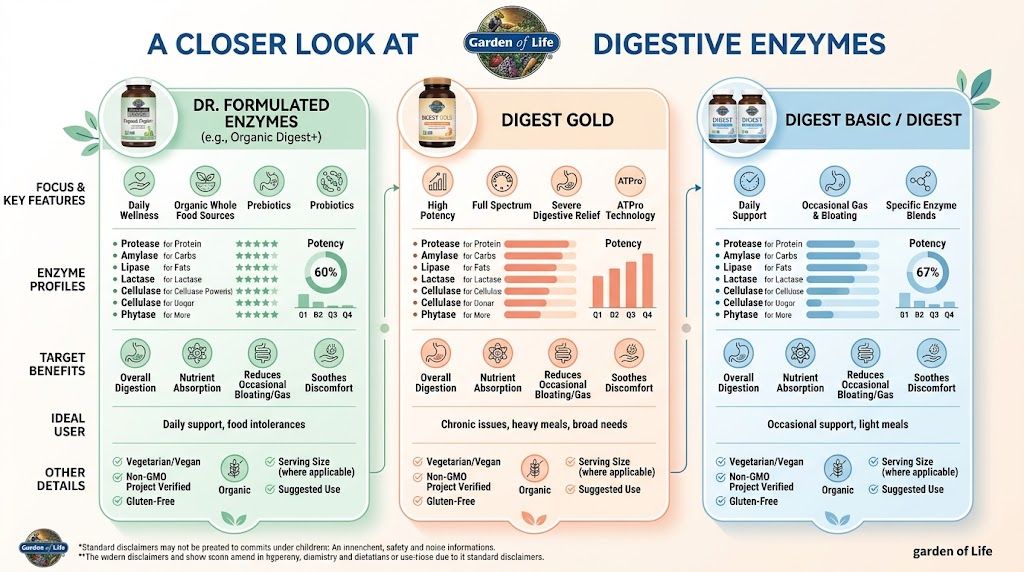
Garden of Life has two products people commonly compare. One is Omega-Zyme Ultra Digestive Enzyme Blend. The other is Dr. Formulated Enzymes Organic Digest+ chewables.
Omega-Zyme Ultra focuses on where enzymes work
One of the more distinctive parts of the Garden of Life lineup is Omega-Zyme Ultra's pH-based design. According to Garden of Life's Omega-Zyme Ultra product details, the formula contains 21 digestive enzymes, with some intended for the stomach's more acidic environment and others intended for the less acidic small intestine.
That is useful context. Digestion changes as food moves through your digestive tract. Your stomach is highly acidic, while your small intestine is less so. An enzyme that performs well in one setting may not perform the same way in another, so a formula built around multiple pH ranges is trying to cover more of that journey.
The ingredient list includes familiar names such as amylase, bromelain, lactase, and papain, which are commonly used for carbohydrates, proteins, and dairy-related digestion support.
Organic Digest+ chewables prioritize format and label preferences
Dr. Formulated Enzymes Organic Digest+ appeals to a different kind of shopper. Some adults do not want capsules. Some care strongly about organic sourcing, vegan standards, and avoiding unnecessary additives. For them, the format is part of the product's value, not a small detail.
Garden of Life describes the chewable as a full-spectrum digestive enzyme formula with 13 digestive enzymes and 29 powdered organic fruits and vegetables. The company also presents it as vegan, gluten-free, kosher, and free from artificial colors, flavors, sweeteners, preservatives, binders, or fillers.
That combination gives the chewable a very specific identity. It is not just an enzyme supplement. It is also aimed at people who want a cleaner-label, plant-based option that feels easy to take.
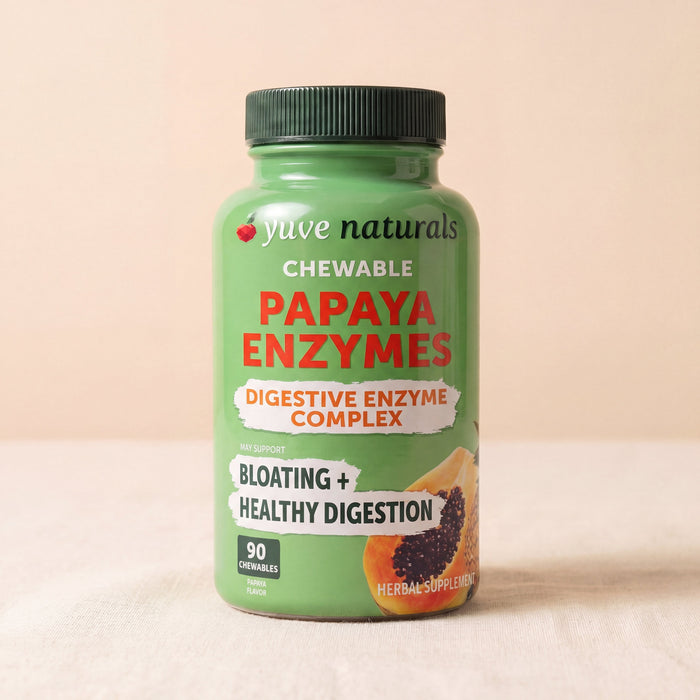
There is also a market gap hiding in plain sight here. A vegan chewable is helpful, but some shoppers want even more direction than Garden of Life gives them. Parents often look for digestive support designed with kids in mind. Other buyers want clearer enzyme plus probiotic pairing in one formula. Some want the clean-label, vegan standard without having to sort through several overlapping products. Those are the kinds of needs a more targeted alternative like Yuve is built to address.
The simplest way to compare them
| Product | Primary focus | Format | What stands out |
|---|---|---|---|
| Omega-Zyme Ultra | Enzyme coverage across different pH environments | Capsule | Designed for use across stomach and small-intestine conditions |
| Dr. Formulated Organic Digest+ | Organic, vegan, chewable convenience | Chewable | Enzymes paired with organic fruit and vegetable powders |
Which type of person might prefer each one
A capsule user who wants a formula built around different digestive environments may gravitate toward Omega-Zyme Ultra.
A shopper who values chewability, vegan standards, and organic certification may prefer Organic Digest+.
That sounds simple, but it is often the deciding factor. A supplement can look great on a label and still be the wrong fit if you dislike swallowing it, do not trust the ingredient philosophy, or need support for a child or for a more specific enzyme and probiotic combination. Those practical gaps are exactly why some people keep looking beyond big-name formulas, even when the brand itself is well known.
The Science Corner How These Ingredients Work
Let's translate the label into human language. When you see a Garden of Life chewable listing papain, lactase, lipase, cellulase, and a string of unit abbreviations, it's easy to think, "Cool. I have no idea what any of this means."
Here's the useful part. Those enzymes each have a job.

Papain and lactase are easy places to start
According to the HEB product listing for Garden of Life Dr. Formulated Organic Digest+ chewables, each serving contains 120,000 PU of papain and 150 ALU of lactase.
Papain comes from papaya and helps break down protein. So if a protein-heavy meal tends to sit in your stomach like a brick, papain is one of the enzymes you want to notice on the label.
Lactase is the enzyme tied to lactose digestion. If milk, soft cheese, or ice cream tends to bring on gas or cramping, lactase is the one most directly connected to that issue.
Those weird units are not random
The abbreviations next to enzymes are activity units. They tell you how the enzyme's strength is measured, not just that the enzyme is present.
A few examples from the same chewable formula:
- PU relates to papain activity
- HUT is used for protease activity
- FIP is used for lipase activity
- ALU is used for lactase activity
- CU, XU, HCU, and FTU show activity for other fiber- and plant-related enzymes
Two labels can both say "contains papain," but one may provide a much more active amount than the other.
Matching enzymes to real meals
If you're trying to connect supplement science to your dinner plate, use this quick map:
- Protein-heavy meal - papain, bromelain, protease, peptidase
- Rich or fatty meal - lipase
- Dairy-based snack - lactase
- Vegetable-heavy or bean-heavy meal - cellulase, hemicellulase, xylanase, pectinase
- Mixed meal with grains and starches - amylase and other carbohydrate-support enzymes
That broad mix is why some people prefer a formula that doesn't only focus on one trigger food.
Label translation: The more varied your meals are, the more helpful a broad-spectrum enzyme blend may feel.
Why plant-food enzymes show up so often
A lot of people understand lactase because dairy reactions are easy to notice. Fiber-support enzymes get less attention, but they matter too.
Organic Digest+ includes enzymes such as cellulase, hemicellulase, xylanase, beta-glucanase, and pectinase. These help work on plant fibers and structural carbohydrates in fruits, vegetables, grains, and legumes. For someone eating a plant-forward diet, that can be a meaningful part of the formula.
For a quick visual overview of digestive enzymes and food breakdown, this short video is helpful:
One more thing people mix up
Digestive enzymes are not the same as probiotics. Enzymes help break down food. Probiotics are live microbes associated with the gut microbiome. They play different roles.
So if a supplement helps with digestion after meals, that doesn't automatically mean it's addressing the microbiome side of gut health. That's one reason the conversation around enzyme formulas can get more nuanced than it looks at first glance.
Potential Benefits and Important Limitations
A garden of life digestive enzyme can make sense for adults who want broad support with proteins, fats, carbs, dairy, and plant foods. The formulas are thoughtful, and the brand has clearly tried to meet different preferences, especially with capsule and chewable options.
Still, a useful review has to hold two ideas at once. A product can be well-designed and still not fit every person or every situation.

Where these products may help
In practical terms, adults may look to these formulas for support when meals feel hard to digest. That might mean less discomfort after a rich dinner, better tolerance for dairy-containing foods, or a little more ease after meals with lots of vegetables, beans, or protein.
The strongest advantages in the Garden of Life range include:
- Broad-spectrum coverage for different food types
- Format variety for people who prefer capsules or chewables
- Strong clean-label appeal in the Organic Digest+ formula
- Thoughtful pH design in Omega-Zyme Ultra
That said, "broad-spectrum" doesn't mean universal. It means the formula tries to cover many digestion scenarios. Your own symptoms, food patterns, and tolerance still matter.
The pediatric gap is real
This is one of the biggest areas where readers deserve more honesty. While these products are popular with adults, there is a lack of specific dosing guidance and pediatric safety data for children. Garden of Life's own blog context highlights that this leaves a gap for families seeking support for children with digestive issues, and notes that 25% of parents of children with autism are actively seeking solutions in this area, as referenced in the Garden of Life product blog discussion.
For parents, that's not a small detail. It's a major one.
If you're trying to help a child with digestive discomfort, especially a neurodiverse child, "adult chewable" is not the same thing as "child-tested and clearly dosed." Those are very different standards.
Parents don't just need ingredients. They need confidence about safety, age-appropriate use, and what a serving actually means for a child.
The enzyme-plus-probiotic question is still open
Another limitation is that many brands, including Garden of Life, sell enzymes and probiotics as separate products. That isn't automatically bad, but it does leave shoppers to figure out the combination question on their own.
If you've ever wondered whether to take one, the other, or both, you're not overthinking it. You're asking the right question. A digestively focused supplement can support food breakdown, while a probiotic-focused supplement may target a different piece of gut health. The overlap is not complete.
This is why many readers find it helpful to compare digestive enzymes vs probiotics before picking a routine. The goals can look similar, but the mechanisms are different.
A thoughtful product can still leave unmet needs
Many people hit the same wall Sam, Yuve's founder, has spoken about in the broader gut health journey. You want something plant-based, simple, gentle, and aligned with real-life eating. But then you run into tradeoffs.
One product has the enzyme profile you want, but not the format. Another has a convenient format, but no child-specific support. Another supports one part of digestion but doesn't answer the probiotic question at all.
That doesn't make Garden of Life a bad option. It just means the best option depends on your actual problem, not on popularity alone.
Finding Your Fit and The Yuve Difference
Choosing a digestive supplement gets easier when you stop asking, "Which brand is best?" and start asking, "Best for what?"
If your main issue is broad adult digestive support, Garden of Life gives you a couple of respectable paths. If your priorities include a stricter vegan lifestyle, a more modern gut-health routine, or a closer look at microbiome support alongside digestion, your checklist may shift.
Three questions worth asking before you buy
First, what foods seem hardest on you?
If dairy is the clear issue, you may care most about targeted lactase support. If it happens after mixed meals, broad-spectrum enzymes may make more sense.
Second, do you want food breakdown support only, or a bigger gut-health plan? Often, many shoppers pause here. An enzyme can help with digestion, but some people also want support that reflects the bigger gut ecosystem.
Third, does your supplement need to match your values?
For many readers, that means vegan ingredients, no gelatin, a cleaner label, and a brand that takes sustainability seriously.
Why the market has moved toward stacks
The current supplement conversation is less siloed than it used to be. According to the trend summary cited in the provided market data, there was a 40% spike in searches for "enzyme and probiotic stacks" in 2025, and 35% of supplement users prioritize microbiome bundles, yet many brands still present these as separate products without synergy data, as noted in the Garden of Life marketplace context.
That doesn't prove every stack is ideal for every body. It does show where shoppers are headed. People want fewer gaps between digestion support and microbiome support.
Where Yuve stands apart
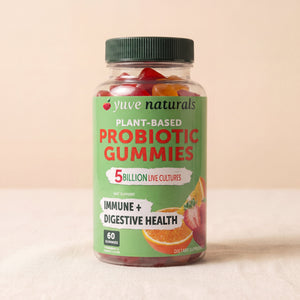
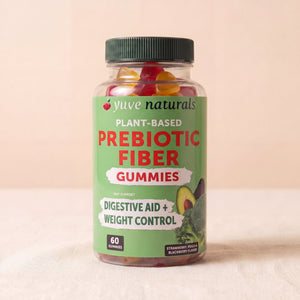
If you care about plant-based wellness, Yuve's approach is worth a look because the brand centers vegan, non-GMO, gluten-free, and gelatin-free supplements with a strong gut-health focus. That's appealing for people who don't want to piece together a routine from disconnected products or compromise on ingredient standards.
A good starting point is Yuve's guide to vegan digestive enzyme supplements, especially if your decision isn't only about digestion, but also about how the product fits your values and lifestyle.
The right fit isn't the loudest product on the shelf. It's the one that matches your body, your meals, and your standards.
For some readers, Garden of Life will absolutely be enough. For others, the gaps around child-specific use, stack strategy, or fully aligned vegan preferences may matter more than the label's popularity.
Your Top Questions About Digestive Enzymes Answered
How do I know if I might need a digestive enzyme
You finish dinner, and within an hour your stomach feels tight, heavy, or gassy. If that happens once, it may just be a rich meal. If it keeps happening after the same kinds of foods, that pattern is worth paying attention to.
Digestive enzymes are meal helpers. They work on food, so the clues often show up around specific meals rather than all day long. You might notice trouble more often with:
- Dairy foods
- High-fat meals
- Protein-heavy meals
- Large plant-based meals with lots of fiber
A short food and symptom journal can make this clearer. A week or two is often enough to spot repeat triggers. If symptoms are frequent, intense, or new, bring that pattern to a healthcare professional instead of guessing.
What's the best time to take digestive enzymes
Timing usually matters because enzymes need to be present when food arrives. Many products are taken right before a meal or with the first few bites, but the label should guide the final decision.
If you want practical help building that habit, Yuve's guide on the best time to take digestive enzymes walks through timing in a simple, real-life way.
Are Garden of Life chewables a good option for adults
For some adults, yes. A chewable can feel easier than swallowing capsules, especially for people who already take several supplements. Garden of Life also positions its chewable formula around organic and non-GMO preferences, which may matter if ingredient sourcing is part of your decision.
Still, a popular chewable is only one piece of the puzzle. Personal fit matters more than shelf appeal. If you want support that also closes common gaps, such as tighter probiotic pairing, stricter vegan standards, or family-focused options, you may find that another formula fits your goals better.
Are digestive enzymes the same thing as probiotics
They do different jobs.
Digestive enzymes help break food into smaller parts your body can absorb. Probiotics are live microbes that support the gut microbiome. A simple way to picture it is this: enzymes help with the meal in front of you, while probiotics support the gut environment over time.
That distinction gets blurry in marketing, so the confusion is completely understandable. It also points to a real gap in the market. Plenty of products focus on one side or the other, while fewer explain how enzyme and probiotic support can work together for people who need both.
How long does it take to notice a difference
The first signal is often mealtime comfort. If a product is a good match, some people notice a difference fairly quickly with the foods that usually bother them.
The better test is consistency. Do you feel less bloated after your usual trigger meal? Do you finish eating without that overly full, stuck feeling? Those small, repeatable changes are more useful than waiting for a dramatic overnight result.
Are digestive enzymes okay for kids
This is one area where extra caution makes sense.
Adult enzyme products are not automatically right for children, even if the label looks gentle or the format seems kid-friendly. Kids have different dosing needs, different health histories, and sometimes different reasons for digestive discomfort. That is one reason pediatric digestive support remains an under-served category.
If you're considering enzymes for a child, involve a pediatrician or qualified practitioner first. That matters even more if there are ongoing GI symptoms, food issues, or neurodiverse support needs in the picture.
What's the simplest next step
Start with the meal pattern, then match the product to the need.
A simple checklist helps:
- Notice which foods trigger symptoms
- Check whether the enzyme blend matches those foods
- Choose a format you will use
- Look at whether probiotics are included or need to be paired separately
- Make sure the formula fits your dietary standards, including vegan preferences if that matters to you
- Talk with a healthcare professional if symptoms keep happening
The best product is not automatically the most popular one. It is the one that fits your body, your meals, and your values. For some people, Garden of Life may be enough. For others, the missing pieces, especially pediatric support, clearer enzyme and probiotic synergy, or cleaner vegan alignment, are exactly why brands like Yuve exist.
If you're ready for a cleaner, plant-based gut health routine, explore Yuve. Yuve offers vegan supplements designed to support digestion, gut health, immunity, and energy with non-GMO, gluten-free, gelatin-free formulas that fit a modern wellness lifestyle.