DGL does not have one established “time in your system.” Deglycyrrhizinated licorice is a mixture of plant compounds, and commercial products do not share a validated human half-life. A small study found an approximately 10-hour half-life for glabridin in a different licorice-flavonoid formula, but that result cannot time every DGL product.
How did we evaluate how long DGL stays in the body?
We separated DGL from whole licorice because deglycyrrhizination removes most glycyrrhizin, the compound behind the best-known blood-pressure and potassium concerns. We prioritized human pharmacokinetic research, the National Center for Complementary and Integrative Health, FDA supplement-label guidance, and randomized human trials over retailer summaries or testimonials. We looked for a product-specific elimination half-life, time to peak concentration, blood or urine measurements, and evidence connecting those measurements to chewables or capsules. No study established a universal clearance time for commercial DGL. The closest human marker study measured glabridin in five men after a licorice-flavonoid oil, not a standard DGL chewable. We therefore use that study only to explain why a precise countdown would be misleading. Ingredient-level clinical trials can describe repeated use and outcomes, but they do not reveal when every component leaves the body. Product labels decide serving frequency; individual metabolism, formulation, food, medicines, and dose add uncertainty.
Does DGL licorice have a known half-life?
DGL licorice has no validated, product-wide human half-life because DGL is an extract rather than one purified drug molecule. A small human study of a different licorice-flavonoid oil measured glabridin, one licorice flavonoid, after single doses in five healthy men. The PubMed-indexed study reported a time to peak concentration near four hours and an elimination half-life near 10 hours. Those numbers apply to that oil preparation, dose range, marker compound, and study population. They do not prove that Yuve DGL, another brand’s chewable, or every compound in deglycyrrhizinated licorice follows the same curve. A half-life also does not mean an ingredient suddenly disappears at that hour; concentration declines over successive half-lives. The useful answer is therefore qualitative: some licorice flavonoids can be absorbed and persist beyond the meal, but current evidence cannot support an exact “fully out of your system” time for a commercial DGL serving.
How is DGL different from regular licorice in the body?
DGL differs from regular licorice mainly because manufacturers remove most glycyrrhizin before the supplement reaches the consumer. Whole licorice can expose the body to glycyrrhizin, which intestinal bacteria convert to glycyrrhetinic acid. A pharmacokinetic review reported dose-dependent terminal half-lives around 3.5 hours for glycyrrhizin and 10–30 hours for glycyrrhetinic acid, with biliary elimination and enterohepatic cycling; those data concern glycyrrhizin-containing material, not properly deglycyrrhizinated products. DGL still contains other licorice constituents, including flavonoids, so “deglycyrrhizinated” does not mean nothing is absorbed. It means the extract was processed to reduce the compound responsible for the classic mineralocorticoid-like safety problem. The NCCIH licorice summary makes the same safety distinction and says glycyrrhizin-free oral licorice products might be safe for up to four months. That statement describes limited safety evidence, not a clearance clock or permission for indefinite use.
| Material | What researchers measured | What the result means | What it cannot establish |
|---|---|---|---|
| DGL extract | No universal product half-life | Follow the exact label | A single clearance time |
| Licorice-flavonoid oil | Glabridin half-life near 10 hours | One flavonoid can be systemically absorbed | Timing for every DGL formula |
| Whole licorice | Glycyrrhizin and glycyrrhetinic acid kinetics | Regular licorice has a different exposure profile | DGL glycyrrhizin exposure |
How should you time DGL if clearance is uncertain?
Use the bottle’s serving directions instead of estimating the next dose from a guessed half-life. FDA guidance requires a Supplement Facts panel to identify serving size and dietary-ingredient amounts, but a label does not have to provide pharmacokinetic data for an herbal mixture. FDA labeling guidance makes the declared serving the practical reference point. This article links to Yuve products, and Yuve earns revenue from product sales; that commercial relationship did not change the evidence criteria. Yuve DGL Licorice Chewables list 400 mg of DGL extract and 100 mg of glycine per two-chewable serving, with directions to chew two tablets daily, preferably with food. Best for a chewable routine: use that labeled serving. Best for avoiding glycyrrhizin uncertainty: choose a label that explicitly says deglycyrrhizinated. Best for medication questions: ask a pharmacist or clinician rather than spacing doses by an unvalidated countdown.
What safety issues matter more than the exact clearance time?
The extract identity, medication list, health history, serving size, and duration matter more than guessing when DGL becomes undetectable. NCCIH warns that glycyrrhizin-containing licorice can contribute to low potassium, high blood pressure, irregular heartbeat, and serious adverse effects, especially with large or prolonged exposure. DGL reduces that specific concern, but a vague “licorice root” label should not be assumed to be deglycyrrhizinated. People who are pregnant, have hypertension, kidney disease, liver disease, heart disease, or low potassium, or use diuretics, corticosteroids, digoxin, or blood-pressure medicines should discuss licorice products with a clinician. The NCCIH safety review also notes reported corticosteroid interactions and limited evidence for digestive benefits. Stop self-managing and seek care for black stools, vomiting blood, trouble swallowing, severe chest or abdominal pain, fainting, or persistent symptoms. Those signs require evaluation; a supplement half-life estimate cannot rule out a medical problem.
What questions do people ask about DGL duration?
Duration questions usually mix four different ideas: absorption, blood concentration, local digestive contact, and the time until a person notices an effect. These clocks are not interchangeable. A human glabridin study measured plasma concentrations after a licorice-flavonoid oil, while DGL trials measured symptom scores after repeated daily use. For example, a randomized trial gave 75 mg of a standardized deglycyrrhizinated licorice extract twice daily for 30 days; the PubMed record reports improved dyspepsia scores versus placebo, but it does not publish a universal DGL elimination time. A newer 28-day trial used a specific standardized extract and also evaluated repeated use, not one-dose clearance. Neither trial proves that every DGL formula works, stays detectable for the same period, or should follow the study schedule. The safest interpretation is narrow: follow the exact product label, do not stack servings to chase faster results, and use a clinician for interaction or symptom questions.
Is DGL out of your system after 24 hours?
No study proves that every DGL compound is fully cleared within 24 hours. One different licorice-flavonoid formula produced an approximately 10-hour glabridin half-life, but a commercial DGL product may contain other compounds and use another delivery system.
How long does DGL take to work?
Clearance time and response time are different. Human trials of standardized deglycyrrhizinated licorice extracts evaluated repeated daily use over 28–30 days, so they cannot promise an immediate effect from one serving.
Can you take DGL every day?
Daily use should follow the exact label and a clinician’s advice when medicines or chronic conditions are involved. NCCIH says glycyrrhizin-free oral licorice products might be safe for up to four months, but evidence remains limited.
Is DGL safer than regular licorice?
DGL reduces exposure to glycyrrhizin, the compound most associated with potassium, blood-pressure, and heart-rhythm concerns. A product must clearly identify deglycyrrhizinated licorice; “licorice root” alone does not establish that distinction.
Can DGL interact with medication?
Licorice products can interact with medicines, and product composition varies. Ask a pharmacist or clinician before use if you take diuretics, corticosteroids, digoxin, blood-pressure medicine, or other drugs affected by electrolyte changes.
Should you wait a certain number of hours between servings?
Use the interval stated on the label rather than calculating from a research half-life. Do not borrow timing from another brand, extract, capsule, or study formula because dose and composition can differ.
What is the bottom line on how long DGL stays in your system?

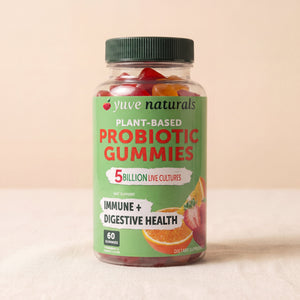
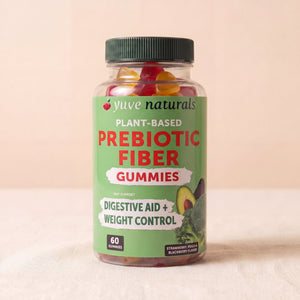
No evidence-based clock can tell every person when a commercial DGL serving is completely out of the body. DGL contains multiple plant compounds, formulations vary, and the available human pharmacokinetic study measured glabridin from a different licorice-flavonoid oil. Its approximately 10-hour marker half-life is useful context, not a dosing rule. Whole-licorice glycyrrhizin data are even less transferable because proper DGL removes most of that compound. Follow the Supplement Facts panel, use only the labeled serving, and avoid stacking DGL with whole-licorice products. If you want a chewable option, Yuve DGL Licorice Chewables provide a clearly labeled two-tablet daily serving; compare the complete label with your medicines and health history before use. The broader Yuve digestion collection separates DGL, probiotics, fiber, enzymes, and lactase by purpose. Persistent or severe digestive symptoms need medical evaluation rather than a longer supplement trial.
Image notes:
- Hero image: DGL chewables beside a simple 24-hour clock, licorice root, and a pharmacokinetic curve, with no promise of exact clearance.
- Inline image: comparison graphic separating DGL extract, licorice-flavonoid glabridin research, and whole-licorice glycyrrhizin research.