“Eat more fiber” is popular digestive advice, but it isn't automatically the right fix for a bloated, uncomfortable stomach. The right fiber, in the right amount, at a pace you can tolerate matters more than reaching the highest possible total.
Learning how to keep your digestive system healthy starts with noticing what helps you pass comfortable stools, enjoy meals, and feel less preoccupied with your belly. We can build those habits without treating gas as a personal failure or expecting a supplement to solve every problem.
Where to Find Your Daily Fiber
Start with the foods already on your plate. Knowing their approximate fiber content helps you see what you're getting before deciding whether to add more. If beans, bran, or large salads leave you uncomfortable, those foods and portions may not suit your gut right now.
A commonly used target is 14 grams of fiber per 1,000 calories, or about 28 grams for a 2,000-calorie day. For a personal guide to daily intake, see how much fiber you need per day. Treat a target as a reference point, not a test. Your needs and tolerance can differ, particularly with IBS, IBD, or a sensitive gut.
Fiber in Common Foods
The table gives approximate amounts. Actual values vary with the food, serving size, preparation, and brand, so use the package label for packaged products.
| Food | Serving | Approximate fiber |
|---|---|---|
| Lentils, cooked | 1 cup | About 15 g |
| Black beans, cooked | 1 cup | About 15 g |
| Chia seeds | 1 ounce, about 2 tablespoons | About 10 g |
| Raspberries | 1 cup | About 8 g |
| Pear, with skin | 1 medium | About 6 g |
| Broccoli, cooked | 1 cup | About 5 g |
| Oats, cooked | 1 cup | About 4 g |
| Almonds | A measured handful | About 3.5 g per ounce |
| Whole wheat bread | 1 slice | About 2 g |
| White bread | 1 slice | About 1 g |
| Daily target for a 2,000-calorie day | Whole day | About 28 g |
Small food swaps can add fiber without changing every meal. Try oats in place of a lower-fiber breakfast, add lentils to soup, or choose a pear with its skin instead of juice. If a food repeatedly brings on symptoms, choose another source or a smaller serving rather than forcing it.
For an oatmeal breakfast topped with raspberries, count the oats and berries separately using the portions you serve. Add those estimates together. A bowl's total depends on how much of each ingredient it contains, not just the recipe name.
Practical rule: Count what you normally eat before deciding what to add.
Use the numbers as a starting point, then adjust the choices and portions to what feels comfortable. Fiber is something to tailor, not maximize.
How to Raise Fiber Without the Bloat
A sudden jump in fiber can leave you feeling worse even when you've chosen nutritious foods. Your digestive system may tolerate a smaller change much better.
This visual gives you a simple way to organize that change.
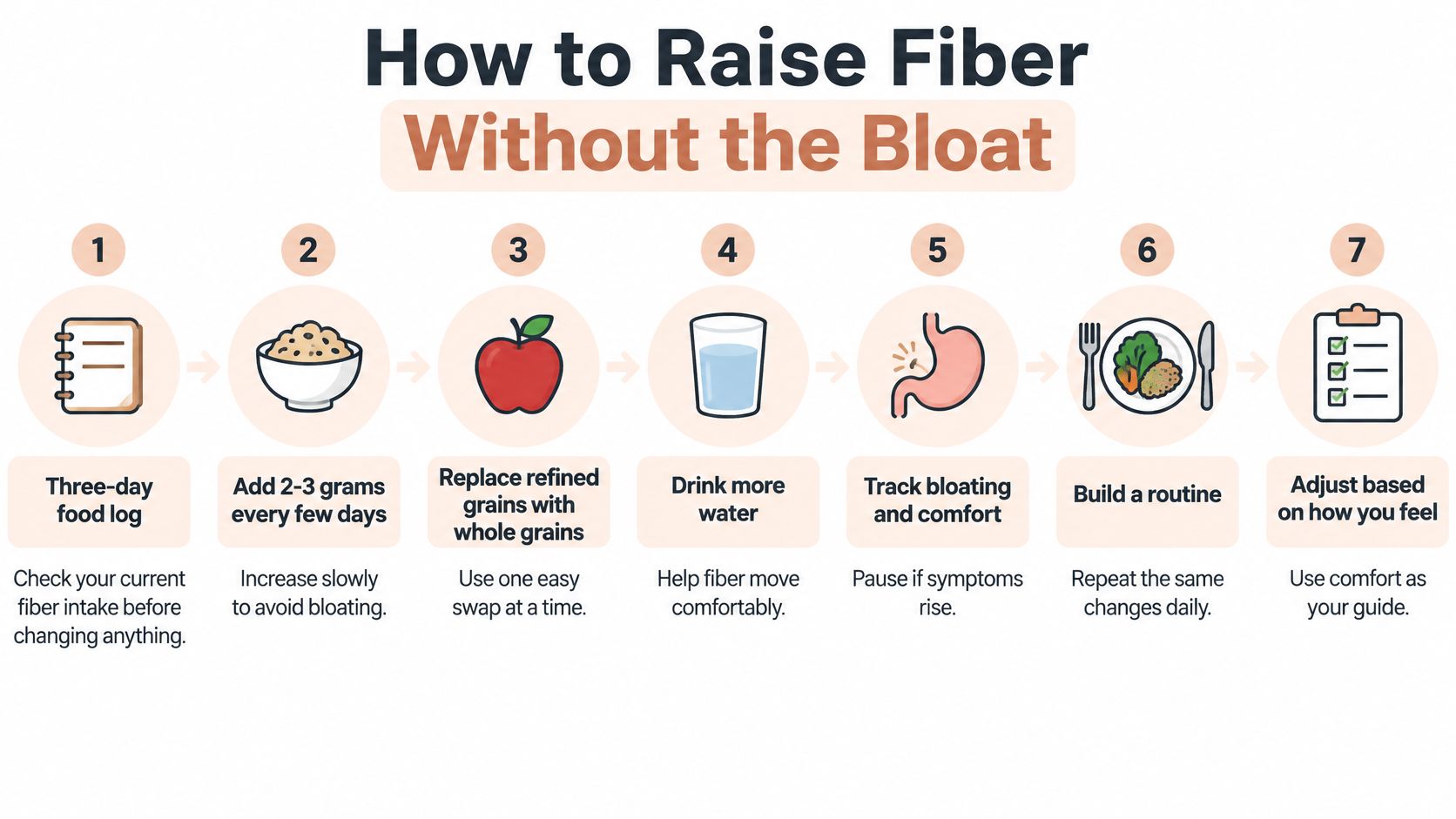
- Estimate your starting intake. Keep a short food log that includes portions, snacks, and supplements. The common slip is recording the main meals while forgetting a fiber powder or gummy.
- Make a modest increase. Add a small portion of one food, such as lentils in soup or berries at breakfast. Don't introduce beans, bran cereal, and a supplement together, because you won't know which change caused discomfort.
- Pair fiber with fluids. NIDDK's guidance on fluids and fiber explains that liquids help soften stools and make them easier to pass. A glass alongside a fiber-rich meal is a useful reminder unless you have a prescribed fluid restriction.
- Spread it across meals. Include manageable portions at breakfast, lunch, and dinner instead of saving most of your fiber for a huge evening meal. A healthy ingredient can still be uncomfortable in an oversized portion.
- Track comfort, not just grams. Note stool frequency, hardness, straining, gas, bloating, and pain. Avoid changing several habits whenever you have one uncomfortable afternoon.
- Pause when symptoms increase. Hold the current amount, or return to the last comfortable portion, rather than pushing through worsening bloating. Significant pain deserves assessment, not a more determined fiber challenge.
- Keep drinking habits steady. Carry water, have a drink available at meals, and consider heat and activity. Don't force an arbitrary water quota: your health, climate, activity, and medical advice all matter.
What Progress Looks Like
Success means softer, easier stools and a routine you can live with. It doesn't mean eliminating every bit of gas.
If you have heart or kidney disease, or another condition that limits fluids, follow your clinician's individualized advice. More water isn't automatically safer.
Daily Habits That Keep Digestion Moving
Consider someone who spends most of the workday at a desk. A realistic digestive routine doesn't require replacing that job with a fitness retreat.
A visible activity tracker can make movement easier to remember.

For movement, NIDDK's constipation guidance recommends at least 150 minutes of moderate activity weekly and notes that some benefits may occur with as little as 60 minutes weekly. Brisk walking and dancing count when your breathing picks up but you can still hold a conversation.
Our desk worker might walk after lunch instead of immediately reopening their laptop. On a busy day, short walks between tasks make movement more achievable than waiting for an uninterrupted workout.
A Calmer Workday Rhythm
At lunch, sit down and give yourself time to chew rather than eating while answering messages. If you notice that stress makes you rush, pause for a few slow breaths before starting.
Keep evenings manageable too. If large, late dinners bring on heartburn, try a smaller meal earlier and leave time before lying down. A consistent bedtime and wake time can help you maintain a steadier daily routine, without turning sleep into another task to perform perfectly.
You can also use the video below as a companion to your movement routine.
Straining despite soft stool deserves a different conversation. If you feel blocked or unable to empty fully, ask whether pelvic floor assessment is appropriate; Lake City Physical Therapy's resource on treating constipation with pelvic floor care offers context for that discussion.
Choose a habit you can repeat on an ordinary workday, not just an ideal one.
Start with the lunchtime walk and record whether passing stool feels easier. Don't judge its value solely by whether your stomach looks flatter.
Probiotics, Enzymes and Fermented Foods Compared
Food is the foundation, and digestive support should have a defined purpose. A probiotic, an enzyme, and a fiber supplement aren't interchangeable tools.
A review of diet and the gut microbiome describes how high-fiber diets support bacteria that produce beneficial short-chain fatty acids, while emphasizing substantial differences between people. In plain language, your gut bacteria use components of food, but your response won't necessarily match someone else's.
Food and Supplement Support Options
| Option | What It Is | Best For | What Evidence Shows | Typical Timeline |
|---|---|---|---|---|
| Fermented foods | Yogurt, kefir, sauerkraut, kimchi, and suitable soy yogurt | Adding variety through meals | The overall diet matters; responses differ between people | An ongoing eating habit, not a quick fix |
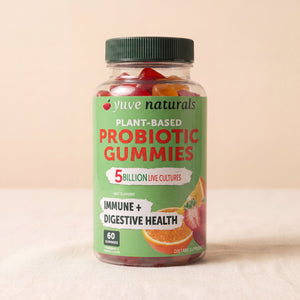
| Probiotic supplements | Live cultures, such as Yuve Vegan Probiotic Gummies | A daily routine with a defined blend | Effects are strain-specific, not guaranteed | Digestive support products often show results within 1–2 weeks of consistent use |
| Digestive enzymes | Papaya enzymes, such as Yuve Vegan Daily Cleanse Papaya Enzymes | Targeted support around heavy or bloated meals | Intended for meal comfort, not treatment of constipation | Often 1–2 weeks of consistent use; follow product directions |
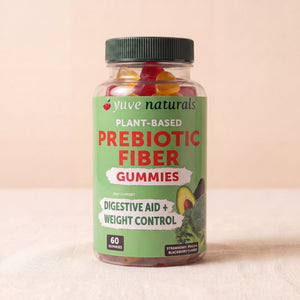
| Prebiotic fiber | Chicory root inulin, such as Yuve Vegan Prebiotic Fiber Gummies | A daily fiber top-up when tolerated | Inulin's constipation evidence is limited and uncertain | Increase gradually and review tolerance before adding more |
For vegan meals, fermented vegetables and appropriate plant-based yogurts can add variety without dairy. Our guide to fermented foods for digestion offers food-focused ideas.
Choose the Tool for the Problem
If your concern is constipation, a product marketed for post-meal comfort isn't automatically the best match. Similarly, a probiotic's culture count alone doesn't tell you whether its particular strains will help your symptoms.
Enzymes aren't permission to ignore repeated food reactions. Persistent pain, diarrhea, or bloating after a specific food deserves a closer look rather than repeated attempts to mask it.
Start with one clearly defined change. Record the symptom you want to improve, keep the rest of your routine reasonably steady, and stop escalating if discomfort increases. That approach gives you more useful information than starting several products together.
Fixing Common Fiber and Digestion Problems
More fiber is not always better. If beans, bran, or another new food brings on symptoms, your portion or the fiber type may not suit you right now. Treat the following as starting points for mild symptoms, not diagnoses.
Symptom Fixes at a Glance
| Symptom | Likely Cause | First Fix |
|---|---|---|
| Bloating after beans or lentils | Fiber added too fast | Halve the portion and step up slowly |
| Hard, infrequent stools | Too little fluid or fiber | Address inadequate fluid intake, then add fiber gradually |
| Loose stools after bran | Too much insoluble fiber at once | Stop the bran increase; consider oats or clinician-guided psyllium |
| Gas after a fiber gummy | Dose too high or poor tolerance | Lower the dose within label directions and try it with a meal |
| Cramping with a new fiber source | Fiber type not tolerated | Swap sources and keep a symptom log |
| Heartburn after large or late dinners | Portion size and timing | Eat dinner earlier and in smaller portions |
Fiber supplements differ in the evidence available for constipation, and no option suits every person or every cause of abdominal discomfort. Start with a small, manageable change and watch how your body responds.
IBS and IBD Need Different Decisions
IBS and inflammatory bowel disease (IBD) are different conditions, so fiber decisions may differ too. With IBS, the type and amount of fiber can affect symptoms. With IBD, disease activity and complications also matter.
The GI Nutrition Foundation's review of nutrition findings in IBD explains why tolerance needs to be individualized. Some people tolerate fiber well, while particular fibers may worsen symptoms for selected patients.
Safety first: With an active IBD flare or a known intestinal narrowing, don't increase bulky fiber without guidance from your treating team.
Suppose oatmeal feels comfortable, but bran and large servings of lentils bring on cramps. That pattern doesn't mean all fiber is harmful. It suggests you could return to foods you tolerate, simplify what you've added, and discuss the pattern with a clinician.
Keep a brief log of the food, portion, symptoms, and bowel movement. If symptoms persist or worsen, take that record to a clinician rather than testing larger doses on your own. Fiber is a dose to tailor: the right amount and type are the ones you can tolerate, not necessarily the largest serving.
When to See a Clinician Instead of Self-Treating
Constipation that persists isn't evidence that you've failed to drink enough water or try hard enough. People who are already adequately hydrated and active may get limited additional relief from pushing those habits further.
Get prompt medical assessment for:
- Bleeding: Blood in your stool or rectal bleeding.
- Unexplained changes: Weight loss, anemia, or a sudden change in bowel habits.
- Persistent vomiting: Especially with abdominal swelling or trouble passing stool or gas.
- Significant pain: Severe or worsening abdominal pain.
Severe pain with vomiting, marked swelling, or inability to pass gas can indicate an urgent problem. Don't treat that combination with more fiber.
When Diet Isn't Enough
For adults with chronic idiopathic constipation, the AGA–ACG clinical practice guideline strongly recommends polyethylene glycol, or PEG, with moderate-certainty evidence; pooled findings showed approximately 2.90 additional complete spontaneous bowel movements weekly versus placebo. That means bowel movements without rescue treatment and with a sense of complete emptying.
A clinician may review your food intake and medications, assess whether an appropriate gradual fiber trial has helped, then discuss PEG. Monitoring includes stool consistency, loose stools, bloating, nausea, and cramping; this isn't a universal prescription for self-directed treatment.
If straining or incomplete emptying is prominent, Nursing Assessment Australia's pelvic floor guide can help you prepare questions about assessment. Our overview of digestive health specialists can also help you understand the types of care available.
Medication safety matters too. Consult your healthcare provider before taking DGL licorice if you take blood pressure medication, diuretics, or any cardiac medications.
Bring your symptom log and a complete medication and supplement list. Those details help your clinician distinguish a food-tolerance issue from a problem that needs another treatment.
Frequently Asked Questions
Do I Need a Probiotic to Keep My Digestion Healthy?
No. A varied eating pattern and comfortable bowel habits matter more than automatically buying a probiotic. Targeted support can be a proactive choice, but its usefulness depends on the strains, your symptoms, and your response.
Does a Fiber Gummy Count Toward My Daily Fiber?
Yes, count the dietary fiber listed per serving, not the gummy's total weight. Food should remain the base because it provides a wider mix of nutrients and fiber sources. Don't assume a supplement closes your entire daily gap.
How Long Until I Notice a Difference?
Give a tolerable routine time to become consistent, and use your log to look for easier stools, less straining, and improved comfort. Don't wait out significant pain or worsening symptoms just to finish a trial. A timeline is never a reason to ignore warning signs.
Is More Fiber Safe if I Have IBD or IBS?
Not always. Fiber type, portion, disease activity, and personal tolerance can change the answer. With diagnosed IBD, a flare, or a known narrowing, discuss changes with your treating team; with IBS, seek help tailoring foods rather than eliminating broad categories indefinitely.
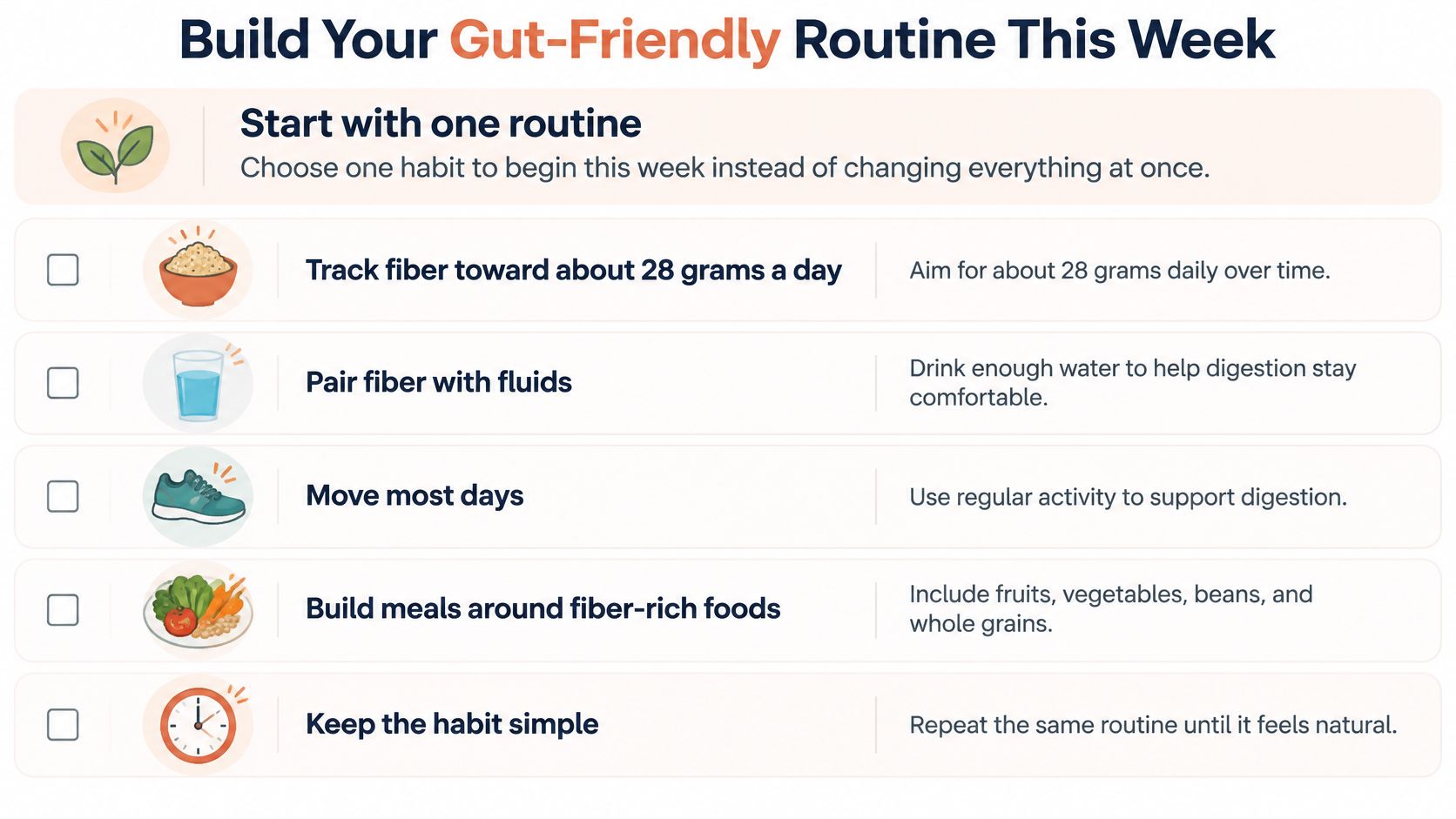
Build Your Gut-Friendly Routine This Week
Choose one repeatable routine, not a complete digestive makeover. A change that fits your normal Tuesday is more useful than a demanding plan you abandon by the weekend.
Use this checklist to pick your starting point:
- Measure before adding: Record your usual fiber foods and use labels to understand your intake.
- Pair meals with fluids: Keep a drink available, while respecting any medical fluid restriction.
- Make movement convenient: Attach a walk to lunch, your commute, or another existing habit.
- Adjust evening meals: Try smaller, earlier dinners if late meals trigger heartburn.
- Record useful details: Track stool comfort, straining, food portions, and symptoms to discuss at an appointment.
Keep the routine somewhere visible so you don't have to rely on memory.
Look for Comfort, Not Perfection
A useful first win might be passing stool without pushing, finishing lunch without rushing, or identifying a portion of beans you enjoy comfortably. Those changes count even if your digestion isn't identical every day.
Karen describes her experience this way:
“Stomach is healing well and I have much less daily discomfort.”, Karen
That's an individual testimonial, not evidence of healing or a promise of the same result for you. Your own progress should be judged by symptoms, daily functioning, and medical advice when needed.
If you want digestive support alongside food changes, choose it for a specific purpose and introduce one change at a time. Avoid layering several new products onto an already uncomfortable gut.
Tell us in the comments which habit you'll start first and which feels hardest. Whether your challenge is remembering water, finding tolerable fiber foods, or making time for lunch, start with the smallest step you can repeat comfortably.
Yuve's Gut Health & Digestion range offers plant-based probiotics, prebiotics, and digestive enzymes to fit a targeted routine; our Vegan Probiotic Gummies contain 5 billion live cultures per gummy and cost $27.49 one-time or $23.37 on subscription. Visit Yuve to explore the range and our 60-day money-back guarantee, then choose support that matches your needs while you build food, fluid, and movement habits.