Ever feel like your stomach inflates like a balloon by afternoon? You’re not alone. That unpredictable bloating and discomfort can be incredibly frustrating, and we get how much it can throw your whole day off track.
The good news is you have more control over your gut health than you might think. The key is understanding the roles of two critical players: probiotics and prebiotics. In this guide, we'll break down the probiotic vs prebiotics difference in plain English, explain why you need both, and give you a clear action plan to finally achieve the digestive comfort you deserve.
Your Gut Health Dream Team: Probiotics and Prebiotics
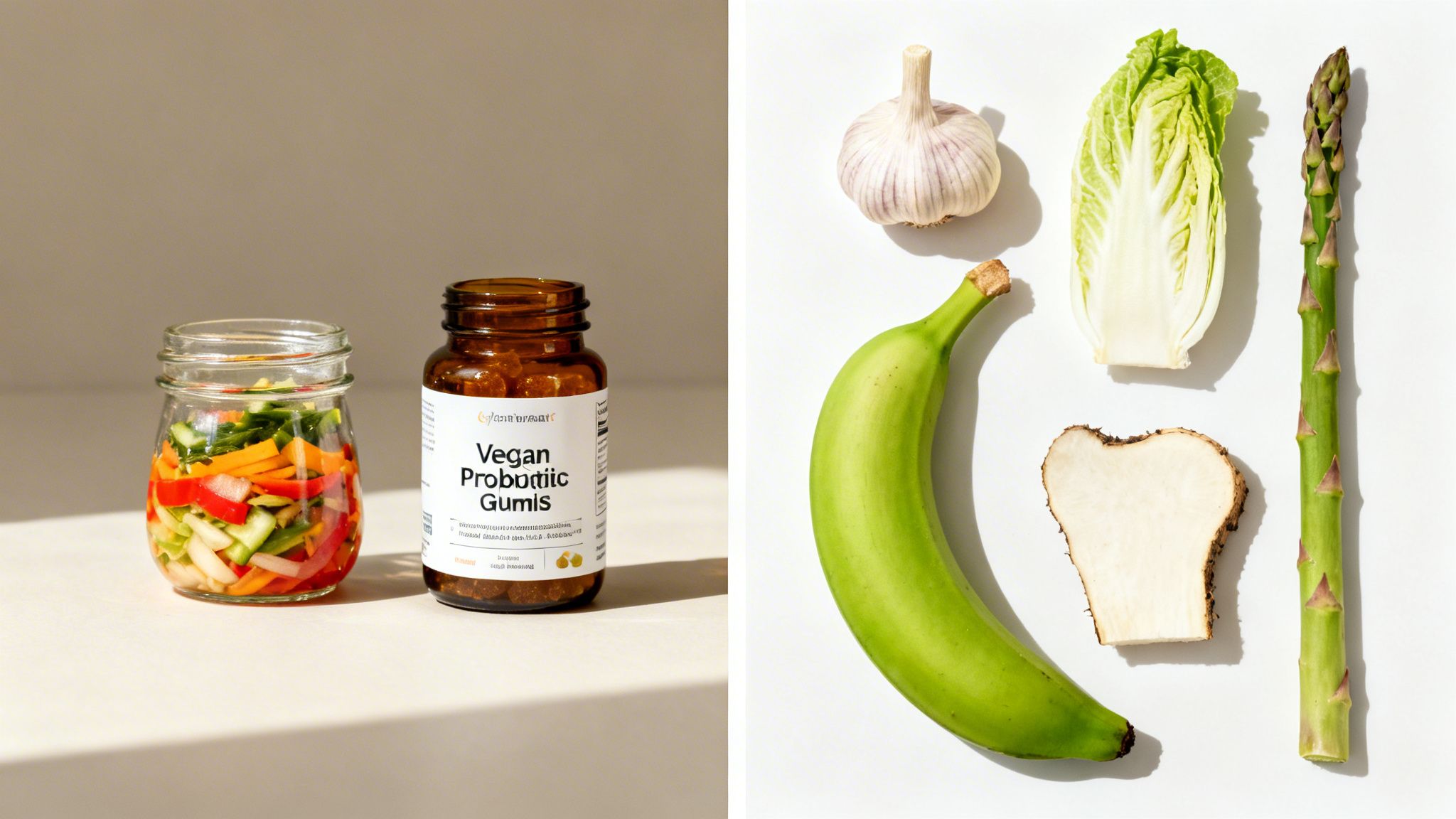
When it comes to the probiotics vs. prebiotics debate, the core difference is pretty simple. Probiotics are live, beneficial bacteria that act as reinforcements for your gut, while prebiotics are the specialized fiber that serves as food for those good bacteria and the ones already living there.
One easy way to think about it is this: Probiotics are the new, skilled workers you bring onto a project, and prebiotics are the high-quality food and resources that keep the entire team energized and productive.
Probiotics vs Prebiotics at a Glance
To make the difference between probiotics and prebiotics perfectly clear, let's put them side-by-side. Here is a quick summary of the fundamental differences between them to help you understand their unique roles in your gut.
| Attribute | Probiotics (The Live Helpers) | Prebiotics (The Helper Fuel) |
|---|---|---|
| What They Are | Live, beneficial bacteria and yeasts that add to the population of good microbes in your gut. | Specialized plant fibers that act as food for the good bacteria already living in your gut. |
| Their Main Job | To directly reinforce and repopulate your gut microbiome with healthy microorganisms. | To selectively nourish and stimulate the growth and activity of beneficial bacteria. |
| Think of It As... | Planting new, healthy flowers in your gut's garden. | Using a specialized fertilizer to help all your good flowers flourish and multiply. |
| Common Examples |
Foods: Yogurt, kimchi, sauerkraut, kombucha. Strains: Lactobacillus, Bifidobacterium. |
Foods: Garlic, onions, asparagus, green bananas, chicory root. Fibers: Inulin, FOS. |
Grasping this core distinction is the first step toward taking charge of your digestive wellness. Probiotics add troops to your gut's army, while prebiotics feed the entire army. Both actions are vital for building a balanced and resilient inner ecosystem.
Understanding Probiotics: The Live Gut Reinforcements
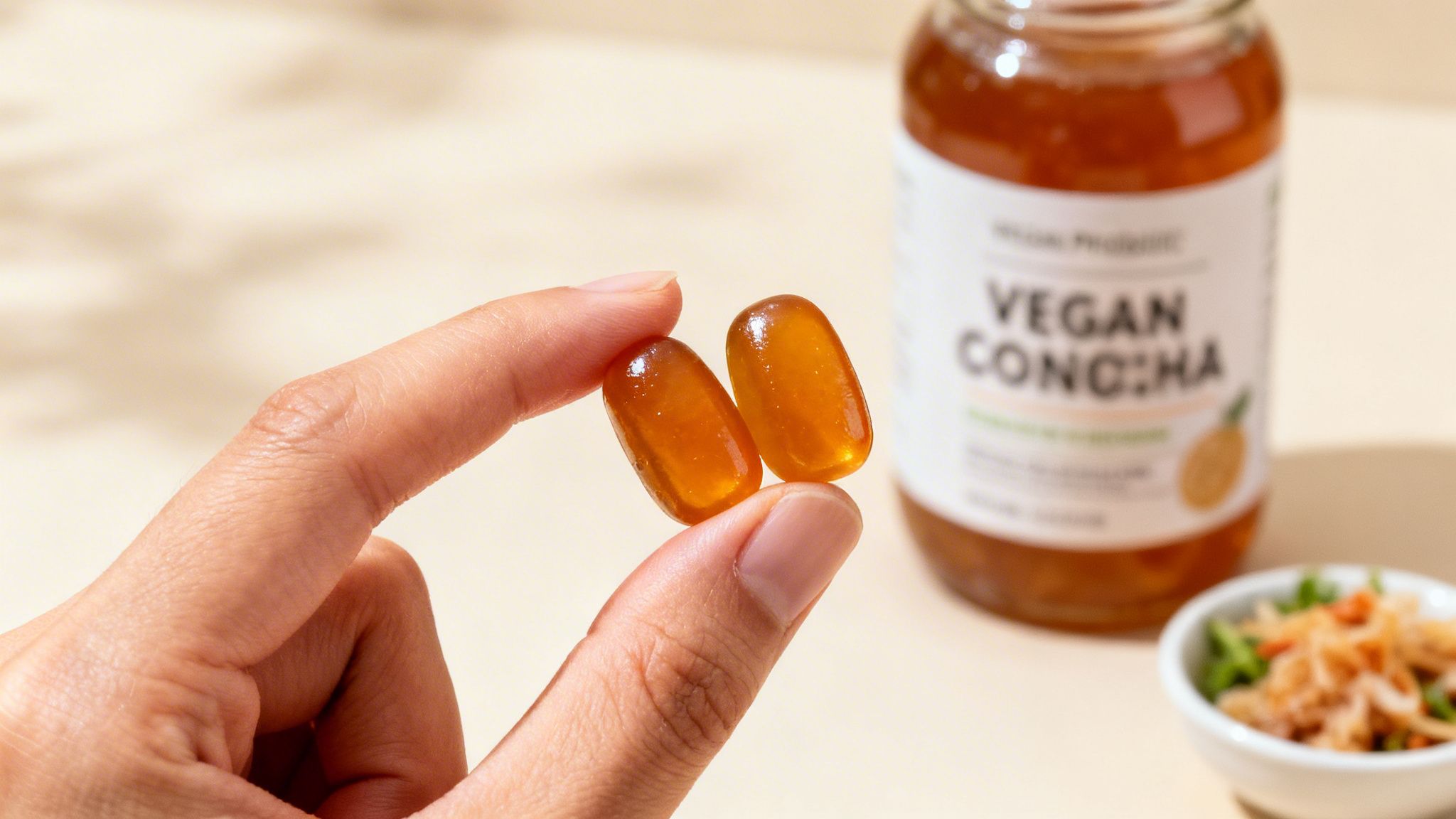
Let's kick things off with the first contender in the probiotic vs. prebiotic discussion. In essence, probiotics are live, beneficial bacteria that you introduce into your system to support the existing community in your gut. These are the "good guys" you hear so much about when people talk about gut health.
These microscopic allies are the powerhouse of your digestive tract, and their influence extends far beyond simply breaking down your last meal. They're fundamental to maintaining a healthy gut, which in turn impacts your overall well-being.
What Probiotics Actually Do for You
I like to think of probiotics as a specialized team brought in to maintain order. Their main job is to keep your gut ecosystem in a state of balance, or what scientists call homeostasis. When your internal community is thriving, you'll notice the difference-smoother digestion, reduced bloating, and a general feeling of vitality.
On a practical level, here’s what this internal team is busy doing:
- Reinforcing your gut lining. Probiotics help strengthen the intestinal barrier, making it less permeable or "leaky." This is crucial for preventing unwanted substances from entering your bloodstream.
- Supporting your immune system. A staggering 70% of your immune function is housed right in your gut. A robust population of beneficial bacteria is non-negotiable for a strong immune response.
- Producing essential vitamins. Certain strains of probiotics are actually little nutrient factories, helping to synthesize Vitamin K and several key B vitamins.
- Communicating with your brain. The gut-brain axis isn't just a buzzword; it's a real communication network between your gut and brain. Probiotics play an active role, which can have a real impact on your mood and mental sharpness.
The magic lies in diversity. A varied and well-populated community of good bacteria is far more resilient and effective at keeping your entire system running smoothly.
Why Probiotics Are More Popular Than Ever
If it feels like everyone is suddenly an expert on gut health, you're not wrong. The global market for probiotics is booming, projected to hit USD 134.50 billion by 2034. This isn't just a trend; it's a fundamental shift in how we view health, recognizing that it truly starts in the gut. As a result, people are actively seeking out probiotics to directly add beneficial microbes to their bodies. You can see the full market analysis and detailed report here.
Of course, this explosion in popularity means navigating a crowded market. It can be tough to know which products are genuinely effective. If you're looking to cut through the noise, our guide on what to look for when buying probiotics is a great resource. A well-formulated supplement delivers specific, beneficial strains directly to your gut, removing the guesswork from supporting your microbiome.
Defining Prebiotics: The Essential Fuel for Your Gut
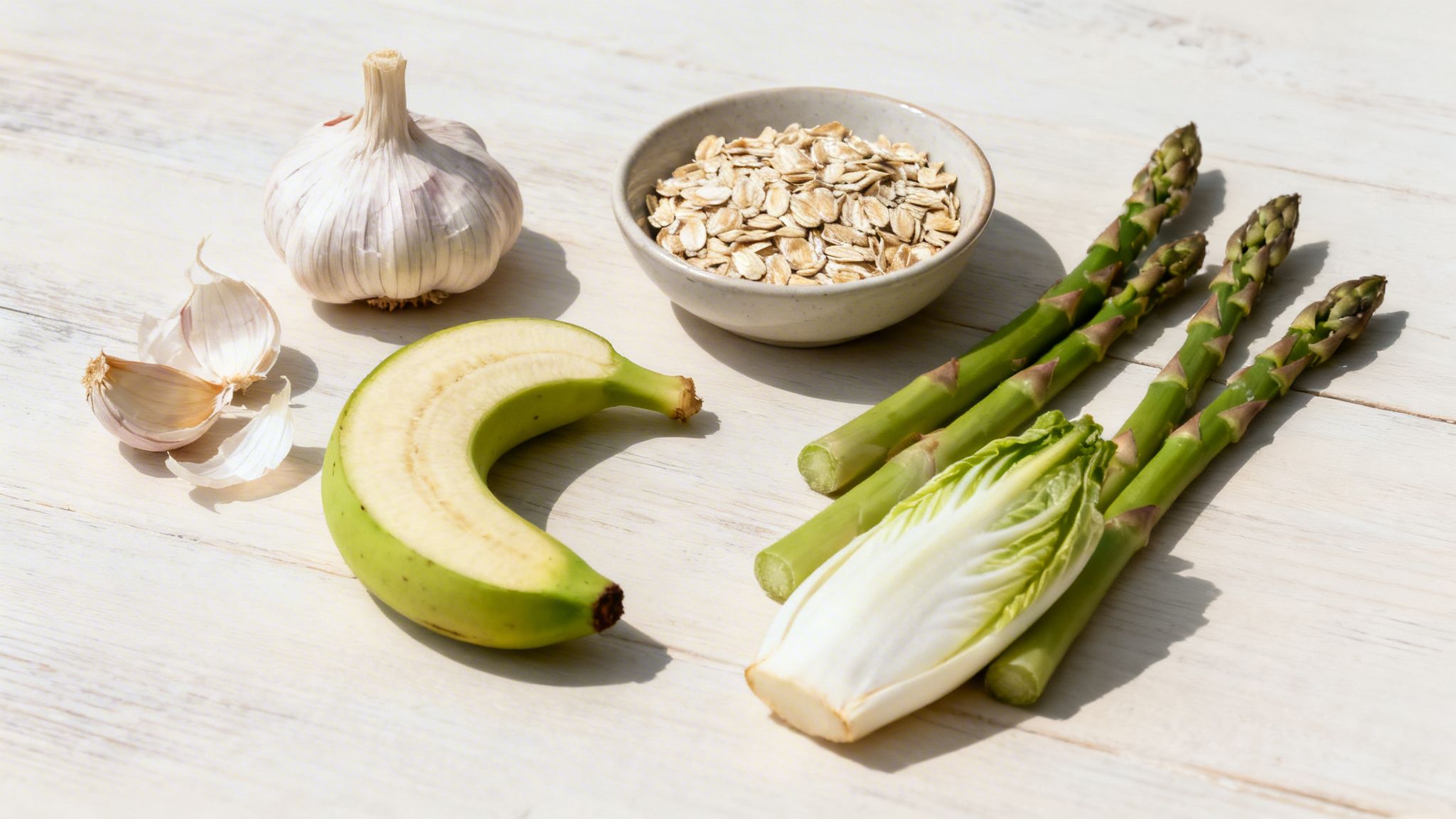
On the other side of the gut health equation, we find prebiotics. If you think of probiotics as the beneficial bacteria themselves, then prebiotics are their specialized food source. They are specific types of plant fiber that our bodies can't actually digest.
Because they are indigestible to us, these fibers travel all the way to your lower digestive tract intact. Once there, they become the perfect meal for your good gut bacteria, allowing them to grow, multiply, and thrive.
How Prebiotics Work Their Magic
I often explain it like this: adding prebiotics is like putting high-quality fertilizer on your internal garden. You're not just planting new seeds (the probiotics); you're nourishing the entire ecosystem so that your existing beneficial microbes can flourish and crowd out the bad guys.
You'll often see these common prebiotic fibers on supplement and food labels:
- Inulin: A very popular and well-researched prebiotic, usually derived from chicory root.
- Fructooligosaccharides (FOS): These are naturally present in many everyday plants, including bananas, onions, and garlic.
- Galactooligosaccharides (GOS): Commonly found in legumes and even some dairy products.
By feeding only the good bacteria, prebiotics help foster a healthier and more balanced gut microbiome. The tangible results? For many people, this means smoother digestion, improved regularity, and even better absorption of crucial minerals like calcium.
It’s a powerful, foundational strategy to boost gut health from the ground up by empowering the beneficial microbes you already have.
This approach is gaining serious momentum. While the probiotics market is massive, the prebiotic market is growing at a much faster clip. Projections show prebiotics growing at a 14.6% compound annual growth rate. A big driver of this growth is their stability and versatility in plant-based products-something we're passionate about at Yuve.
Prebiotics are a form of dietary fiber, so understanding the difference between soluble and insoluble fiber can give you an even clearer picture of how they function.
Adding More Prebiotics to Your Diet
The best part is how easy it is to get more prebiotic-rich foods into your meals. They're found in delicious, natural sources that create a strong foundation for gut wellness over the long term.
If you're curious about which foods give you the most bang for your buck, take a look at our simple guide on what foods are high in prebiotics. It's a great list to bring on your next trip to the grocery store.
How Probiotics and Prebiotics Create Gut Harmony Together
We've spent a lot of time looking at probiotics and prebiotics on their own, but the conversation around probiotic vs prebiotics isn't really a competition. It’s not about choosing a side. The real power, the kind that leads to lasting gut health, comes from understanding how beautifully they work together.
When you bring probiotics and prebiotics into your routine at the same time, you create what's known as a synbiotic effect. It’s the smartest way to support your digestive system.
The Power of Teamwork
Think of it like this: taking a probiotic is like planting a garden with beneficial, hardworking seeds (the bacteria). That's an excellent start! But if you plant those seeds in barren soil without any water or nutrients, they won't grow. They'll struggle to survive, let alone flourish and do their job.
That’s where prebiotics come in. They are the rich, fertile soil for your probiotic seeds. By adding prebiotics, you’re providing the exact fuel your new gut allies need to take root, multiply, and get straight to work restoring balance.
This powerful combination often helps you see more significant improvements in those frustrating symptoms-like bloating, gas, and irregularity-much faster than you would by taking either one alone. You’re not just adding good bacteria; you're building a self-sustaining ecosystem inside your gut.
Key Takeaway: Probiotics add beneficial bacteria to your gut, and prebiotics act as their specific food source. Together, they create a 'synbiotic' environment where your good gut microbes can truly thrive.
A Personal Story of Gut Harmony
This synergy isn't just a scientific theory for us; it’s a personal story that sits at the very heart of Yuve. Our founder, Sam, struggled for years with his own digestive issues. It was a constant source of discomfort and frustration that so many of us know all too well.
He tried just about everything. He found that taking probiotics did offer some relief-the bloating eased up a bit, and his digestion felt more predictable. But it wasn't the complete turnaround he was searching for. It was an improvement, but he wasn’t quite there yet.
The real breakthrough happened when he started focusing on his prebiotic intake. Once he began intentionally adding prebiotic-rich foods to his diet alongside his probiotic supplement, everything just clicked. The combination created a level of gut harmony he hadn't been able to achieve with either one alone.
This firsthand experience is what inspired our entire philosophy at Yuve. We believe in creating simple, effective solutions that work together for your health, providing both the workers and the fuel they need to succeed. This holistic approach is why we formulate our products to offer comprehensive support, taking the guesswork out of building a happier gut.
Choosing Your Strategy: When to Use Probiotics vs. Prebiotics
Now for the big question: which one should you actually be taking? The truth is, there’s no single right answer that applies to everyone. The best choice really depends on your specific health goals and what your gut is currently telling you.
Let's walk through a few common scenarios to help you figure out the right starting point for your own body.
When to Prioritize Probiotics
Probiotics are often your best bet if your gut needs an immediate, targeted reset. Think of them as the special forces you call in when your microbiome is in distress.
You might want to focus on a probiotic if you are:
- Recovering from a round of antibiotics. While essential, these drugs can wipe out the good bacteria along with the bad. Probiotics are crucial for repopulating your system.
- Going through a period of high stress. We’ve all felt it-stress can throw your entire digestive system out of whack. A good probiotic can offer stability when things feel chaotic.
- Struggling with persistent digestive issues. If you're constantly dealing with bloating, gas, or irregularity that just won't budge, directly introducing beneficial bacteria can often help bring your system back into line.
In these situations, probiotics are an intervention. You're adding new, beneficial microbes directly to your gut's "team" to help regain control.
When to Focus on Prebiotics
On the flip side, prebiotics are fantastic for long-term maintenance and building a resilient gut ecosystem. They're less of a rescue mission and more of a sustainable nourishment plan.
Leaning into prebiotics is a smart move if:
- Your digestion is generally stable and healthy. You feel pretty good most of the time but want to proactively optimize your health and fortify your gut for the long haul.
- You want to give your immune system a natural boost. By feeding your good gut bacteria, you're directly supporting the 70-80% of your immune cells that reside in your gut.
- You’re aiming for lasting gut resilience. Prebiotics ensure your existing beneficial bacteria are well-fed, strong, and can consistently keep less helpful microbes in check.
Essentially, prebiotics are the foundation of a great long-term gut health maintenance plan.
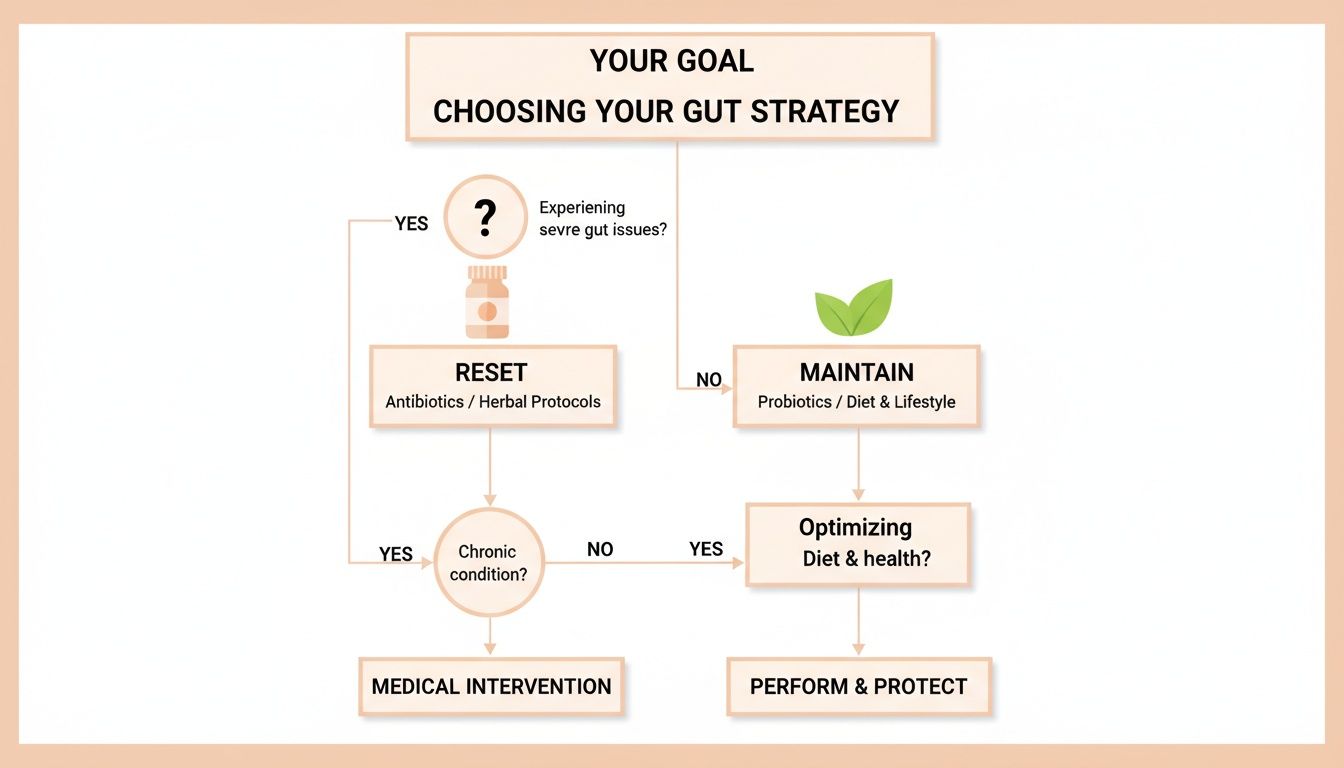
To make this even clearer, here's a quick decision-making guide to help you find your path.
Which Gut Health Strategy Is Right for You?
Use this table to decide whether a probiotic, prebiotic, or a combined approach is the best fit for your current health goals.
| Your Primary Goal | Best Strategic Choice | Why This Approach Works |
|---|---|---|
| Reset & Rebalance: Recovering from antibiotics, stress, or new digestive upset. | Probiotics | Directly introduces beneficial bacteria to quickly repopulate and stabilize a disrupted gut microbiome. |
| Maintain & Nourish: Optimizing an already healthy gut for long-term wellness. | Prebiotics | Feeds your existing good bacteria, helping them thrive and strengthen your natural gut defenses and immunity. |
| Comprehensive Support: Addressing issues while building long-term resilience. | Synbiotics (Probiotic + Prebiotic) | Provides new beneficial bacteria (probiotics) and the specific food (prebiotics) they need to flourish, offering the most complete support. |
This flowchart also visualizes the strategy perfectly: if your system feels off and needs a reset, start with probiotics. If you're focused on maintaining good health, prebiotics are your key.
The Synbiotic Solution: Why Both Is Often Best
For many of us, the most powerful approach isn't an "either/or" choice-it's using them together. This is known as a synbiotic approach, where you tackle both sides of the gut health equation at once. You introduce the good bacteria and immediately give them the fuel they need to thrive.
This dual-action strategy is becoming the gold standard for a reason. The demand for effective gut health support that combines convenience and real results is skyrocketing. That's the exact thinking behind our Yuve Vegan Probiotic Gummies. We formulated them to deliver 5 billion live cultures to replenish your gut while also including prebiotic fiber to nourish them. This takes all the guesswork out of building a happy, balanced microbiome-the good bacteria arrive with their lunch packed.
If you want to dig deeper into how this powerful combination works, check out our guide on probiotic and prebiotic capsules.
Your Action Plan for a Happier Gut
Alright, let's turn all this information into a simple, actionable plan. You don’t need to completely overhaul your life overnight. From our experience, the most significant and lasting results come from small, consistent changes.
Here’s a practical way to start tackling the probiotic vs. prebiotic puzzle today.
Your Probiotic Power-Up
First, focus on getting a steady supply of beneficial bacteria. The easiest way to do this is by adding a high-quality supplement to your daily routine, which gives you a reliable and effective dose to help repopulate your gut.
- Make It Easy: Yuve Vegan Probiotic Gummies are a simple (and genuinely tasty) way to start. Just two gummies a day provide a potent dose of 5 billion CFUs to help get your system back in balance.
- Eat Your Bugs: At the same time, try bringing more fermented foods into your meals. Think about adding things like vegan kimchi, sauerkraut, kombucha, or tempeh. These foods are natural sources of live cultures that contribute to a more diverse gut microbiome.
Your Prebiotic Fuel-Up
Next up: feeding those good microbes you've just introduced. This is where prebiotics come in, serving as the essential fuel for your gut allies to thrive.
We’ve seen it time and again with the people we work with-consistency is what truly matters. Be patient as your body adjusts. That feeling of relief and renewed energy is absolutely worth sticking with it.
Look for simple ways to get more fiber-rich plants onto your plate. Some fantastic choices include:
- Garlic and onions
- Asparagus
- Bananas (especially when they're still a bit green)
- Whole grains like oats and barley
These foods are loaded with the specific nutrients your beneficial gut bacteria love to eat, helping them multiply and flourish. For anyone managing specific gut related conditions like IBS and IBD, a careful and tailored approach that includes both probiotics and prebiotics can make a real difference in finding relief.
Think of this as a long-term investment in your well-being. Every small step you take is a win for your gut health, and we're here to cheer you on.
Frequently Asked Questions About Probiotics and Prebiotics
When it comes to probiotics and prebiotics, a few questions always pop up. We’ve heard the confusion from our community, and our mission is to make gut health feel simple and achievable. Let's clear the air on some of the most common topics.
Can I Get Enough Probiotics and Prebiotics From Food Alone?
Eating a diet packed with fermented foods like kimchi and vegan yogurt, alongside high-fiber plants like garlic and asparagus, is a fantastic foundation for gut health. But in the real world, I do NOT think it's easy to get a consistent, therapeutic amount every single day.
Life gets busy, and meal prep doesn't always go as planned. Plus, factors like food processing and even how you cook your meals can reduce the number of live cultures that actually make it to your gut. A high-quality supplement acts as your daily insurance policy, ensuring you get a potent and specific dose without the pressure of a perfect diet.
How Long Does It Take to Feel the Benefits?
This is the big question, isn't it? The honest answer is: it’s different for everyone because your gut microbiome is as unique as you are. Some people tell us they notice less bloating and better regularity within just a few days.
For most, it typically takes about 2-4 weeks of consistent daily use. This timeframe gives the beneficial bacteria enough time to settle in, multiply, and start making a real difference in your digestive ecosystem. Patience and consistency are truly your best allies here.
Should I Take Probiotics and Prebiotics at the Same Time?
Absolutely! In fact, taking them together is often the most effective approach. This powerful duo is what experts call a synbiotic.
Think of it this way: when you take prebiotics with your probiotics, you’re not just sending new workers into your gut-you’re sending them in with a packed lunch. They have immediate fuel to survive the journey and get right to work.
This is exactly why we formulated Yuve's Vegan Probiotic Gummies to include both. It simplifies your routine and gives your gut the complete support system it needs to truly flourish.
Are There Any Side Effects When Starting?
It's possible to notice some temporary gas or bloating when you first introduce a new wave of good bacteria and fiber. Dun, dun, dun-unwelcome gas. Yikes! Don't worry-this is usually a good sign! It means things are shifting and your microbiome is rebalancing.
This initial adjustment period is typically mild and fades within a few days as your body finds its new normal. A great tip is to start with a smaller dose for the first week and slowly work your way up. This gives your system a little extra time to adapt to the positive changes.
At Yuve, we believe that achieving gut harmony shouldn't be complicated. Our goal is to provide simple, clean, and effective solutions to help you feel your best.
Ready to give your gut the synbiotic support it deserves? Try our delicious Yuve Vegan Probiotic Gummies and take the first easy step toward a happier, more balanced digestive system.