Trying to eat well on a plant-based diet can get weirdly stressful when supplements enter the picture. You want stronger bones, steady energy, and a calm stomach, but then one label says calcium, another says vitamin C, and suddenly you're wondering if you need both, whether they work together, and why some supplements leave you feeling heavy or bloated.
You're not overthinking it. Vitamin c calcium questions are common because these two nutrients are connected, just not in the simple way expected. If you're vegan, vegetarian, or just trying to build a routine that feels good in your body, a little clarity goes a long way.
The Power Players: What Vitamin C and Calcium Actually Do
Calcium usually gets all the bone-health attention, and fair enough. It's the mineral your body uses to help keep bones and teeth strong. It also helps with muscle movement and nerve signaling, which means it does far more than just sit in your skeleton.
Vitamin C has a different job description. It acts as an antioxidant, and the NIH Office of Dietary Supplements explains that vitamin C is required for the biosynthesis of collagen, which is a key part of connective tissue. That matters for skin, gums, joints, and bone structure too.
Think of calcium as the hard material
If your bones were a building, calcium would be part of the solid material that gives them firmness. It's the “strength” piece people usually mean when they talk about bone support.
That's why calcium-rich foods and supplements get so much attention. But bones aren't made of mineral alone.
Think of vitamin C as the scaffold support
Vitamin C helps your body make collagen. In bone, collagen works like a flexible framework that the mineral part builds onto. Without that framework, “more calcium” isn't the whole story.
A landmark 1997 study in Osteoporosis International on postmenopausal women found that calcium intake wasn't directly linked to bone mineral density in that group, while dietary vitamin C showed a positive association with femoral neck bone mineral density. It's one reason nutrition professionals stopped thinking about bone health as only a calcium conversation.
Why this matters: Bone support isn't just about adding more mineral. Your body also needs the structure that helps hold that mineral in place.
Teeth fit into this conversation too. If you're also thinking about enamel and remineralization, this guide on fluoride-free ways to reverse enamel erosion offers a useful food-and-habit perspective.
The Big Question: Should You Take Vitamin C and Calcium Together
Yes, you can take them together. For many individuals, that's a perfectly reasonable choice.
The important nuance is why it can make sense. Some people assume vitamin C acts like a booster switch that instantly makes calcium absorb better. That's too simplistic. The stronger case is indirect support.
The house-building analogy helps
Think of bone like a house:
- Vitamin C helps your body build the frame through collagen production
- Calcium provides the mineral material that helps harden and strengthen that structure
That pairing is why these nutrients belong in the same conversation. They're not interchangeable, and one doesn't replace the other.
A practical takeaway is that vitamin C is most useful for bone support when your overall nutrition is already in decent shape. If calcium intake is too low, vitamin C won't magically fill the gap. If calcium is present but the body isn't building and maintaining tissue well, that's not ideal either.
What usually confuses people
Many readers ask, “So does vitamin C directly improve calcium absorption?” The cleaner answer is that it's better to think about vitamin C as supporting the environment in which healthy bone structure is built, rather than as a guaranteed short-term absorption hack.
That's especially relevant for plant-based eaters. When meals rely heavily on grains, packaged snacks, or lots of cooked staples, vitamin C intake can slip without you noticing. Cooking can reduce vitamin C content, and some staple foods contribute very little of it.
Bones need both the framework and the mineral. That's the most helpful way to understand vitamin c calcium as a pair.
If you want help putting nutrients together more effectively, Yuve's article on how to increase vitamin absorption is a practical next read.
Your Plant-Powered Plate: Vegan Food Sources
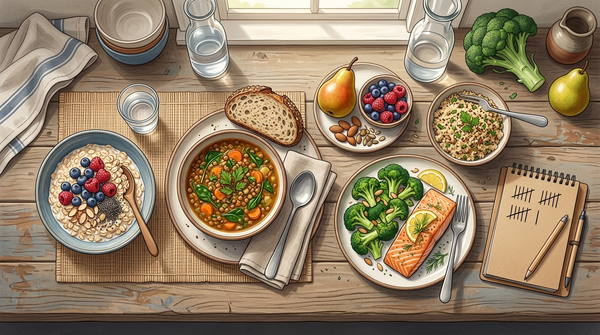
Food first is still the easiest way to make this less complicated. A plant-based plate can absolutely support both nutrients. You just need to be a bit more intentional than “eat healthy” advice usually suggests.

Calcium-rich vegan foods
These are common go-to options for plant-based eaters:
- Fortified plant milks like soy, almond, or oat milk can make calcium intake much easier.
- Calcium-set tofu is one of the most practical staples because it's flexible, filling, and easy to build meals around.
- Tahini and sesame-based foods can contribute calcium while adding flavor.
- Leafy greens like kale work well for many people and fit easily into soups, bowls, or sautés.
Vitamin C-rich vegan foods
This side is often easier to cover when meals include fresh produce:
- Bell peppers are one of the most useful options because they're easy to eat raw or lightly cooked.
- Broccoli gives you a simple way to add vitamin C to savory meals.
- Strawberries and citrus fruits work well for snacks or breakfast.
- Fresh produce added at the end of cooking can help preserve more vitamin C than long cooking times.
A lot of vegans do well when they stop thinking in isolated nutrients and start building simple pairings. A tofu bowl with broccoli and bell pepper works. Fortified plant milk in a smoothie with berries works too.
A low-stress meal-planning shortcut
Try building meals from these two buckets:
| Meal part | Good plant-based options |
|---|---|
| Calcium anchor | Fortified plant milk, tofu, tahini, kale |
| Vitamin C booster | Bell peppers, broccoli, strawberries, citrus |
If you want more ideas, this roundup of dairy-free calcium sources for strong bones is especially helpful for vegan meal planning.
Smart Supplementing for Vegans and Sensitive Stomachs
Supplements can be useful. They can also be annoyingly uncomfortable.
If you've ever taken a calcium supplement and felt chalky, constipated, or weirdly full afterward, you're not imagining it. Some forms are harder for some bodies to tolerate.

Why calcium form matters
This part is worth paying attention to. A consumer review notes that calcium bioavailability depends heavily on its chemical form, and that calcium citrate is more easily absorbed than calcium carbonate in people with reduced gastric acidity. The same review also says there's no evidence that vitamin C inhibits calcium absorption.
For real life, that means:
- Calcium carbonate may be less ideal if your stomach acid is lower or you take acid-suppressing medication
- Calcium citrate is often the gentler option in those situations
- Vitamin C in the same routine isn't the problem if calcium feels rough on your stomach
Sensitive gut, practical choices
If your digestion is easily irritated, keep it simple.
- Take supplements with food if that feels better for your stomach
- Choose fewer, more targeted products instead of stacking lots of pills
- Read the calcium form, not just the front-label claim
- Pay attention to your own response because the “best” supplement on paper still has to work in your body
Some of the most frustrating supplement problems come from the form, not the nutrient itself.
For vegans, this matters even more because there can be pressure to “cover every base” with multiple products. That often backfires. A calmer plan usually works better than a perfect-looking one.
If you're sorting through options, Yuve's guide to the best supplements for a vegan diet can help you narrow your choices without overloading your routine.
Your Daily Protocol for Optimal Timing and Dosing
A good supplement routine should feel boring in the best way. Easy, repeatable, and gentle on your stomach.

The numbers that actually matter
The Mayo Clinic vitamin C guidance lists the adult RDA for vitamin C as 75 mg/day for women and 90 mg/day for men, with 85 mg/day in pregnancy and 120 mg/day during lactation. It also notes a tolerable upper intake level of 2 g/day, and that excess intake can cause diarrhea and stomach cramps.
The same source lists common adult calcium recommendations of 1,000 mg/day for many adults, increasing to 1,200 mg/day for women age 51+ and men age 71+.
A simple routine that works for many people
Use this as a starting framework:
- Start with food. Build meals around fortified plant foods, tofu, greens, and produce before reaching for extra pills.
- Take calcium with a meal. Many people find this easier on digestion.
- Keep vitamin C moderate unless advised otherwise. More isn't always better.
- Avoid mega-dosing “just in case.” That's where side effects become more likely.
- Stay consistent. A sensible daily habit beats occasional overcorrection.
Here's a helpful visual overview if you like seeing routines in action.
If your stomach gets fussy
Try this checklist:
- Take supplements earlier in the day if nighttime dosing bothers you.
- Use water and a real meal, not coffee alone.
- Reduce the number of variables by adding one supplement at a time.
- Back off high-dose vitamin C if you notice loose stools or cramping.
Practical rule: If a supplement plan looks impressive but makes your digestion miserable, it isn't a good plan.
Your Vitamin C and Calcium Questions Answered
Can vitamin C replace calcium for bones
No. They do different jobs.
Vitamin C supports collagen-related structure. Calcium supplies the mineral component associated with bone strength. A plant-based routine works best when you respect both roles instead of expecting one nutrient to do everything.
Does vitamin C block calcium absorption
Current evidence doesn't show that vitamin C blocks calcium absorption. If you're having trouble with a calcium supplement, the form of calcium and your digestive conditions are usually more relevant than vitamin C itself.
Is food better than supplements
Usually, food is the better foundation. It gives you a broader mix of nutrients and makes your routine feel more natural and sustainable.
Supplements can still be helpful when intake is inconsistent, your diet is limited, or you have higher needs. The sweet spot for many people is food first, supplement smart.
Should vegans worry more about this pairing
Vegans should pay attention, yes, but not panic.
Calcium can be lower if your diet lacks fortified foods or tofu. Vitamin C can also run lower when meals lean heavily on grains, convenience foods, or lots of cooked staples. A little planning fixes a lot of this.
Is high-dose vitamin C always harmless because it's water-soluble
Not necessarily. Water-soluble doesn't mean consequence-free.
A review from the Linus Pauling Institute notes that oxalate is a metabolite of vitamin C and that there is concern high vitamin C intake could increase calcium oxalate kidney stone risk, especially in people who are predisposed. That doesn't mean everyone should fear vitamin C. It means dose still matters.
What if I'm prone to kidney stones
This is a good reason to be conservative with high-dose supplements and to discuss your individual situation with a qualified clinician. Food-based intake is often a more comfortable place to start while you sort out what makes sense for your history.
Can I take both every day
Yes, many people can. The more useful question is whether your dose, form, and routine fit your body.
If you're eating a varied plant-based diet and using supplements thoughtfully, daily use can be part of a steady routine. If your stomach rebels, step back and simplify.
A good nutrition routine should help you feel more confident, not more confused.
What's the most common mistake people make
They chase “more” instead of “enough.”
More pills, more milligrams, more stacking. Usually the better move is to cover your basics consistently, choose forms your body tolerates, and let food do more of the work.
If you want a simpler way to support your plant-based routine, explore Yuve. Their vegan-focused supplements are built for real life, especially if you care about clean ingredients, gut-friendly choices, and making daily nutrition feel easier instead of more overwhelming.