You're halfway through dinner, a meeting, or a perfectly ordinary afternoon when your belly twists, tightens, and sends you sprinting. Yikes. With abdominal cramps diarrhea, you're probably not looking for a lecture. You want to know what's likely going on, what to sip first, and whether tonight is a stay home night or a call someone night.
We'll walk through it together, step by step, so you can tell a short, miserable bug from a pattern that keeps coming back.
When Cramps and Loose Stools Show Up Together
Say it's 2 a.m. A wave of cramping low in your belly wakes you, then another trip to the bathroom, then another. You're shaky, a little sweaty, and already dreading the next wave. That pairing is common, frustrating, and still not one single disease.
Diarrhea means passing loose or watery stools at least three times per day, or more often than is normal for you, and abdominal cramps are a recognized partner symptom. The National Institute of Diabetes and Digestive and Kidney Diseases diarrhea overview notes that acute diarrhea is most commonly associated with viral gastroenteritis, food poisoning, or medication side effects.
A weekend bug is not a months long pattern
A short episode often follows an infection or a food related illness. Diarrhea that persists can come from very different places, including celiac disease, Crohn's disease, ulcerative colitis, pancreatic disorders, and small-intestinal bacterial overgrowth.
That same NIDDK summary says research suggests as many as 5% of people in the United States experience chronic diarrhea. What this means for you is simple. Duration changes the job. One rough weekend usually needs fluids and watchful rest. Recurring cramps and loose stools need a clinician looking for an underlying digestive disorder or intolerance.
If the whole house is passing the same bug around, this guide to viral gastroenteritis explained for everyday readers can help you picture how stomach viruses tend to move through a home.
Don't try to name an infection from one search. Match the pattern first, then decide the next step.
Ahead you'll get a pattern table, a first day fluid routine, clear red flags, and a straight answer on antibiotics. We'll keep the calls simple. What you can do safely at home, and what belongs with a clinician.
Match Your Pattern to a Likely Cause
Sort the episode by the company your cramps keep, not by pain alone. Cramps are loud, but they're not specific. A 2025 study published in Tropical Medicine and Health reported abdominal pain in 5,231 of 6,891 participants with diarrhea, equal to 75.91%. That tells you cramps are common. It doesn't tell you the cause.
Use this table as a sorting tool, not a diagnosis.
| Pattern | Likely cause | First move |
|---|---|---|
| Watery stools under 2 days, cramps, no blood | Viral gastroenteritis | Oral fluids, rest, watch for red flags |
| Several people sick after one meal, often with vomiting | Food poisoning | Small frequent sips of oral rehydration solution |
| Starts after a new antibiotic, magnesium, or metformin-type drug | Medicine side effect | Call the prescriber before stopping the drug |
| Fever plus bloody or mucus-streaked stool | Bacteria that may need stool testing | Same-day clinician, no leftover antibiotics |
| Recent hospital stay or recent antibiotics, then watery diarrhea | Possible C. difficile | Contact a clinician promptly for testing |
| Weeks of repeat cramps, weight loss, or nighttime stools | Intolerance, celiac disease, IBD, or bacterial overgrowth | Primary care with a symptom log |
| Travel or a known outbreak | Infectious diarrhea with higher testing value | Clinician-directed care, not self-treatment |
Start with the most common row
Watery, brief, and no blood is the classic stomach virus pattern. You feel washed out, cramps come in waves before a stool, and you may have nausea or a low fever. Fluids, rest, and watching for warning signs are usually the plan. I do NOT think you need to chase a special cleanse or restrictive diet for this row.
Several people sick after one shared meal leans toward food poisoning, especially when vomiting joins in. Fluid loss can stack up faster here because you're losing fluid from both ends. Small, frequent sips matter more than finishing a big glass.
If loose stools reliably follow meals even when no one else is sick, our guide on why diarrhea can happen after eating walks through post meal triggers in plain language.
Rows that change the plan
- New medicine timing: A new antibiotic, a magnesium product, or a diabetes medicine such as metformin can loosen stools by itself. Call the prescriber before you stop a needed drug on your own.
- Fever with blood or mucus: That combination raises the chance of bacteria that need stool testing, including Salmonella, Shigella, Campylobacter, Yersinia, Clostridioides difficile, and Shiga-toxin-producing E. coli.
- Recent antibiotics or hospital stay: New watery diarrhea after that history deserves prompt testing for possible C. difficile, not watchful waiting alone.
- Weeks of repeats: Cramps and loose stools returning for weeks, especially with weight loss or waking at night to use the bathroom, need a workup for intolerance or inflammatory disease.
A repeating pattern can also overlap with irritable bowel syndrome, where cramping and urgency come and go without fever. If that sounds familiar, this overview of IBS care at Sunridge Medical is a useful next read while you arrange your own clinician visit.
Travel or a known outbreak is its own row. Same day clinical advice beats leftover medicine every time.
Replace Fluids Before You Chase a Cause
The immediate hazard isn't the cramp itself. It's fluid and salt loss. Loose stool removes more water and electrolytes than formed stool, and vomiting speeds the loss. That's why you can feel dizzy, headachy, and oddly tired even after the cramping eases for a bit.
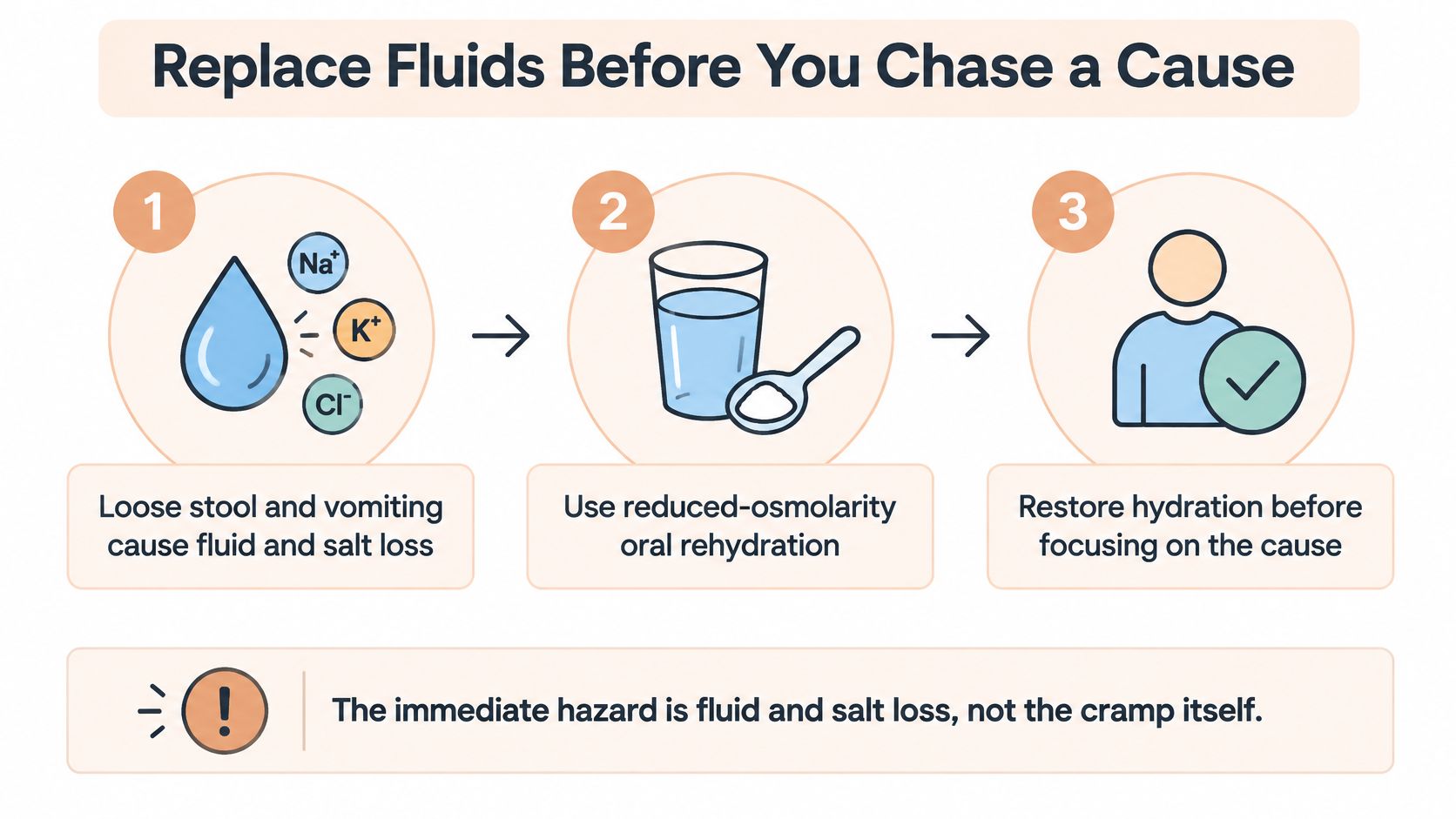
The NIDDK guidance on diarrhea symptoms and causes describes reduced-osmolarity oral rehydration solution as first line treatment for mild to moderate dehydration across age groups. Here's the plain language version. The glucose in that solution helps your intestine absorb sodium, and water follows the sodium in, even while diarrhea continues.
Plain water replaces water. It doesn't replace salts. A sports drink can help you drink something, but it isn't an exact stand in for a real oral rehydration solution when losses are steady.
Your first day sipping routine
- Sip small and often: Take about a teaspoon to a tablespoon every few minutes if you feel sick. Tiny sips are easier to keep down than a full glass at once.
- Use a real oral rehydration solution: Choose one when stools are frequent or vomiting is part of the picture. This replaces both water and electrolytes, which is the actual job.
- Pause solids only while vomiting is active: Once fluids stay down, return gently to rice, bananas, toast, and broth. You don't need to starve a recovering gut.
- Skip the irritants for now: Hold alcohol, greasy meals, and large dairy portions until stools start to firm. They can keep a sensitive gut churning.
- Recheck every few hours: Notice your thirst, urine color, and any dizziness when you stand. Pale urine and steady trips to pee are reassuring signs.
Practical rule: If a big drink makes you gag, shrink the sip and shorten the interval. Consistency beats volume in one go.
A few people need individualized advice before using oral rehydration products. That includes older adults, people who are immunocompromised, and anyone with diabetes or kidney disease. A quick call first is the safer move for you.
When sipping at home stops being enough
Stop home dosing and get urgent assessment if you can't retain fluids, vomiting is frequent, pain is severe, or you see blood or pus in stool. Black tarry stool, altered mental status, or symptoms that keep worsening also move you out of the home care lane.
Severe dehydration, shock, or failure of oral rehydration may need intravenous isotonic fluids in a medical setting. That's not a failure on your part. It's the right tool when the gut can't keep up.
Red Flags and Tonight's Decision
Start with the emergency list, in the order most of us scan it at night. Get emergency care now for sudden or severe pain, pain when your belly is touched, inability to pass stool or gas, fainting, confusion, or a feeling of shock. Don't negotiate with those.
Same day urgent care fits bloody, black sticky, or pus filled stool, a high fever with marked cramps, or no fluid kept down. The NHS guidance on stomach ache and abdominal pain recommends urgent assessment for abdominal pain that begins suddenly or is severe, pain that hurts when the stomach is touched, bloody or black sticky stools, inability to urinate, or inability to pass stool or gas.
| Sign | Why it matters | Where to go |
|---|---|---|
| Sudden or severe pain, or pain when the belly is touched | May be more than simple gastroenteritis | Emergency care |
| Unable to pass stool or gas | Possible blockage | Emergency care |
| Fainting, confusion, or shock | Severe dehydration or systemic illness | Emergency care |
| Bloody, black sticky, or pus-filled stool | Bleeding or a pathogen that needs testing | Same-day urgent care |
| Cannot keep fluids down or urinating much less | Oral rehydration is failing | Urgent care; emergency if faint |
| High fever with marked cramps | Higher chance of invasive infection | Same-day clinician |
| No improvement after a few days, weight loss, or returning bouts | Possible ongoing digestive disease | Primary care soon |
What dehydration actually looks like
Forget vague warnings. Look for extreme thirst or a dry mouth, urinating much less than usual, dark urine, and unusual tiredness. Dizziness, sunken eyes or cheeks, and skin that stays tented after a gentle pinch and release are later, more worrying signs.
Children, older adults, and people with chronic illness should move up one level of care sooner. A sign that might mean urgent care for a healthy adult can mean emergency care for them. Trust that lower threshold.
For a calmer walk through comfort measures once danger signs are ruled out, see our guide on how to ease stomach cramps with safe first steps.
Three leftover questions, answered in one pass
Was it food poisoning or a virus? A shared meal with several people sick leans toward food poisoning. A bug moving through the household over days leans toward a virus. Either way, the fluid plan stays the same until a red flag appears.
Can I take anti diarrhea medicine tonight? Not when blood or high fever is present. Slowing the gut in that setting can be the wrong move, so ask a clinician first.
This keeps happening, but it always settles. Can I skip the doctor? No. Repeated bouts are a reason to contact a primary care clinician, even if each episode fades. Diarrhea that doesn't improve after a few days, unexplained weight loss, or pain and bloating that keep returning warrant medical review.
Once red flags are cleared and you're eating again, the job changes from rescue to rebuilding comfortable, ordinary meals.
That's the point where daily digestive support fits. Our Vegan Daily Cleanse Papaya Enzymes are papaya enzymes meant to ease bloating and smooth daily digestion, so a balanced meal feels less heavy afterward. Digestive support products like enzymes and probiotics often show results within 1 to 2 weeks of consistent use, which makes them a recovery step, not a same night fix.
I do NOT think enzymes belong in the middle of vomiting, fever, or bleeding. Fluids and medical care own that window. Afterward, supporting digestion is a smart, proactive step toward enjoying food without dreading the aftermath.
Why Antibiotics Are Not the First Fix
Dun, dun, dun, the leftover antibiotic in the cabinet starts looking like a plan. Yikes, friend, let's pause there. Cramps plus diarrhea often get framed as either a home remedy situation or a reason to demand an antibiotic. Real life has a middle lane, and it matters.
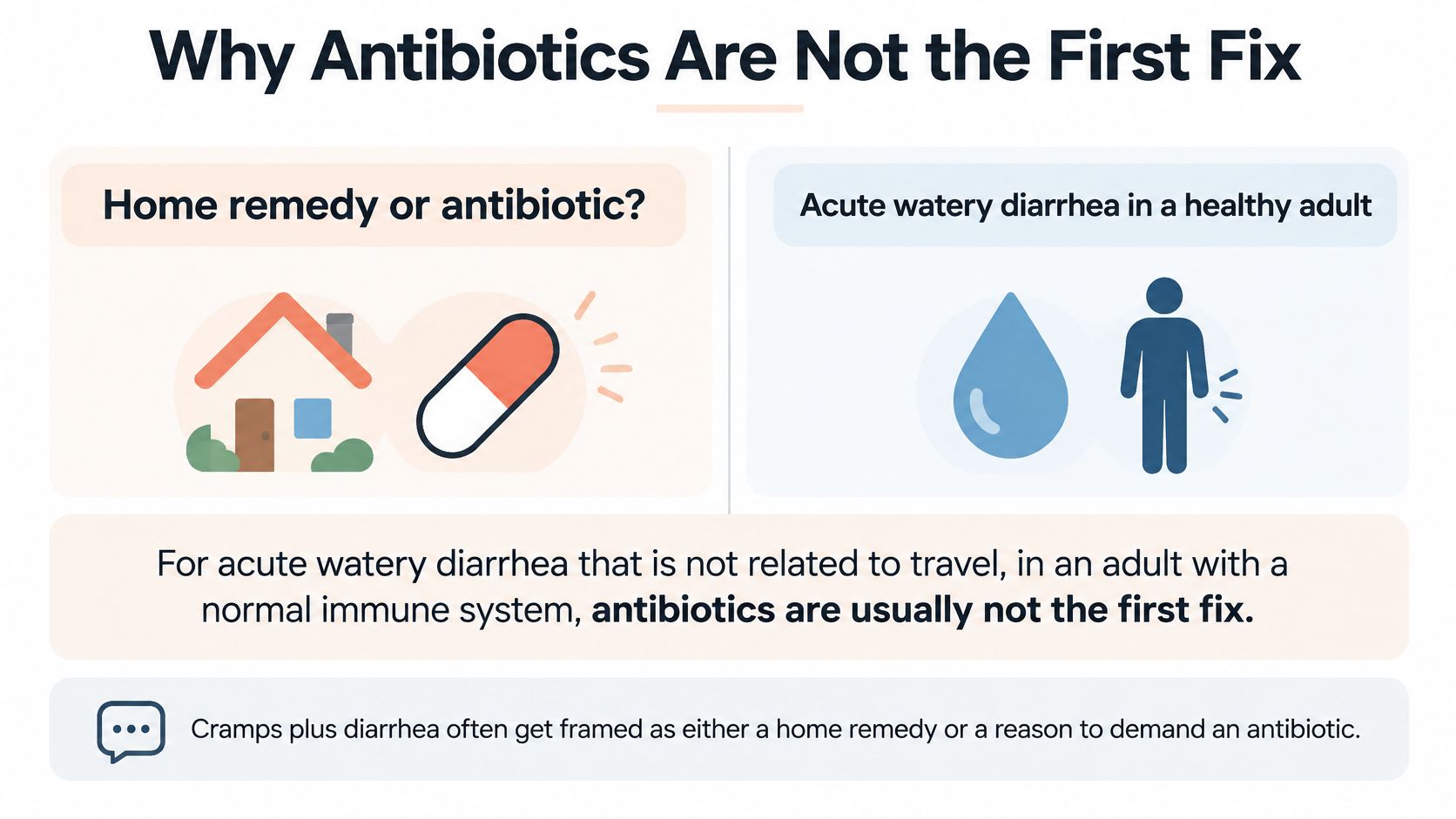
Recent clinical guidance on acute diarrhea management says antibiotics generally should not be started empirically for acute watery, non-travel-associated diarrhea in immunocompetent adults, because viral causes are common. In plain words, if it's watery, brief, not travel related, and your immune system is normal, an antibiotic is usually aimed at the wrong target.
When the answer changes
The picture shifts with fever, blood or mucus in stool, recent antibiotics or a hospital stay, travel, a known outbreak, or a weakened immune system. Those features raise the value of stool testing. Testing helps a clinician choose a drug that fits the actual pathogen, or decide that no antimicrobial is the safer call.
One pattern deserves special care. When Shiga-toxin-producing E. coli is possible, antibiotics should be withheld until testing excludes Shiga toxin, because treatment can increase the risk of serious complications such as hemolytic uremic syndrome. Severe cramping with bloody diarrhea and little or no fever is the pattern that makes that risk especially relevant.
Drugs that slow the gut, such as loperamide, raise a similar concern. They're a poor match for high fever or bloody stool. Holding infected contents in a very inflamed gut isn't relief, even if the bathroom trips pause.
What this means for you
- Supportive fluids come first: Rehydration helps in nearly every row of the pattern table.
- Testing decides the antimicrobial: A clinician directed prescription is different from a leftover bottle guess.
- Access is not the same as safety: Antibiotic availability and prescribing practices vary substantially by country. Easier access in some places doesn't make self medication a safe default.
If a clinician does prescribe an antibiotic for you, our guide on how to take probiotics with antibiotics explains timing in everyday language. Keep the order straight. Fluids first, testing when the pattern calls for it, prescription only when a clinician directs it.
When the Same Bout Keeps Returning
Cramps and loose stools that return every few weeks deserve a different response from a one-off bout. Even if each episode settles, a repeating pattern can have several causes and is worth discussing with a clinician.

Bring a log, not a guess
A brief symptom record gives your primary care clinician a clearer picture than memory alone. For a couple of weeks, note when symptoms start and how often they return.
- Stool details: Record how many stools you pass in a day, whether there is blood or mucus, and whether symptoms wake you at night.
- Other changes: Note fever, weight change, or unusual tiredness.
- Context: Include new medicines, recent travel, and foods that seem to set symptoms off.
These details can help a clinician consider causes such as lactose trouble, celiac disease, irritable bowel syndrome, inflammatory bowel disease, or small-intestinal bacterial overgrowth. Avoid cutting out many foods on your own. A restrictive diet can make meals harder without identifying the cause.
Calmer meals, after urgent concerns are addressed
For some readers, eating feels less stressful when discomfort after meals eases. Nicole says, “GI tract is calmer and I have less discomfort after eating.” Jessica says, “My stomach is noticeably calmer.”
These comments describe individual experiences with everyday comfort. They do not mean digestive support treats infection, fever, or bleeding. If you are struggling to keep fluids down or a clinician is investigating a possible infection, focus on medical care first. Once urgent concerns are addressed and you are eating again, digestive support may be a separate topic to discuss.
What pattern finally led you to call a clinician? Share it in the comments if you're comfortable. Another reader may recognize the same pattern and seek care sooner.
Frequently Asked Questions About Cramps and Diarrhea
How long do cramps and diarrhea usually last? Short viral episodes often settle within a few days with fluids and rest. Anything that isn't improving after a few days needs a clinician, even if the cramps feel milder.
Should I take an antibiotic at home? Usually not for acute watery diarrhea without travel, fever, blood, or immune concerns. Stool testing decides whether an antimicrobial helps, and which one fits.
Can I take anti diarrhea medicine? Avoid it when blood or high fever is present, and ask a clinician first in that setting. Slowing the gut isn't always the safe kind of relief.
How do I tell food poisoning from a stomach bug? Several people sick with vomiting after a shared meal leans toward food poisoning. A bug spreading through the household over days leans toward a virus. The fluid plan is the same either way.
When do digestive enzymes make sense? After red flags are excluded, for bloating and heavy after meal feelings around a sensitive gut. Never as a treatment for infection, fever, or bleeding.
Do repeated episodes need a doctor? Yes. Bring a symptom log to primary care, even if each bout settles on its own. Repeating patterns deserve a real look.
For gentler next steps, explore our related reads on Foods That Trigger Bloating and How to Reintroduce Dairy. Pair them with trusted guidance from the NIDDK or NHS when symptoms are active, and let your clinician make the medical calls.
When you're past the fluid rescue stage and ready for meals to feel ordinary again, Yuve offers plant based digestive support designed for bloating and heavy after meal discomfort. Start with the pattern table above, keep your symptom log going, and visit us to find the daily support that fits your gut once your clinician has cleared the urgent stuff.