You've read that probiotics can support gut health, so you add one to your morning routine. A few days later, your bloating is worse, your stomach feels unsettled, and you're wondering whether you should keep pushing through.
For many healthy adults, common probiotics are tolerated well. But live microorganisms aren't automatically safe for every person or every medical situation. The answer to “who should not take probiotics” depends on your immune system, illness severity, gut-barrier health, medications, medical devices, age, and the exact strain in the bottle.
The Probiotic Excitement That Deserves a Reality Check
The label says “probiotic,” the bottle is sold without a prescription, and the marketing sounds reassuring. It's easy to assume that a product containing “good bacteria” must be harmless. I understand the appeal, especially when you're dealing with uncomfortable bloating, unpredictable digestion, or the frustration of trying one gut-health solution after another.
That assumption needs a reality check. A probiotic is a live microorganism, and different products may contain different bacterial species, yeast strains, doses, formulations, and manufacturing standards. A capsule containing Lactobacillus rhamnosus GG isn't the same intervention as one containing the yeast Saccharomyces boulardii. Your body's response also depends on your health at the time you take it.

The clearest concern involves people who are immunocompromised, critically ill, have a weakened intestinal barrier, or have a central venous catheter. In these settings, microorganisms that usually remain in the digestive tract can cross damaged tissue and reach the bloodstream. The CDC-reviewed clinical literature identifies these groups as having the strongest risk factors for serious probiotic-related complications, including bacteremia and fungemia. CDC clinical safety literature
That doesn't mean every healthy person needs to fear probiotics. It means you should match the person, product, and purpose before taking one. If you're comparing products for oral use, this guide to choosing the right oral probiotics can help you think beyond the word “probiotic” and examine the actual formulation.
The practical rule: “Over the counter” describes how you buy a product, not whether it fits your medical history.
What Probiotics Are and Why Safety Is Not Automatic
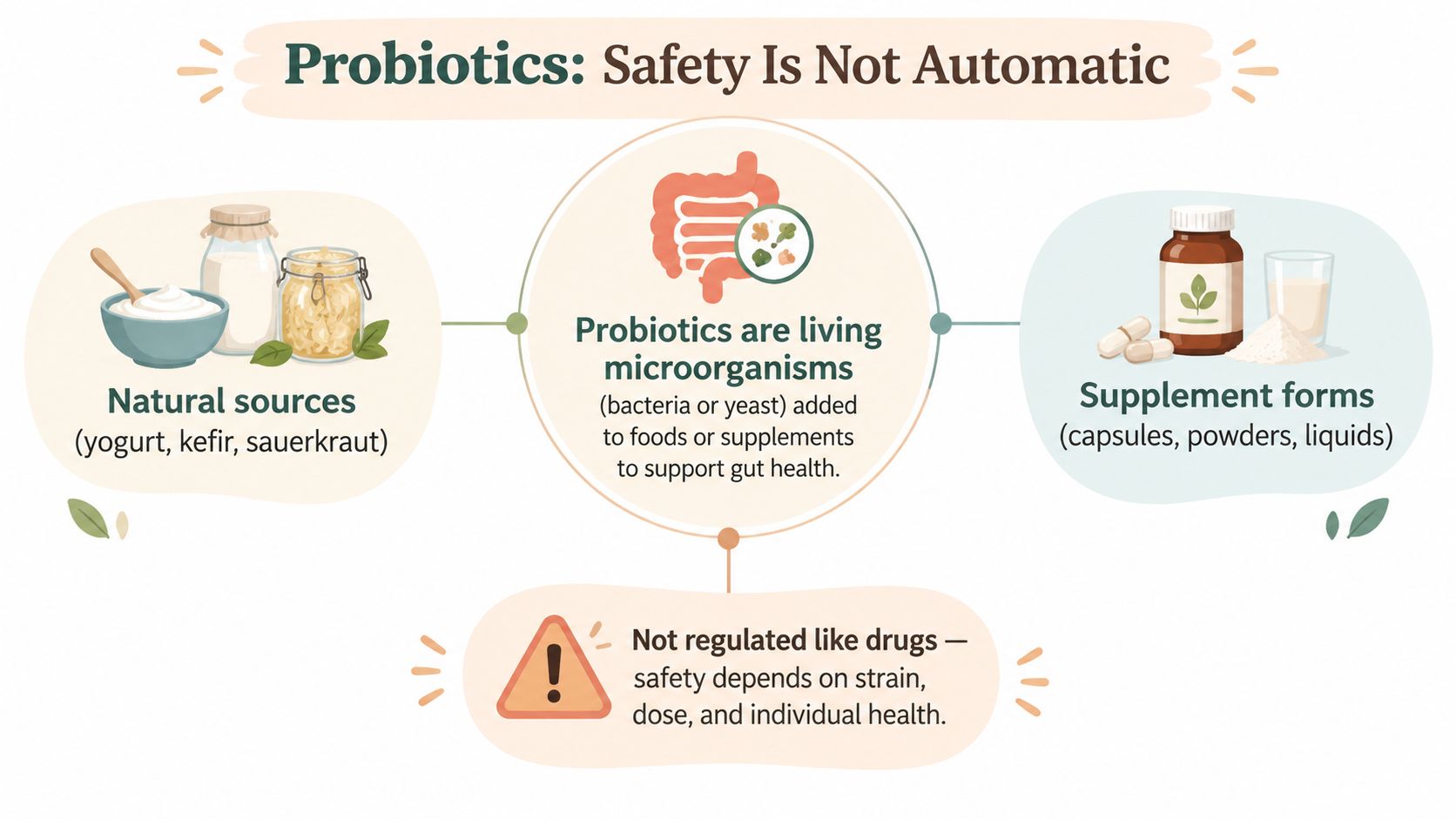
Probiotics are living bacteria or yeasts consumed through foods or supplements. People take them to introduce selected microorganisms into the digestive tract. Foods such as yogurt, kefir, sauerkraut, and other fermented products may contain live cultures, while supplements commonly come as capsules, powders, liquids, or gummies.
The live-microbe feature is also the reason safety requires context. A healthy intestinal barrier helps keep gut contents inside the digestive tract. Severe illness, immune suppression, intestinal injury, or major medical procedures can weaken that barrier. In an especially vulnerable person, a live organism may move into tissue or circulation and contribute to bacteremia, fungemia, or sepsis. The NIH Office of Dietary Supplements reports that serious probiotic-related infections have mostly involved people who are severely ill or immunocompromised. NIH probiotic safety information for health professionals
Why the strain matters
The label should identify the organism clearly. Saccharomyces boulardii, for example, is a yeast-based probiotic that deserves particular caution in people with immune compromise, critical illness, or a central venous catheter. CDC-reviewed guidance specifically notes that experts recommend avoiding it in those groups. CDC-reviewed guidance on probiotic-associated infection
Risk also depends on the dose, formulation, duration, product quality, and the person's current condition. A concentrated supplement shouldn't be treated as automatically equivalent to eating a serving of fermented food. Prebiotics are different again. They're substances that nourish existing gut microbes rather than adding live organisms, but that distinction doesn't make every prebiotic product suitable for every digestive condition.
The key principle is simple: the word probiotic doesn't erase the need for individual safety screening.
Medical Conditions Where Probiotics Carry Real Risk
Some medical situations deserve a firm pause before probiotic use. The strongest warnings apply to people whose immune defenses, intestinal barrier, or bloodstream access make an invasive infection more likely or more dangerous.
Immunocompromised patients should not self-start a live probiotic. This includes people receiving chemotherapy or radiation, transplant recipients taking anti-rejection medicines, and people using high-dose corticosteroids or other immunosuppressive treatments. Clinical reviews identify immune compromise, impaired intestinal barriers, and central venous catheters as major risk factors for serious adverse events, including bloodstream infection. Clinical review of probiotic safety risks
Critical illness is another clear red flag. The broader clinical guidance cited by the CDC-reviewed literature states that probiotic treatment is contraindicated for critically ill patients. If someone is hospitalized, unstable, or experiencing multi-organ stress, a routine digestive supplement isn't an appropriate wellness experiment.
The highest-risk situations at a glance
| Medical condition or situation | Primary concern | Recommended action |
|---|---|---|
| Immunocompromised state | Reduced immune defenses may allow probiotic organisms to become invasive | Don't self-start. Ask the treating specialist about a specific strain and indication |
| Critical illness | Severe illness and weakened barriers increase the chance of serious infection | Avoid routine probiotic use unless the hospital team specifically directs it |
| Central venous catheter | Bloodstream access can make contamination or translocation more consequential | Obtain specialist guidance, with particular caution around yeast products |
| Predicted severe acute pancreatitis | Randomized evidence found no infectious benefit and increased mortality in the probiotic arm | Don't use routine probiotic prophylaxis |
| Major intestinal injury or impaired gut barrier | Damaged tissue can permit organisms to cross into circulation | Wait for individualized medical advice |
| Prematurity or neonatal intensive care | Immature immunity and intestinal defenses raise infection concerns | Use only under pediatric or neonatal specialist oversight |
| Serious allergy to an ingredient | The formulation may contain allergens or triggering ingredients | Review the complete label with a clinician or allergist |
Severe acute pancreatitis deserves special attention. In a randomized trial involving patients with predicted severe disease, probiotic prophylaxis didn't reduce infectious complications and was associated with increased mortality, reported as 16% versus 6% with placebo. The authors concluded that probiotic prophylaxis shouldn't be administered in this category. Trial evidence on probiotics in severe acute pancreatitis
Premature infants also need separate treatment from healthy adults. Their immune systems and intestines are still developing, and the U.S. FDA warned in 2023 that premature infants given probiotics can develop severe, potentially fatal infections. The American Academy of Pediatrics doesn't recommend routine, universal probiotics for preterm infants, especially those with birth weight under 1,000 g, citing the lack of FDA-approved pharmaceutical-grade products in the United States and concern about harm such as sepsis. American Academy of Pediatrics guidance for preterm infants
These aren't blanket warnings for every person with a chronic diagnosis. They're signals that severity, strain, dose, and clinical supervision matter. If you're immunocompromised, hospitalized, catheter-dependent, recovering from major intestinal surgery, or managing severe pancreatitis, don't make probiotics a DIY decision.
Medications and Treatments That Change the Equation
Your medication list can change a probiotic decision even when your digestion feels relatively stable. The biggest concern involves treatments that lower immune activity or damage the intestinal lining.
Chemotherapy, radiation, transplant medicines, biologic immune therapies such as TNF inhibitors, calcineurin inhibitors, and high-dose corticosteroids can reduce the body's ability to contain live microorganisms. The problem isn't that these medicines “cancel out” a probiotic. The problem is that immune suppression may make it harder to control an organism if it crosses the gut barrier.
Antibiotics are different. They don't create an automatic ban, but they do make strain selection and timing relevant. Antibiotics can alter the existing gut community, while the product's organism may be affected differently depending on its identity and formulation. Anyone taking antibiotics should ask a pharmacist or prescriber how to handle a specific probiotic rather than assume that taking both together is useful.
Recent abdominal surgery and short bowel syndrome also call for individualized review. Surgery can disturb the intestinal barrier and alter how food and microorganisms move through the digestive tract. Short bowel syndrome may involve substantial changes to digestion, absorption, and barrier function, so a concentrated live-microbe supplement shouldn't be treated like a routine fiber product.
Treatments and procedures that need review
| Treatment or procedure | Why it matters | Recommended action |
|---|---|---|
| Chemotherapy or radiation | Immune suppression and mucosal injury can reduce microbial containment | Ask the oncology team before using any live strain |
| Transplant medicines | Anti-rejection therapy dampens immune defenses | Don't self-prescribe. Have the transplant team assess the product |
| TNF inhibitors or other biologic therapies | Immune pathways are intentionally reduced | Review the strain, dose, and purpose with the prescribing clinician |
| High-dose corticosteroids | Strong immune suppression can increase infection vulnerability | Pause and seek professional guidance |
| Antibiotic treatment | Drug timing and strain response can differ by product | Use a pharmacist-guided plan, not a blanket rule |
| Central venous catheter | A bloodstream connection raises the consequences of invasive infection | Avoid unsupervised use, especially of yeast-based products |
| Recent abdominal surgery | Tissue healing and barrier function may be disrupted | Wait for the surgical or medical team's advice |
| Intensive care admission | Critical illness is a high-risk setting for probiotic complications | Avoid routine use unless specifically ordered |
If you're taking antibiotics and want to understand the practical questions to raise with your care team, review Yuve's guide on how to take probiotics with antibiotics. Use it as preparation for a medication conversation, not as a substitute for individualized instructions.
Pregnancy, Breastfeeding, and Infants
Pregnancy and breastfeeding don't automatically place every person in the same risk category as a critically ill or immunocompromised patient. Available safety information for healthy pregnant and breastfeeding women is generally favorable, but it remains limited and depends on the strain and formulation. That's why I wouldn't treat a pregnancy probiotic as a casual purchase. Ask your obstetric clinician or pharmacist to review the exact label.
Infants require a sharper distinction. A healthy full-term baby isn't the same as a premature infant in neonatal intensive care, but babies still shouldn't receive a high-dose supplement because the package uses words such as “gentle” or “natural.” Product identity, ingredients, dose, medical history, and feeding situation all matter.
Premature infants are the clearest infant group where probiotics can be dangerous. The NIH's NCCIH summarizes the 2023 FDA warning that premature infants who receive probiotics can develop severe, potentially fatal infections caused by microorganisms in the products. The American Academy of Pediatrics also advises against routine, universal probiotic use for preterm infants, especially those with birth weight under 1,000 g. NIH NCCIH information on probiotic usefulness and safety
Avoid Saccharomyces boulardii in vulnerable infants unless a neonatal specialist explicitly recommends it. Central lines, intestinal disease, and the fragile medical condition common in neonatal care make unsupervised live-organism exposure inappropriate.
For parents juggling feeding, recovery, and sleep deprivation, a practical postpartum recovery essentials list can help organize broader care needs. If you're considering infant products, review the specific guidance on baby probiotic drops with your pediatrician before giving anything to your child.
Warning Signs and When to Call Your Doctor
Mild gas, temporary bloating, or a modest change in bowel habits can happen when a healthy adult starts a new supplement. Those symptoms aren't proof that the product is working, though, and they shouldn't be ignored if they persist or intensify.
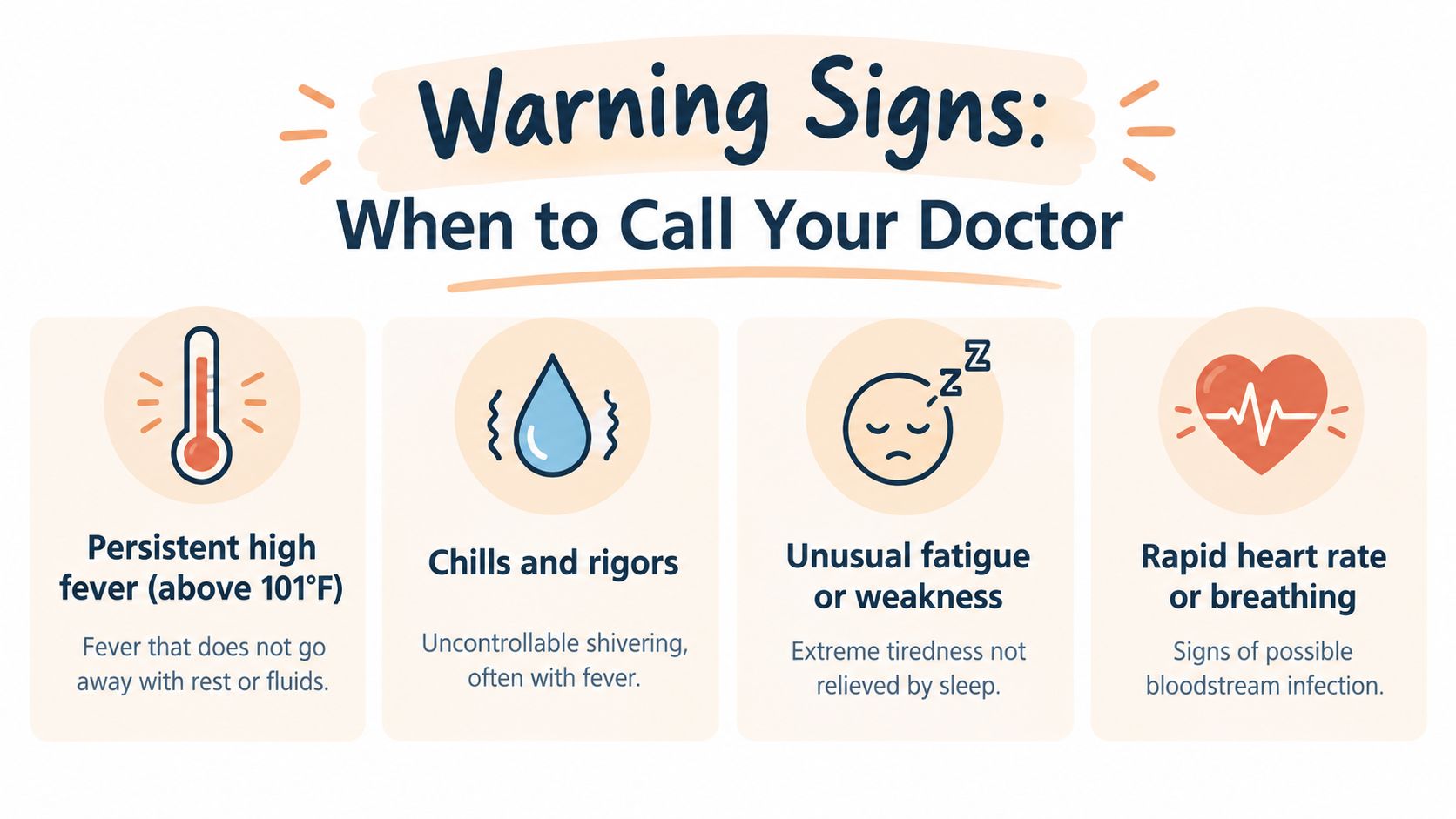
A possible invasive infection is a different matter. Call a healthcare provider promptly if you develop persistent high fever, chills, unusual fatigue, diarrhea lasting more than two days, blood in your stool, severe abdominal pain, or signs of dehydration after starting a probiotic. Seek urgent care for severe weakness, confusion, rapid breathing, fainting, or a rapidly worsening condition.
What to bring to the conversation
Don't throw away the bottle. Give the clinician:
- Strain and product name: Include the full label, not just the brand.
- Dose and start date: Note how much you took and when symptoms began.
- Current medications: Include antibiotics, immune-suppressing drugs, steroids, and cancer treatments.
- Recent procedures: Mention surgery, hospitalization, catheter placement, or intensive care.
- Your medical history: Flag immune compromise, intestinal disease, pancreatitis, or prematurity in a child.
Rapid identification of the microorganism can help clinicians decide which tests and treatments are appropriate. Caregivers should use an especially low threshold for calling when the patient is a premature infant, critically ill, immunocompromised, or dependent on a central line.
Clear communication is part of safe care. Resources on effective patient education strategies can also help caregivers prepare questions and communicate changes accurately.
Here's a visual reminder of symptoms that need attention:
Your Probiotic Safety Checklist and a Calmer Way Forward
Before opening a probiotic, run through this checklist. It takes less time than recovering from a supplement decision that wasn't right for your situation.
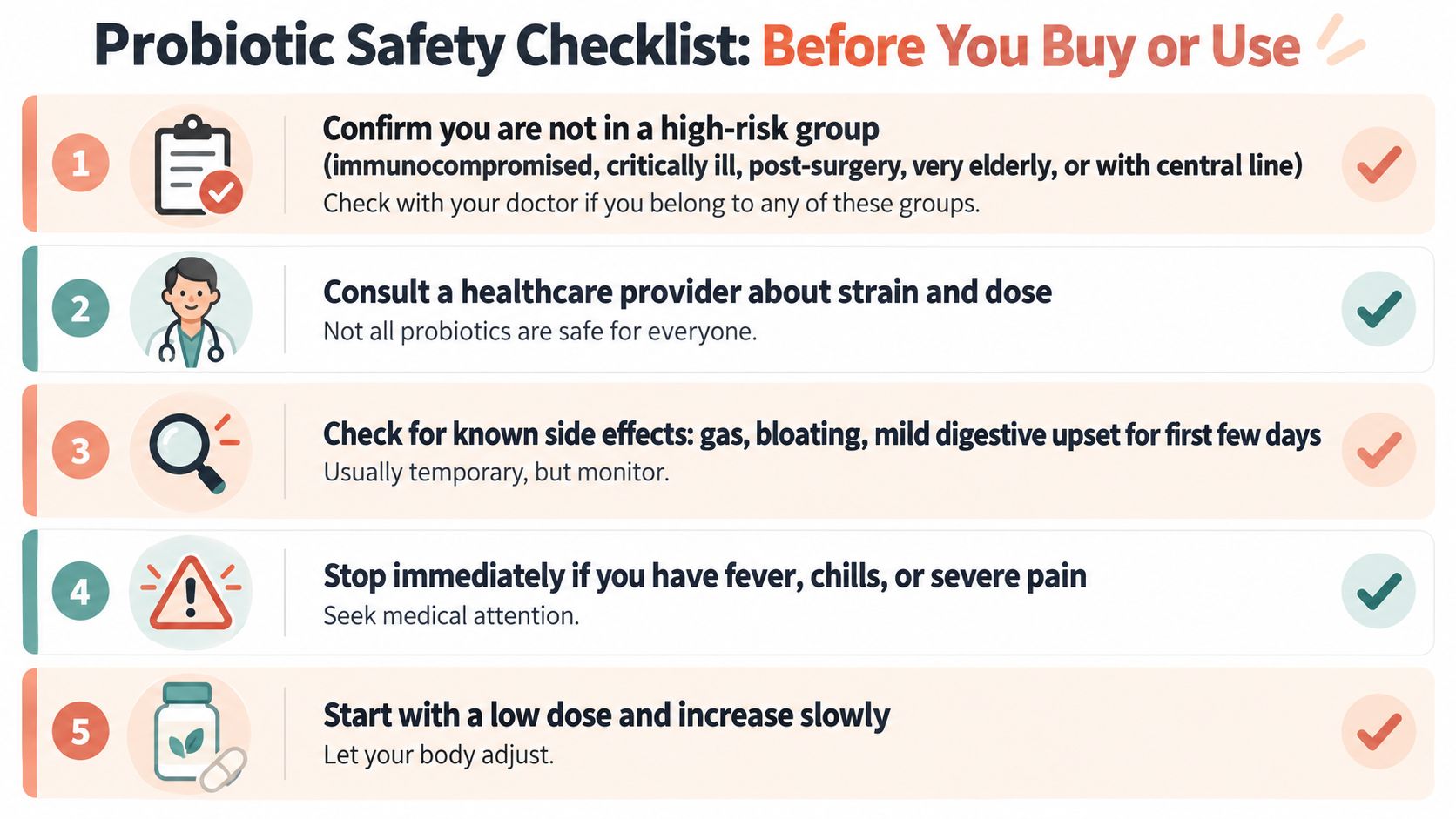
- Confirm your risk category. If you're immunocompromised, critically ill, recently had major abdominal surgery, have severe pancreatitis, use a central venous catheter, or are considering probiotics for a premature infant, stop and get specialist guidance first.
- Review your medication list. Ask a pharmacist, oncologist, transplant clinician, pediatrician, or other relevant provider to assess the exact strain and dose.
- Choose one clearly labeled product. Don't stack multiple probiotic formulas while trying to identify what affects your digestion. A transparent label should identify the microorganisms and other ingredients.
- Start cautiously if you've been cleared. For a lower-risk adult, beginning with a low dose and introducing one strain at a time makes it easier to notice gas, bloating, or other changes.
- Stop for red flags. Fever, chills, severe abdominal pain, blood in stool, dehydration, or unusual weakness calls for medical attention, not dose escalation.
A calmer way forward: Caution isn't fear. It's how you protect your long-term gut-health goals while making room for better questions.
For healthy adults who don't have the cautions above, a clearly labeled, adult-focused probiotic may be a reasonable option. Before buying, use this guide on what to look for when buying probiotics, and remember that a supplement should support a thoughtful routine rather than replace evaluation of ongoing bloating or pain.
If digestive symptoms continue, consider broader gut health tips, a symptom log, food triggers, hydration, and professional assessment. You don't have to keep chasing supplements when your body is asking for a more precise answer.
Yuve offers plant-based probiotic and prebiotic supplements for adults who've reviewed these safety considerations and want a clearly defined gut-health option. Visit Yuve to explore the available formulas, then check the label with your healthcare professional if you have any medical risks, take immune-affecting medication, or are choosing a product for a child.