You spoon chia and flax into the same breakfast bowl, then wonder why your stomach feels tight by lunch. You're not doing it wrong. The two seeds just don't do the same job, and a big scoop can outrun a gut that wasn't ready.
Flax and chia seeds are both small, both plant-based, and both easy to overdo. Flax is the stronger source of the plant omega-3 alpha-linolenic acid (ALA) and of oil. Chia carries more fiber and swells into a gel. Serving size and hydration decide how either one feels. Below, the numbers sit side by side, then the gut mechanics, a pace that keeps gas down, kitchen uses, and who should go slower.
Flax vs Chia at a Glance and Per Spoon
Per 100 grams, the two seeds look similar in protein but differ more in fiber and fat. The comparison chart shows the broad pattern; the table gives the values on the same weight basis, so the comparison does not depend on spoon size.
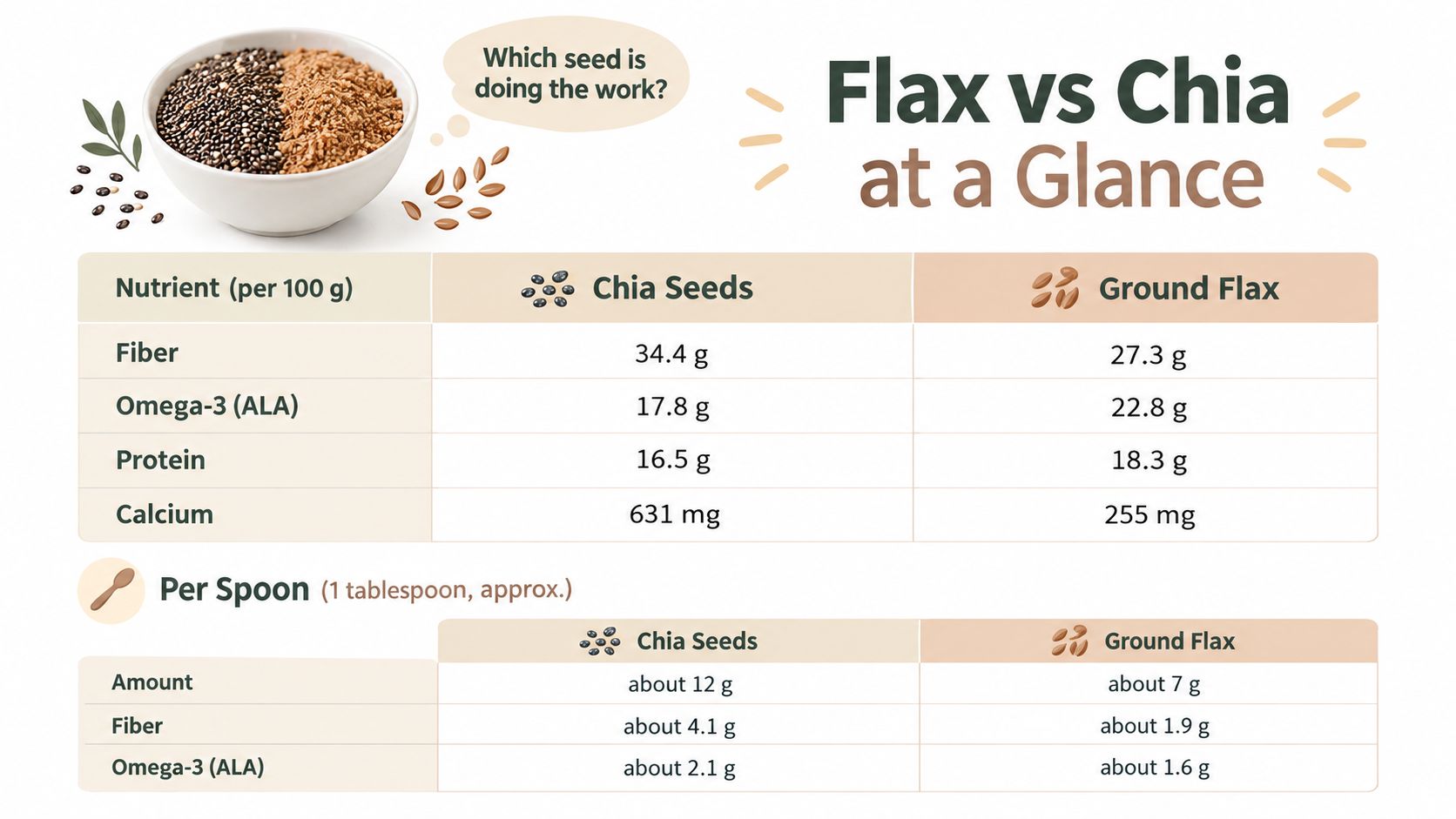
USDA FoodData Central values compiled by FoodIndex put flaxseed at about 534 kilocalories, 18.3 grams of protein, 42.2 grams of fat, and 27.3 grams of fiber per 100 grams. Chia contains about 486 kilocalories, 16.5 grams of protein, 30.7 grams of fat, and 34.4 grams of fiber.
| Nutrient (per 100 g) | Flaxseed | Chia Seeds | Higher In |
|---|---|---|---|
| Calories | 534 kcal | 486 kcal | Flax |
| Protein | 18.3 g | 16.5 g | Flax (by 1.8 g) |
| Fat | 42.2 g | 30.7 g | Flax (by 11.5 g) |
| Dietary fiber | 27.3 g | 34.4 g | Chia (by 7.1 g) |
| ALA omega-3 | 22.8 g | 17.8 g | Flax |
| Calcium | 255 mg | 631 mg | Chia |
| Iron | 5.7 mg | 7.7 mg | Chia |
The distinction is practical: flax leads on calories, protein, fat, and ALA, while chia leads on fiber, calcium, and iron. The protein difference is 1.8 grams per 100 grams, while the fat gap is 11.5 grams. Flax's higher fat content accompanies more ALA, about 22.8 grams compared with chia's 17.8 grams. Chia has about 631 milligrams of calcium versus 255 milligrams in flax, and 7.7 milligrams of iron versus 5.7 milligrams.
What a spoon actually holds
A 100-gram comparison helps with nutrient density, but breakfast portions are smaller. Harvard Health gives about 4 grams of fiber in one tablespoon of chia and about 3 grams in one tablespoon of flaxseed. Each supplies roughly 2 grams of protein per tablespoon.
A 28-gram (1-ounce) portion shows a different serving-size comparison. The American Heart Association lists flax at about 150 kcal, 7.6 grams of fiber, and 6.4 grams of ALA; chia provides about 137 kcal, 10.6 grams of fiber, and 4.9 grams of ALA. At that weight, flax delivers roughly 31% more ALA, while chia supplies about 39% more fiber. The same 28 grams is about four tablespoons of ground flax but about two tablespoons of chia, because chia weighs more per spoon.
That serving-size difference matters when you add seeds to a meal: equal spoonfuls and equal weights are not the same comparison. If you are keeping track of your daily intake, this guide to how many grams of fiber you should have a day can help put a seed serving in context. Measure before adding more.
How Each Seed Moves Through Your Gut
Fiber behaves differently depending on whether it dissolves and holds water or stays more intact. Soluble fiber thickens as it absorbs water, while insoluble fiber adds bulk that helps stool move. Chia pudding sets into a gel; flax in oats adds fiber without the same thick texture.
A peer-reviewed comparison in Food Science and Nutrition reports that flaxseed fiber commonly contains about 20–40% soluble and 60–80% insoluble fractions. Chia's fiber is rich in mucilage, which absorbs water and forms a gel. Its water-holding capacity can reach about 12 times its weight, explaining why the seeds thicken quickly in liquid.
| Fiber Property | Flaxseed | Chia Seeds | What It Means for You |
|---|---|---|---|
| Soluble vs insoluble split | About 20-40% soluble, 60-80% insoluble | Mucilage-rich fiber that forms a gel | Chia is the stronger gel-former |
| Water-holding capacity | Mixed fiber, far less gel than chia | Up to about 12 times its weight | Chia swells fast, so hydrate it |
| Short-chain fatty acid output in tests | Nearly twice chia's (acetate, propionate, butyrate) | Lower under the same test conditions | Lab signal, not a clinical benchmark |
| Main digestive role | Bulk and regularity from a mixed fiber matrix | Gel, slower digestion, fullness | Match the seed to your goal |
What bacteria make from that fiber
Gut bacteria ferment fiber into short-chain fatty acids, mainly acetate, propionate, and butyrate. In fermentation testing reported in the same comparison, flaxseed fiber generated nearly twice as much of these compounds as chia fiber.
Lab, not a clinic: The nearly twofold difference in acetate, propionate, and butyrate is a test-tube finding. It does not show that flax will improve symptoms twice as much.
The distinction helps guide everyday choices. Flax's mix of fiber suits a goal of regularity and fermentable fiber; chia's gel may better suit fullness, thicker texture, and water binding. They do different jobs, so choosing one does not make the other redundant. Serving size and hydration affect how that gel feels: a large portion of high-viscosity fiber without enough fluid may feel heavy. Match the seed to the texture or digestive role you want, and consider how much you are using and whether it has been hydrated.
How to Add Them Without the Bloat
A large serving of chia pudding can feel uncomfortable if your gut is not used to that much fiber. The main variable is often the sudden increase, rather than whether you chose flax or chia. Raising fiber too quickly can bring gas, bloating, cramping, and general discomfort, because the gut and its bacteria need time to adjust, according to guidance summarized by the National Library of Medicine. Start small, then let your tolerance guide the pace.

- Begin with 1 teaspoon of ground flax or chia per day, stirred into yogurt, oatmeal, or a smoothie. This keeps the first serving modest while you observe how it feels.
- Keep that amount for three to four days. Note any gas, cramping, or changes in bowel habits.
- If you feel comfortable, add roughly 2 to 3 grams of fiber every few days, about half to three-quarters of a tablespoon of either seed. If symptoms return, reduce the serving and try a slower increase.
- Grind flax first. Whole flax can pass through largely intact, while grinding helps make its oil and ALA available. Store ground flax sealed and refrigerated to protect its oils from going stale.
- Hydrate chia. Soak it for 10 to 15 minutes or mix it into moist food, and drink water through the day. Chia absorbs liquid and swells, so swallowing a dry spoonful may be uncomfortable, especially if it is not followed by enough fluid.
- If symptoms flare, return to the last amount that felt comfortable and hold there before trying to increase again. A slower pace gives your gut more time to adjust.
- Once you feel steady, about one tablespoon of each seed a day can be a comfortable amount for many adults. You do not need to use both at every meal: flax and chia can complement each other, but serving size and hydration shape how they feel.
For more practical ways to reduce discomfort, see how to prevent bloating. If hemorrhoids are part of the picture, fiber and fluid matter there too. This hemorrhoid diet advice from Revivol-XR offers food guidance to consider alongside a gradual increase.
Best Vegan Uses for Each Seed
Ground flax binds and tastes nutty. Chia gels and thickens. That single kitchen difference picks the seed before any nutrition table does.
| Use | Better Seed | Why It Works | How Much |
|---|---|---|---|
| Egg replacer in muffins and pancakes | Ground flax | Binds and adds a nutty taste | 1 tbsp ground flax + 3 tbsp water per egg |
| Chia pudding | Chia | Gel sets into a spoonable texture | About 3 tbsp chia per 3/4 to 1 cup plant milk |
| Smoothies | Ground flax (chia for thickness) | Ground flax blends smooth; chia adds body | 1 tbsp per smoothie |
| Oatmeal and yogurt toppings | Either (soak chia first) | Adds fiber and crunch | 1 tbsp per bowl |
| Savory crackers and seed breads | Ground flax | Binds dough and adds flavor | Per recipe; ground, not whole |
| Sauces and dressings | Chia | Gel thickens without cooking | 1 tbsp chia soaked in 3 tbsp liquid |
Eggs, pudding, and the blender
For an egg replacer, stir 1 tablespoon ground flax with 3 tablespoons water per egg and rest it about 5 minutes. The mix turns slick and holds a muffin the way an egg white would, with a toasted flavor. For pudding, stir about 3 tablespoons chia into three-quarters to one cup of plant milk and set it 20 minutes or overnight. Don't skip the rest. Ungelled chia is gravel in a glass.
In a smoothie, ground flax disappears. Chia adds body, so keep either to about 1 tablespoon unless you want a spoon-standing drink. On oatmeal or yogurt, either seed works at 1 tablespoon per bowl, and chia should be soaked first so it doesn't pull water out of the bite in your mouth.
Bread, crackers, and cold sauces
Savory crackers and seed breads want ground flax. It binds dough and adds flavor. Whole flax on a loaf mostly rides through intact, so grind it before it hits the mixer. For a sauce or dressing, soak 1 tablespoon chia in 3 tablespoons liquid. You get thickness without turning on the stove.
Try one of these this week, then tell us how the texture turned out. A muffin that holds and a pudding that sets are the two wins that home cooks tend to notice first.
Quality Checks and Who Should Be Careful
A bag of seeds can look much like the next, but nutrient content and mineral absorption do not tell the same story. That distinction matters when flax or chia becomes a daily habit.
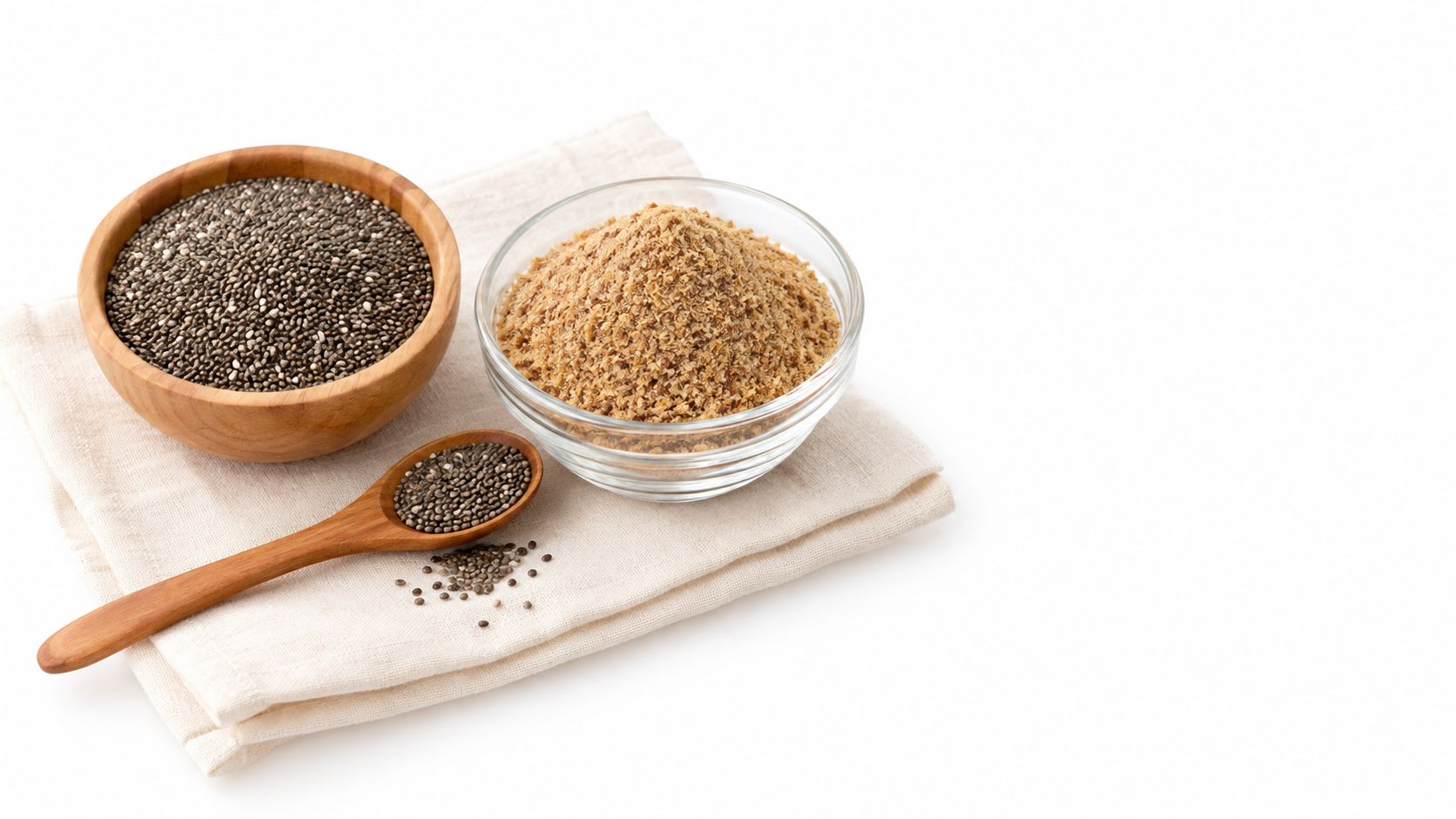
A 2026 review in Cogent Food and Agriculture highlights two gaps: the minerals listed on a label are not necessarily absorbed, and products can vary by brand.
- Phytic acid in chia can bind calcium, iron, and zinc, while evidence about actual mineral absorption in people remains incomplete. Treat chia as one part of a varied diet, not a sole source of minerals.
- Cadmium in flax can be measurable. If you eat flax most days, choose a brand that batch-tests and ask for its results. A polished label does not show what testing found.
- Grinding, soaking, cooking, and fermentation are reasonable preparation methods, but evidence that they improve mineral absorption is weaker than marketing often suggests. Grind flax to access its oil, and soak chia to reduce the chance of swallowing dry seeds that expand. Neither step should be expected to remove phytate.
- A few tablespoons a day suits many adults. Preparation also affects how the seeds feel: ground seed spoils faster than whole seed, so buy small amounts and keep them cold. Increase servings gradually, since tolerance depends on both dose and hydration.
- Children, pregnant people, and anyone with kidney or mineral-balance concerns should check with a clinician before making seeds a daily food. The NIH Office of Dietary Supplements pages on fiber and omega-3s can inform that conversation, but do not replace individual advice.
Skip “detox” and “superfood.” Check sourcing, serving size, preparation, and who is eating the seeds.
Choosing Flax, Chia or Both for Your Goal
Neither seed wins outright. Pick by the job, and combine them when you want both jobs.
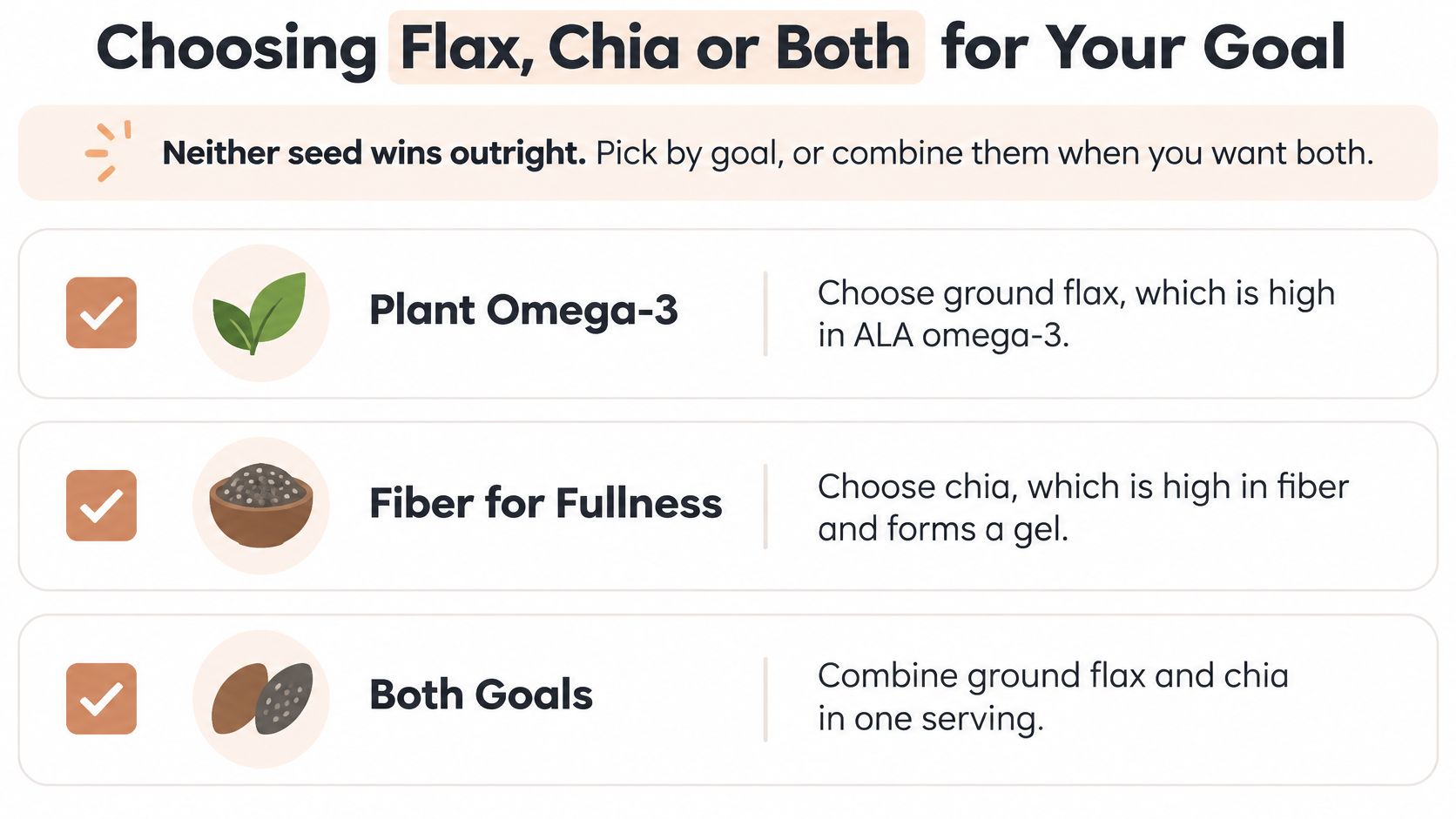
| Your Goal | Lean Toward | Why | Watch For |
|---|---|---|---|
| Plant omega-3 (ALA) on a vegan diet | Ground flax | About 31% more ALA per 28 g | ALA is not EPA or DHA |
| Fiber for fullness and texture | Chia | About 39% more fiber per 28 g; forms a gel | Hydrate before eating; ramp up slowly |
| Minerals like calcium and iron | Chia for content, plus varied meals | Higher calcium and iron per 100 g | Phytic acid may reduce absorption |
| Both omega-3 and fiber | Ground flax plus chia | 1 tbsp of each gives about 7 g of fiber | Keep total fiber increase gradual |
| Sensitive stomach or IBS | Either, starting at 1 teaspoon | Gentle pacing builds tolerance | Add about 2-3 g fiber every few days |
One tablespoon of ground flax plus one tablespoon of chia is a pattern many people can live with. You get about 7 grams of fiber from those two spoons, flax carrying the ALA and chia carrying the gel. ALA is not EPA or DHA, and conversion to those long-chain fats is limited, so seeds support plant ALA intake rather than replacing an algal source. Our guide to the best vegetarian omega-3 sources lays out algae, chia, flax, and walnuts without pretending they are the same molecule.
If you are curious about seeds and cycle-related routines, seed cycling in a vaginal wellness context is a separate beginner's read. It is not a gut prescription, and it doesn't change the spoon-and-water rules here.
A short walk-through of the same choice:
If your stomach is sensitive, start at a teaspoon, build over weeks, and let the goal pick the seed. Tell us in the comments which spoon you kept.
Frequently Asked Questions About Flax and Chia Seeds
Which seed has more fiber?
Chia does, at about 34.4 grams per 100 grams versus 27.3 grams for flax. Per spoon the gap shrinks, because a tablespoon of chia is heavier than a tablespoon of ground flax. Use the spoon you eat in practice, not the 100 gram column, when you plan breakfast.
Can I eat flax and chia every day?
For most adults, one tablespoon of each is a comfortable daily amount once your gut has adjusted. Pregnant people, children, and anyone with kidney concerns should check with a clinician first. Build to that spoon. Don't start there.
Do I need to grind flax?
Yes. Whole flax seeds largely pass through intact, so you miss much of the oil. Grind them and keep the ground seed sealed and cold. A small jar in the fridge beats a big bag on the counter.
Is dry chia safe to eat?
Soak it first, or stir it into yogurt, oatmeal, or plant milk. Dry chia swells and, in rare cases, can block the throat or esophagus. A glass of water after a dry spoonful is not the same as soaking.
Does plant omega-3 replace fish oil?
No. ALA is not EPA or DHA, and only a small share converts. If you need the long-chain fats on a vegan diet, look at algae-based sources and keep flax for ALA and fiber.
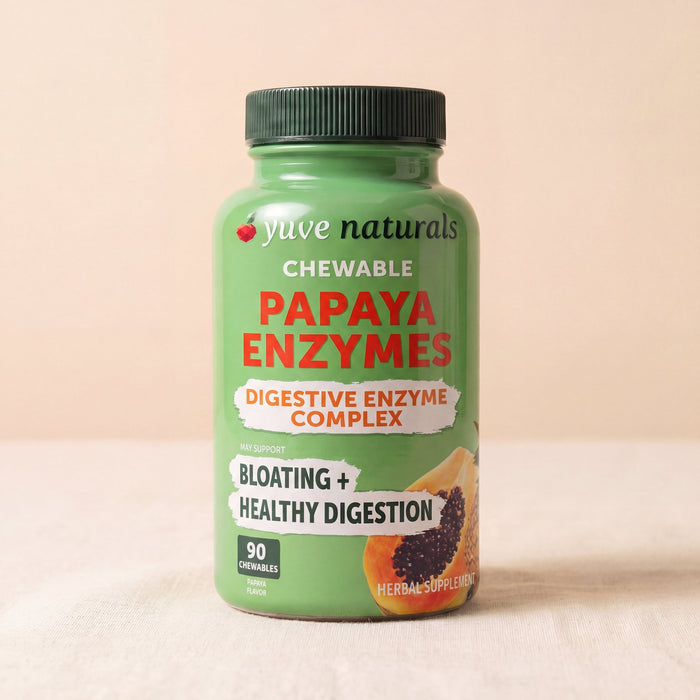
Yuve makes vegan, non-GMO supplements for gut comfort, including papaya enzymes you can take with the meals where you add flax and chia seeds. If fiber is new for you, pairing a steady spoon with digestive support is a practical way to enjoy the seeds without the afternoon puff. Visit Yuve to see the enzyme options and start with the serving your stomach can comfortably finish.