The most popular advice about “immune support natural slim” is also the advice I'd question first: take a natural blend, boost your defenses, and watch your waist shrink. If you're already dealing with afternoon bloating, that promise can make a complicated problem sound unfairly simple.
You deserve a clearer distinction between supporting normal immune function, calming digestive symptoms, and losing body fat. Those goals can belong in the same healthy routine, but they don't share the same evidence, and a smaller-looking stomach after dinner doesn't prove that a supplement burned fat.
Which Immune and Slim Claims Hold Up
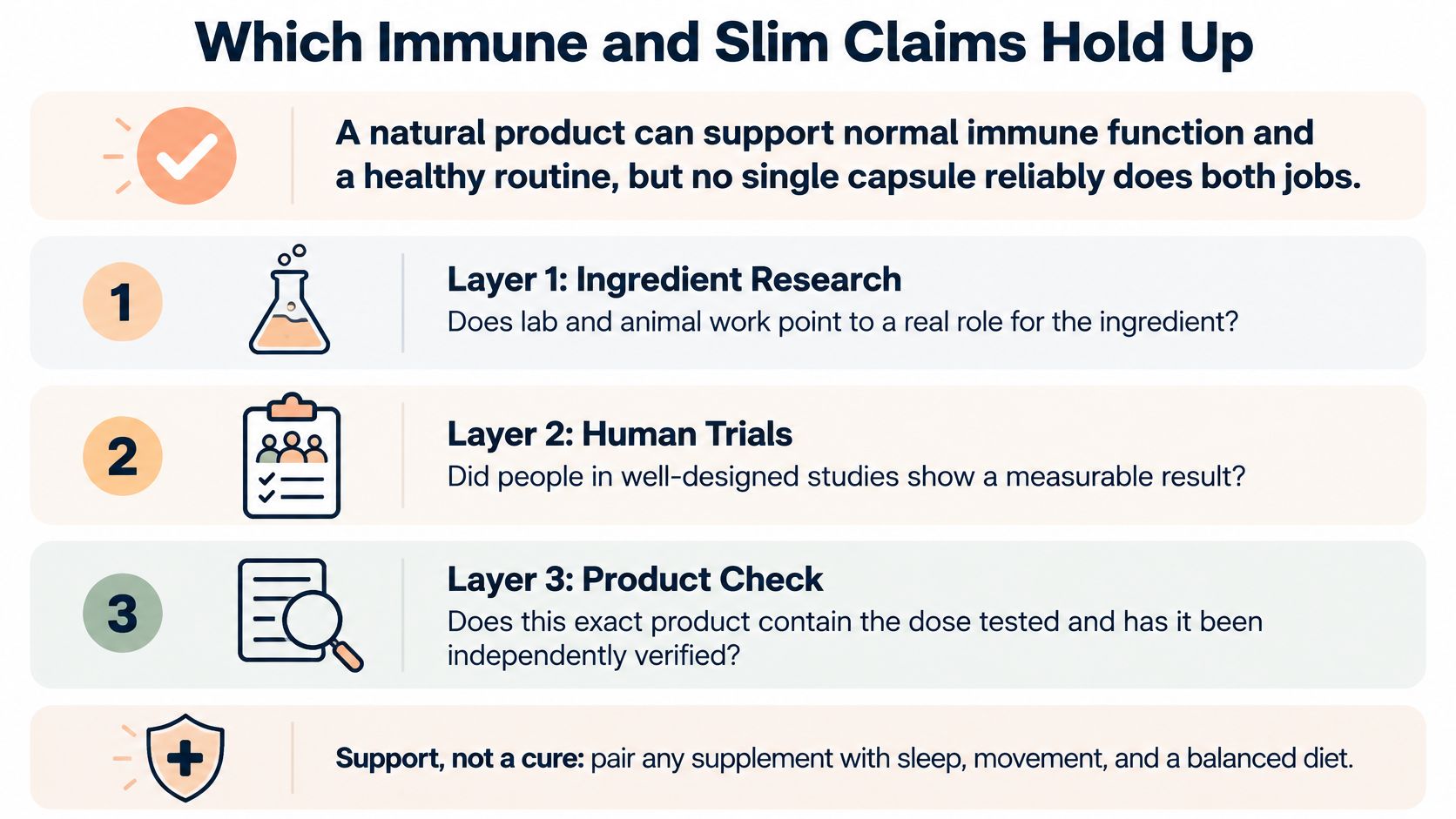
A natural product can support normal immune function and a healthy routine, but no single capsule reliably does both jobs. Treat the combined promise as something to investigate, not something the word natural establishes.
Supplements are familiar purchases. In 2023, 74% of U.S. adults reported using dietary or nutritional supplements, according to Ipsos research for the Council for Responsible Nutrition. Popularity tells us that many people take them, not that every claim holds up.
Separate the ingredient, the trial, and the product
Think of evidence as a sequence. Laboratory research can suggest that an ingredient has a biological role. Human trials must then show whether taking it produces a useful result, and the product you buy must meaningfully match what researchers tested.
An immune biomarker is a laboratory measurement related to immune activity. Changing that measurement isn't automatically the same as having fewer infections or recovering sooner. Similarly, a scale drop doesn't establish sustained fat loss.
Use this visual as a reminder to check all those layers.
Common claims and how strong the evidence is
| Claim | Evidence Strength | What It Means for You |
|---|---|---|
| Correcting a vitamin or mineral deficiency, including vitamin D, zinc, or vitamin C | Strong for supporting normal immune function when a deficiency exists, as explained by the NIH immune-function consumer guidance | Check your intake or status first, then supplement if needed |
| Vitamin D helps you slim | Not supported. A 12-trial meta-analysis found no significant weight or fat change without calorie restriction, as summarized in the NIH vitamin D evidence review | Treat vitamin D as bone and immune nutrition, not fat burning |
| Fiber helps you feel full | A useful association, not a guaranteed result | Build fiber through food first, using the evidence and tolerance guidance below |
| Weight-loss supplements melt fat | Generally inconclusive | Be skeptical of fast or dramatic promises |
| Herbal immune blends prevent colds | Limited and ingredient-specific | Judge each ingredient, not the word natural on the label |
The NIH review of weight-loss supplements describes the evidence as generally inconclusive and reports that Americans spend more than $2 billion annually on these products. It also identifies safety concerns, including liver damage linked to green-tea extract pills in some people and undeclared pharmaceutical ingredients in some weight-loss products.
That means a clean-looking label isn't enough. Before buying, use this checklist:
- Human evidence: Were people studied using the specific ingredient, formulation, and amount?
- Realistic benefit: What changed, and was the difference meaningful rather than merely measurable?
- Medication interactions: Could the ingredients affect anything you already take?
- Contraindications: Who should avoid it because of a condition, life stage, or treatment?
- Honest purpose: Is it nutritional support, or does the advertising slide into treatment and guaranteed weight-loss promises?
For weight management, the CDC recommends gradual loss of about 1 to 2 pounds per week, roughly 4 to 8 pounds over four weeks, although individual results vary. Weekly averages are more useful than reacting to an isolated weigh-in.
My sorting rule: If a claim doesn't identify a meaningful outcome, such as fewer infections, better recovery, sustained fat loss, or improved metabolic measures, treat it as marketing until the evidence says otherwise.
For help applying that distinction, read how to evaluate whether immune-support supplements work.
Daily Habits That Support Immunity and Steady Weight
Fiber is a sensible starting point because it connects digestion with the wider routine you're trying to build. Your gut bacteria ferment certain fibers into short-chain fatty acids, including acetate, propionate, and butyrate.
In plain English, those are compounds that help regulate the gut lining and influence immune-cell activity. Some fibers also make stomach contents thicker and slow stomach emptying, which can help you feel satisfied after eating.
A review of fiber and weight-management mechanisms describes an analysis associating 14 g more fiber daily with approximately 10% lower energy intake and about 2 kg of weight loss over roughly four months. That's an association, not a promise that adding fiber will produce those results for you.
Daily habits for immune support and steady weight
Use the targets below as practical planning ideas, not as a personalized prescription.
| Habit | Practical Target | Why It Helps | First Move |
|---|---|---|---|
| Plant fiber from legumes, oats, vegetables, and fruit | Increase in small steps | Fermentable and viscous fibers can support the gut environment and fullness | Add a manageable fiber food to meals |
| Fluids alongside fiber | Drink water throughout the day as fiber rises | Helps make increasing fiber more tolerable | Keep water within reach |
| Protein at each meal | Use roughly a palm-sized portion as a meal-planning cue | Gives balanced meals a substantial protein component | Try tofu, edamame, or lentils |
| Sleep | Protect a consistent, adequate sleep window | Keeps rest part of your health routine rather than an afterthought | Choose a bedtime you can maintain |
| Movement | Build regular, manageable moderate activity | Supports a sustainable weight-management routine | Walk after your largest meal |
| Fermented foods | Include a tolerated serving regularly | Adds variety; some products provide live cultures | Try kimchi, tempeh, sauerkraut, or yogurt with live cultures |
Make the changes comfortable enough to keep
A large bowl of chickpeas isn't automatically a better choice than a small serving you digest comfortably. Fiber type, portion size, preparation, and your tolerance matter, along with the overall composition of your meals.
Start with familiar foods. Oats at breakfast, lentils mixed into soup, or fruit alongside lunch may feel easier than suddenly building every meal around beans.
Fermented foods need the same common sense. Check the label rather than assuming every fermented product contains live cultures, and don't force yourself to eat something that consistently makes you uncomfortable.
A habit you can repeat comfortably is more useful than an ambitious plan you abandon because your stomach hurts.
Choose two habits to practice this week and track them for seven days as a personal experiment. Note what you really did and how manageable it felt before adding more.
Why Your Stomach Bloats and How to Calm It
That tight waistband by afternoon can be miserable, especially when breakfast felt completely fine. Bloating isn't a personal failure: the NIDDK summary of digestive gas research estimates that 16% to 31% of people experience it, while about 20% in a large U.S. survey reported bloating during the previous week.
Gas has ordinary origins. We swallow air, and bacteria in the large intestine produce gas when they break down carbohydrates that weren't fully digested earlier.
The diagram below groups common triggers and possible next steps.
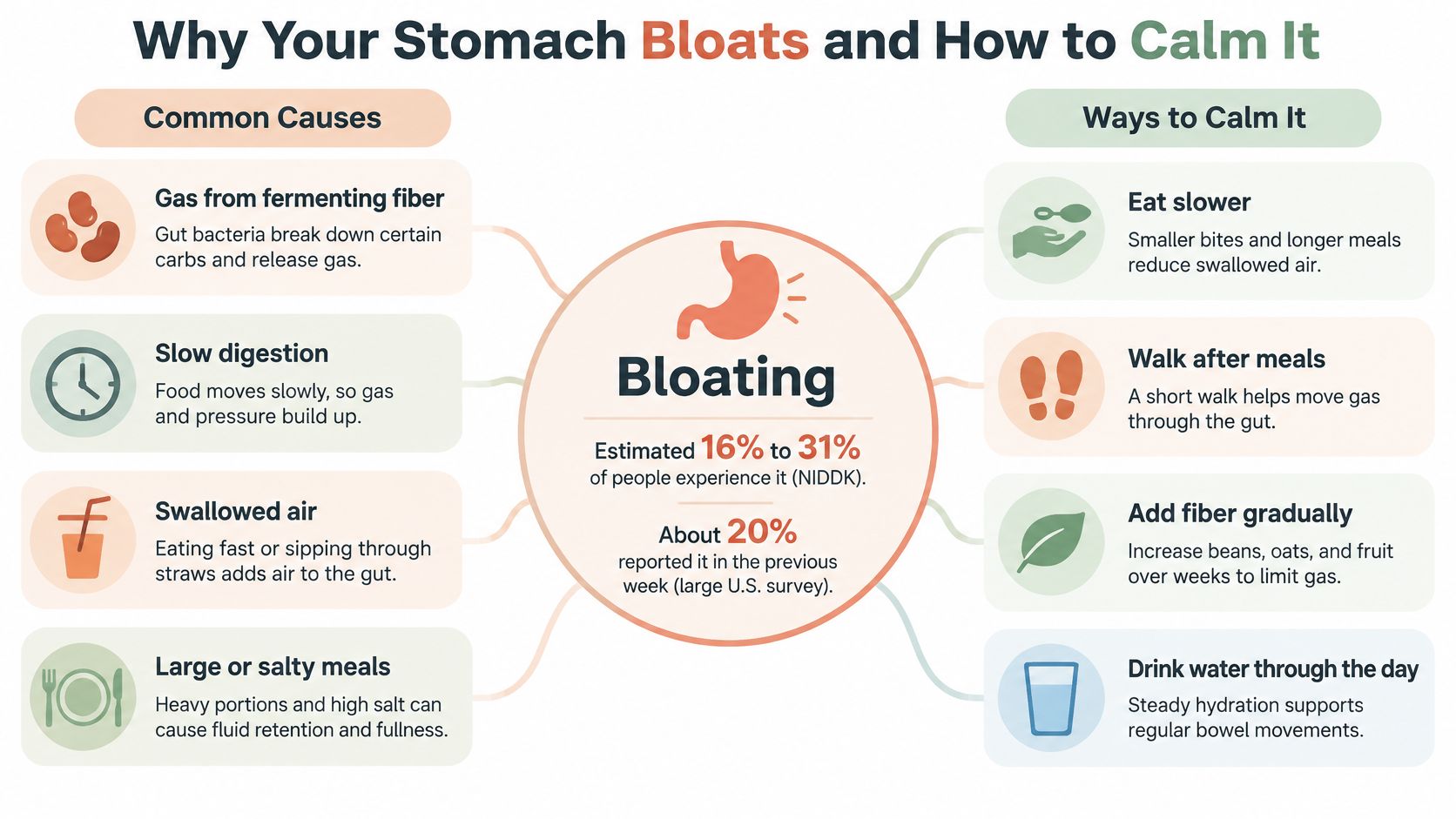
Match the response to the trigger
Think of the large intestine as a fermentation vat. When more undigested carbohydrate arrives, bacteria have more material to process, and gas can be an unwelcome part of the result.
Consider a hypothetical dairy night: you enjoy pizza and ice cream, then notice pressure and discomfort. That's a reason to investigate lactose and meal size, not proof that you need a detox or that you've gained body fat.
For that specific situation, Yuve Lactase Enzymes are an option to consider alongside lactose-reduced foods and portion adjustments. Check the product label for timing and suitability rather than assuming an enzyme guarantees a comfortable evening.
Bloating triggers, what happens and simple fixes
| Trigger | What Happens | Simple Fix |
|---|---|---|
| Eating fast or talking while eating | You may swallow extra air | Slow down, take smaller bites, and chew fully |
| Fizzy or sugary drinks | Carbonation adds gas; poorly digested carbohydrates can also contribute | Try still water and compare symptoms |
| Large servings of beans, onions, or cabbage | Bacteria ferment undigested carbohydrates | Reduce the serving, then build up gradually |
| Dairy such as milk, soft cheese, or ice cream | If lactose isn't digested well, it reaches the large intestine | Consider lactose-reduced choices or a suitable lactase product |
| Constipation or slow bowel movement | Bowel-pattern changes may accompany bloating | Review fluids, fiber tolerance, and movement; seek advice if it persists |
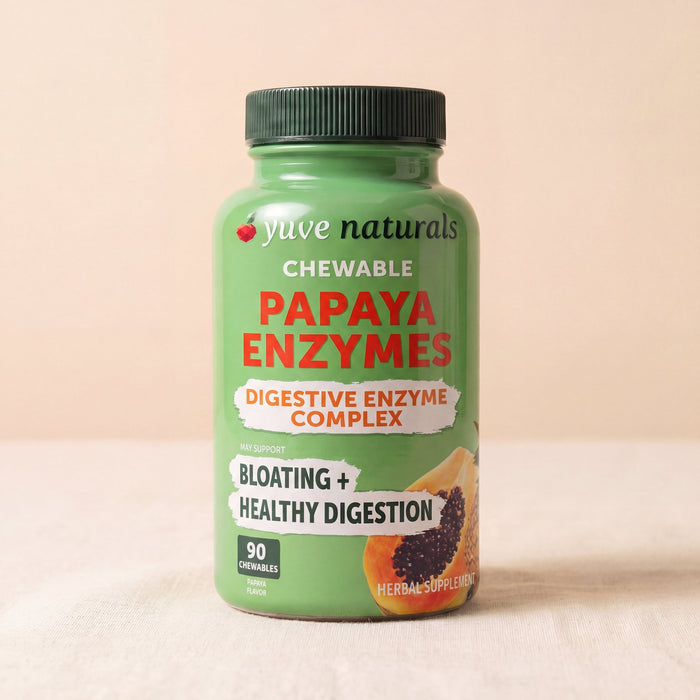
Papaya enzyme products are another category readers encounter for daily digestion. Don't assume they're interchangeable with lactase or that a broad enzyme blend addresses every cause of discomfort.
If you're comparing product labels, you can browse supplements for bloating support from Wallaby Wellness as a starting point for questions about ingredients and intended use, not as proof of effectiveness. The more useful question is whether the formulation matches your suspected trigger.
For another way to explore the topic, this video is available below.
Keep a brief note of what you ate, when discomfort began, and whether your bowel habits changed. The guide to what causes bloating and gas can help you organize those observations.
Persistent or severe discomfort needs medical evaluation. Bleeding, vomiting, or unexplained weight loss shouldn't be managed with a supplement-only approach.
Probiotics, Prebiotics and Herbal Blends Side by Side
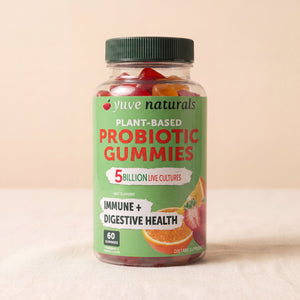
Probiotics and prebiotics sound almost interchangeable, but they do different jobs. In a garden analogy, probiotics add living organisms, while prebiotics feed organisms already growing there.
The analogy has limits. Adding more seeds doesn't guarantee a healthier garden, and adding a probiotic doesn't guarantee better immunity.
Gut options compared
| Option | What the Evidence Shows | Best Everyday Use | Main Caution |
|---|---|---|---|
| Probiotics | Plausible gut and immune effects; findings depend on the organism and condition studied | A targeted digestive routine when evidence fits the intended use | Strain matters; immunocompromised users need clinical advice |
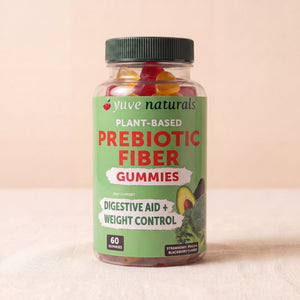
| Prebiotics, including inulin, FOS, and GOS | Feed existing gut microbes; don't assume every isolated prebiotic has the same fullness evidence as dietary fiber | A considered fiber addition alongside meals | Adding too much too quickly can worsen gas |
| Digestive enzymes, including lactase and papaya-derived enzymes | Target particular digestive processes; evidence shouldn't be transferred between different enzymes | Matching an enzyme to a specific food-digestion issue | They aren't immune products or weight-loss treatments |
The NIH health-professional review of immune function explains that probiotics might influence the gut barrier, antibody production, and white-blood-cell activity. However, mechanisms remain unclear, and studies don't consistently agree on immune-cell or inflammatory changes.
Its ventilator-associated pneumonia example is especially instructive: low-certainty evidence suggested a 32% reduction, but the finding wasn't statistically significant in double-blind studies or studies with low risk of bias. That hospital-based finding isn't evidence that an everyday probiotic prevents your next cold.
Read the label like you're checking a recipe
A useful label tells you what you're taking, not just the category it belongs to. Look for enough detail to compare the product with relevant research.
- Organism identity: For probiotics, check the full strain designation rather than only a broad species name.
- Shelf-life information: Look for a live-culture guarantee through expiry and follow storage instructions.
- Ingredient amounts: Avoid assuming that an impressive-looking blend contains the amounts used in studies.
- Independent verification: Check what third-party testing covers. Ingredient verification doesn't prove a clinical benefit.
Vegan, non-GMO, gluten-free, and gelatin-free formulations can help a product fit your preferences and dietary needs. Those features don't establish that it improves infection outcomes, digestion, or weight.
Herbal blends deserve the ingredient-by-ingredient scrutiny used earlier, not a separate pass because they're plants. Change one thing at a time, so you have a reasonable chance of identifying what helps and what makes symptoms worse.
Safety, Dosing and When to Call a Clinician
Caution isn't a rejection of natural options. It's how you choose one you can check, understand, and use appropriately.
The NCCIH guide to using dietary supplements wisely notes that many supplements haven't been adequately tested in pregnant or nursing people or children, and that interactions and surgery-related risks matter. It also describes a review of 27 immune-marketed ingredients in which only eight had rigorous human evidence, still insufficient for definite conclusions.
Situations that deserve advice first
- Pregnancy or breastfeeding - Ask your maternity-care clinician before starting a new supplement.
- Children - Have a pediatric clinician assess the need and age-appropriate use. Don't adapt an adult routine yourself.
- Immune conditions or immunosuppressive treatment - Ask your treating clinician before using live-microbe products or immune-marketed blends.
- Prescription medication - Bring the ingredient panel to a pharmacist for an interaction check.
- Planned surgery - Tell the surgical team what you take and follow their instructions about stopping products.
- Bleeding, vomiting, or unexplained weight loss - Seek medical evaluation rather than experimenting with another digestive product.
If immune status is part of your concern, the guide to who should not take probiotics offers questions to bring to that discussion.
Dosing is not a more-is-better contest
Follow the label and don't exceed it. Avoid stacking products with overlapping ingredients, such as a multivitamin, an immune blend, and a separate vitamin D product.
Introduce a new product on its own and agree on an appropriate review period with your clinician or pharmacist. Don't keep taking something that causes worsening symptoms merely because you've decided to finish the bottle.
For high-dose vitamin D, ask whether checking your status is appropriate first. As the earlier vitamin D evidence shows, the purpose is to address nutritional need, not to pursue fat burning.
Before you buy: A supplement can fit your values and still be unsuitable for your medical situation.
Check allergen statements for milk, soy, nuts, and other relevant ingredients. Vegan doesn't mean allergen-free, and front-label wording isn't a substitute for reading the full panel.
Also, FDA doesn't preapprove dietary supplements or most supplement claims before marketing. Wording about supporting normal function shouldn't be mistaken for an evaluated claim to prevent or treat disease.
Bring your complete supplement list to a pharmacist or clinician, including powders, gummies, drinks, and products you take only occasionally. They can assess the combination rather than reviewing each purchase in isolation.
Quick Answers to Common Questions
Can an immune-support supplement also help me lose weight?
Usually not on its own. The NIH Office of Dietary Supplements evidence discussed earlier doesn't establish weight-loss supplements as reliable fat-loss tools. Ask for ingredient-specific human trials with meaningful weight outcomes, not just immune measurements.
Do probiotics stop colds?
They aren't universal protection. Their potential gut and immune effects don't translate consistently into fewer infections, and the intended strain and outcome matter. Use the gut options comparison to distinguish the categories before choosing one.
Is vegan automatically safe?
No. Vegan describes an aspect of formulation, not suitability for every person. Read the allergen statement, ingredient amounts, and warnings, especially if you have allergies or take medication.
Should I take lactase every day?
Match use to lactose-containing meals and follow the product directions, rather than treating it as a general daily immune supplement. Discuss frequent or long-term symptoms with a clinician, because not every dairy-associated discomfort has the same cause. The bloating guidance above can help you identify useful observations.
How fast should I expect results?
Digestive comfort and weight change are different outcomes, so don't give them the same deadline. For weight, use the gradual CDC benchmark explained earlier as guidance rather than a promised result. For digestion, track symptoms and seek advice if they persist instead of repeatedly increasing the dose.
Less pressure after a meal is worth noticing. It still isn't evidence that a product prevented illness or reduced body fat.
Start a Four-Week Gut and Immune Routine
You don't need to overhaul every meal or buy a stack of products. A short, structured experiment can help you make decisions from your own observations without confusing them with proof of a medical benefit.
Use this visual as a reminder to build gradually.
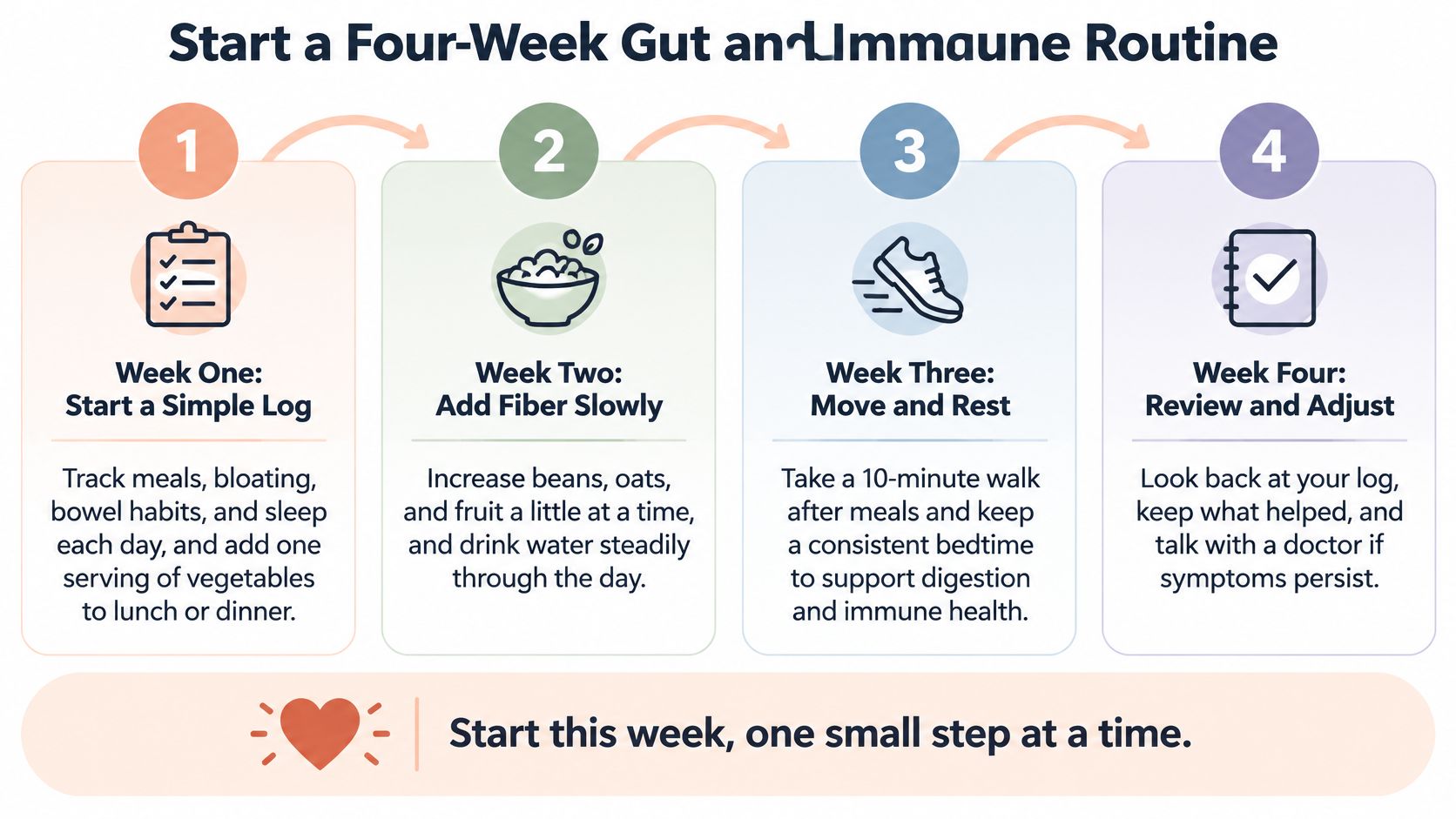
- Week one, notice your starting point. Log meals, bloating, bowel habits, and sleep. Add a manageable fiber food to meals rather than chasing a dramatic increase.
- Week two, make meals easier to manage. Try a tolerated fermented food and keep water available as fiber rises. If lactose is an established trigger, plan lactose-reduced choices or use a suitable lactase product according to its label.
- Week three, test a targeted addition. If your clinician agrees, introduce a probiotic or prebiotic that fits your goal. Keep the rest of the routine steady enough to judge tolerance.
- Week four, review rather than grade yourself. Look for patterns in comfort, bowel habits, sleep, and any weekly weight averages you're tracking. Keep what feels sustainable and discuss persistent symptoms with a clinician.
Share one win and one struggle in the comments. A comfortable meal, a clearer trigger, or a habit you can maintain can help another reader feel less alone.
Yuve offers plant-based supplements for digestive and nutritional support, giving you options to compare against your meals, preferences, and clinical advice. Visit Yuve to explore the range and start your routine with products that fit a clearly identified need, without expecting a capsule to do every job.